
Eisenkot’s Mizrahi Roots and Coalition Math Define Netanyahu’s Final Election Stand
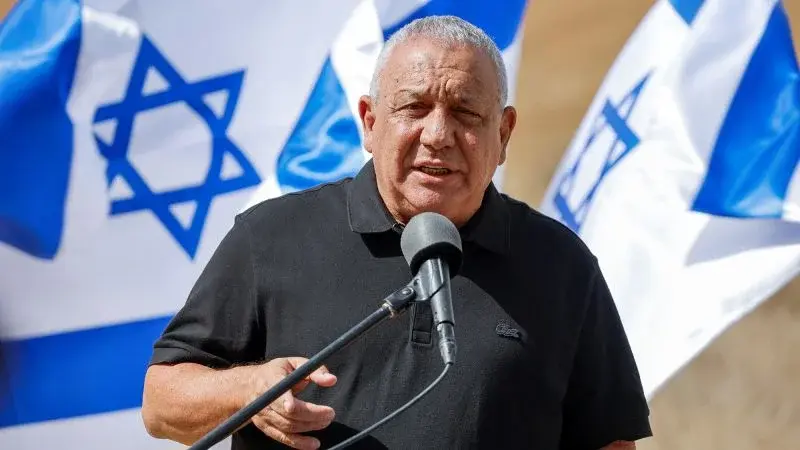
Gadi Eisenkot, a former IDF chief of staff and son of Moroccan immigrants, has emerged as the leading challenger to Benjamin Netanyahu in Israel’s October 27 election. Despite polling in single digits a year ago, his Yashar party now projects 20 to 23 Knesset seats, surpassing Likud. His campaign emphasizes accountability for the October 7 failures and mandatory national service, contrasting with Netanyahu’s reliance on ultra-Orthodox exemptions. However, victory is uncertain due to Israel’s complex coalition arithmetic, where neither bloc currently guarantees a 61-seat majority. The race is further complicated by Trump’s explicit endorsement of Netanyahu and Eisenkot’s controversial stance on the two-state solution.
Key points
- Eisenkot’s Yashar party leads polls with 20-23 seats, but coalition math remains uncertain as neither bloc guarantees a 61-seat majority.
- A recent racial slur by TV host Yinon Magal highlighted Eisenkot’s Mizrahi heritage, a factor analysts believe drives his appeal among traditional Likud voters.
- Eisenkot promises a state commission of inquiry into October 7 and mandatory national service, directly challenging Netanyahu’s coalition partners.
- Trump endorsed Netanyahu, warning that a different leader would force the US to confront Iran alone, while Eisenkot’s coalition may lack far-right support.
- Eisenkot rejected the two-state solution as 'delusional' but opposes formal annexation and E1 construction, differing from Netanyahu on diplomatic strategy.
Background
Recent archive coverage highlights a fractured Israeli society facing deep war trauma and mass emigration, with tens of thousands of expatriates returning to vote. Previous reports noted a conspicuous absence of peace debate in the campaign, with both sides focusing on domestic security and personal blame. The current election follows three years of advocacy for accountability regarding the 2023 Hamas attack, with Netanyahu facing corruption charges and an ICC warrant. The political landscape is defined by institutional changes and a polarized electorate, where Eisenkot’s rise marks a shift from his single-digit polling a year ago.
Why it matters
The outcome determines whether Israel maintains its current far-right coalition or shifts toward a centrist government that may facilitate regional diplomacy. Eisenkot’s potential victory would be the first for a Mizrahi prime minister, signaling a significant demographic shift. The election also tests the viability of a minority government sustained by Arab parties, a scenario Netanyahu has long delegitimized. Trump’s intervention underscores the high stakes for US-Israel relations and regional stability, particularly regarding Iran and Saudi normalization.
What to watch
Israelis vote on October 27, with coalition formation likely to be protracted if no bloc reaches 61 seats. Eisenkot has indicated he may attempt a minority government, though right-wing partners may reject this. Trump’s stance may influence international support for the resulting government, while domestic debates over the October 7 commission and national service will shape the new administration’s agenda. The race remains tight, with polls showing a dead heat between the two leaders.
- Who is Gadi Eisenkot, Netanyahu’s main challenger in Israel’s elections? CNN
- Eisenkot offers hawkish alternative to Netanyahu for Israeli PM Reuters
- Opinion | Its' Netanyahu vs Netanyahu-lite The Boston Globe
- Weekend profile: Gadi Eisenkot, Israel’s unflashy leadership contender The Economist
- Gadi Eisenkot Couldn’t Be More Unlike Netanyahu. Can He Beat Him? The New York Times
Want the full story? Read the original reporting
Read on CNN