
European Youth Uprising Exposes Generational Wealth Divide and Institutional Failure
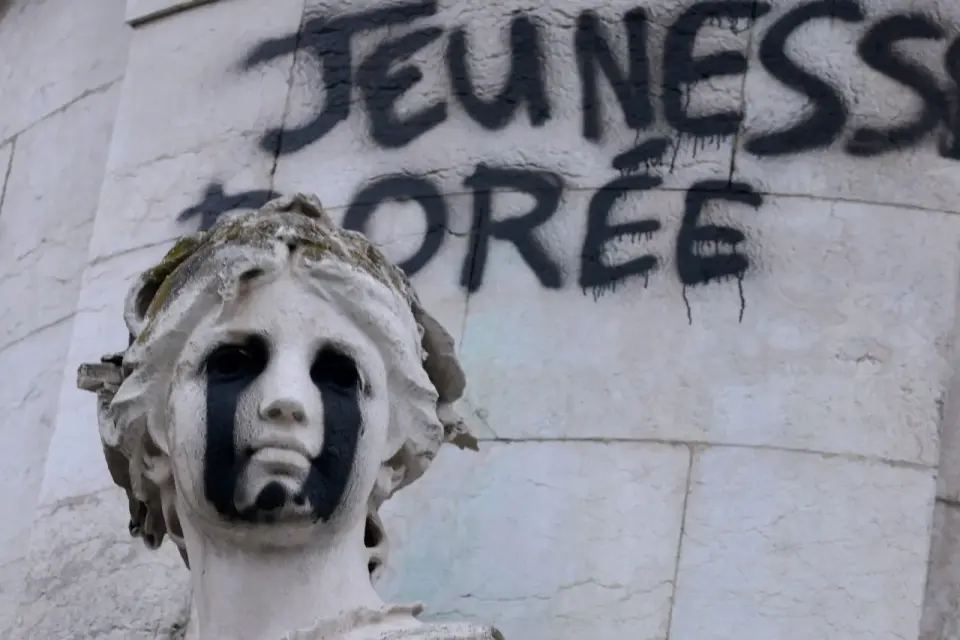
Widespread youth protests across Europe, marked by violence in France and Italy, stem from a collapsed social contract and perceived generational wealth theft. While triggers vary from housing to education, the core grievance is the neoliberal transfer of resources to older generations and the prioritization of military spending over social needs. Experts debate whether these riots signal a deepening crisis of hope or a failure of democratic representation, with some noting that similar unrest in Serbia led to electoral change, unlike the fragmented Western response.
Key points
- Protests erupted in France, Italy, Spain, Portugal, Belgium, Greece, Ireland, Germany, and Austria, with France seeing the most violent unrest including looting and arson.
- The primary driver is a generational wealth gap; in France, over-60s hold 60% of national wealth and receive two-thirds of social spending, while young people face precarious employment and unaffordable housing.
- Protesters link the cost-of-living crisis to EU fiscal rules that shield pensions but cut education and youth services, while simultaneously allocating billions for Ukraine and rearmament.
- In Serbia, a student movement won a general election, ending Aleksandar Vučić’s rule, offering a contrast to the Western European situation where youth remain a political minority.
- Violence in France and Italy involved participants from diverse backgrounds, including second-generation immigrants and native-born youth, reflecting a broader nihilistic malaise rather than a single ideological cause.
Background
These events follow a decade of austerity and neoliberal policies that have eroded public services and labor security. The current unrest is part of a broader European crisis characterized by weak economic growth, political polarization, and a sense of institutional irrelevance, as noted in recent analyses of the EU’s adaptability and resilience.
How outlets are covering it
UnHerd frames the unrest as a rational response to a structural generational class war, arguing that the violence is a symptom of a system that offers no democratic avenues for change. Le Monde highlights the cross-border impact of French footage, noting that while triggers differ (e.g., housing in Spain, education in Italy), the demand for increased public investment is common. The Financial Times contextualizes the protests within a broader 'century of humiliation' for Europe, where the EU is struggling to maintain cohesion against nationalist forces and external threats, with some experts fearing a slide into irrelevance rather than collapse. Conservative commentators, as noted by UnHerd, often attribute the violence to immigration and 'islamo-gauchiste' alliances, a view UnHerd rejects as misleading given the cross-ethnic nature of the crowds.
Why it matters
The protests signal a potential breakdown of the post-war social contract, threatening political stability across the EU. If the current institutional architecture fails to address youth grievances, it may lead to further fragmentation or the rise of anti-liberal forces, as predicted by some historians. The contrast with Serbia’s electoral outcome underscores the risk of political exclusion for younger generations in Western democracies.
What to watch
EU leaders are expected to face pressure to reform fiscal rules and increase public investment in education and housing. The outcome of the French presidential race, with Marine Le Pen as a frontrunner, will be a key indicator of whether the youth movement can translate into electoral power or if the anger will be channeled into the far-right. The EU may also need to reconsider its defense spending priorities in light of public backlash.
- Why Europe’s kids are revolting The system won’t save them UnHerd
- Donatella della Porta, political scientist: 'Footage of France's youth protests is so powerful that it has an impact across Europe' Le Monde.fr
- Opinion | Europe Is Aflame, and It’s Not Going to Stop The New York Times
- Europe in a time of crisis — can the EU unite a fracturing continent? Financial Times
- NEWSLETTER: What’s driving the Gen Z protests? Reuters
Want the full story? Read the original reporting
Read on UnHerd