
Far-right leaders target EU overhaul after 2027 national election wave
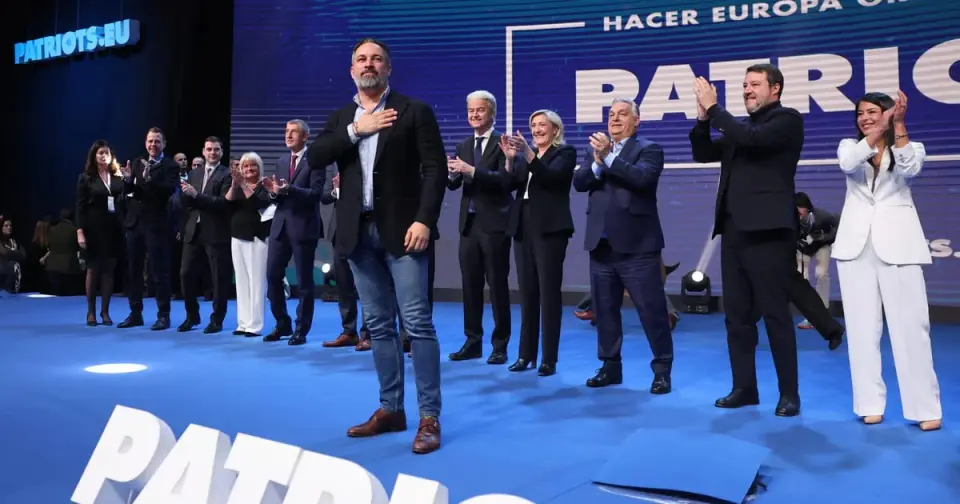
Kinga Gál, co-president of the Patriots for Europe group, stated that the far-right’s immediate priority is winning national elections in Spain, France, Italy, and Poland to reshape the European Council. The group aims to curb the European Commission’s power and return competences to member states. While the center-right European People’s Party has breached its traditional firewall against far-right cooperation, Gál expects a complete dismantling of this barrier in the coming years. The strategy involves coordinating on migration, energy costs, and economic policy, with the ultimate goal of influencing the 2029 European Parliament elections.
Key points
- Kinga Gál, co-president of Patriots for Europe, identified national election victories as the prerequisite for changing EU policy.
- The far-right aims to reduce the European Commission’s authority and return powers to member states.
- The center-right European People’s Party has already passed legislation with far-right support, breaching previous cooperation barriers.
- Gál expressed optimism that Vox will enter the Spanish government after the November 29 election.
- The group plans to coordinate on migration, energy costs, and economic growth before potentially merging with other right-wing parliamentary factions.
Background
Recent events in Poland, including a far-right motivated shooting in Kraków and large independence marches, have highlighted rising nationalist sentiment. In Spain, conservative leader Alberto Núñez Feijóo is poised to form a coalition with far-right Vox, potentially marking the first government with far-right ministers since the end of the Franco dictatorship. These developments occur amid a broader European trend where traditional center-left and center-right parties are losing support due to economic stagnation and housing crises.
How outlets are covering it
POLITICO highlights the strategic coordination within the Patriots for Europe group, emphasizing Gál’s focus on national elections as a stepping stone to EU influence. The Guardian frames the upcoming 2027 elections as a 'supercycle' that could hollow out the EU’s foundations, noting that a cohesive Eurosceptic bloc could create a formidable blocking minority in the Council. The Middle East Council on Global Affairs argues that the rise of the far-right stems from a failure of the social contract and poor distribution of economic benefits, rather than immigration alone. Hürriyet Daily News notes that while electoral gains could shift the balance of power, radical-right parties remain divided on issues like support for Ukraine, which may prevent a unified front.
Why it matters
The outcome of the 2027 national elections could determine whether the EU can maintain its current legal and political framework. A shift in power to far-right leaders in major member states like France, Italy, and Poland could lead to paralysis in decision-making on budgets, enlargement, and defense. This could also impact the EU’s ability to support Ukraine and enforce rule-of-law standards, potentially leading to a loss of relevance for the European project.
What to watch
Spain holds a general election on November 29, followed by presidential and parliamentary elections in France in 2027. Italy and Poland are also expected to hold elections in 2027. The far-right groups plan to assess their strength after these national votes before deciding on the form of cooperation within the European Parliament. The 2029 European Parliament election is seen as the next major milestone for the far-right’s influence in Brussels.
- Far right wants to transform the EU after big national election wins POLITICO.eu
- Europe is entering a ‘supercycle’ of national elections. Their outcomes could shake the EU’s foundations The Guardian
- Europe’s year of political paralysis The Economist
- Europe’s Predicament: Immigration and the Social Contract Middle East Council on Global Affairs
- European elections could shift EU balance of power Hürriyet Daily News
Want the full story? Read the original reporting
Read on POLITICO.eu