
France school protests slow but remain localized as government offers teacher deployment
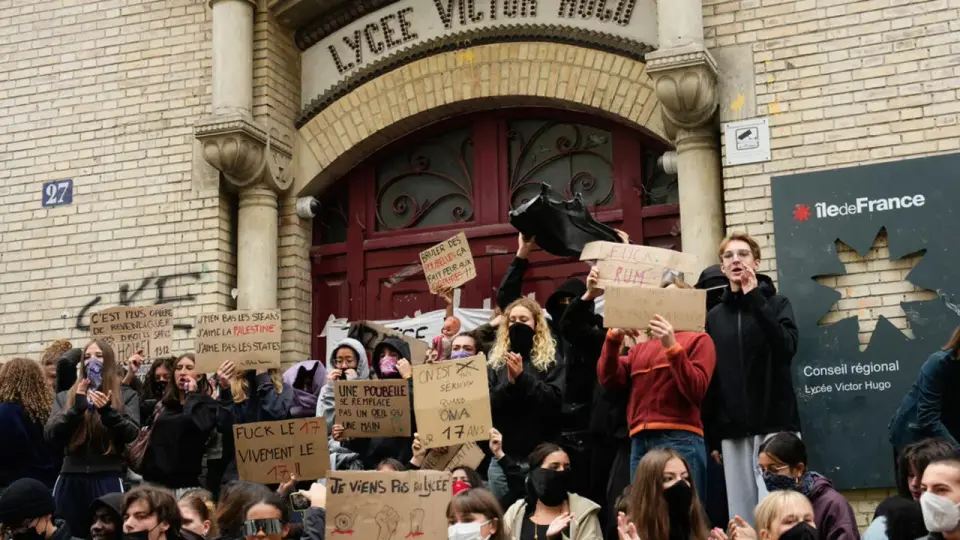
French high school protests have seen a 'marked slowdown' with only 141 schools closed on Friday, down from 157 on Thursday, according to the education ministry. However, student unions reject government concessions as insufficient, planning a new wave of demonstrations for Tuesday. The government pledged to deploy 3,000 substitute teachers, while the police watchdog opened 24 probes into alleged brutality, including a 15-year-old losing a hand in Lens. Nearly 6,800 people, mostly minors, have been detained since mid-September, and the UN has expressed concern over the violence.
Key points
- The number of closed secondary schools dropped to 141 on Friday, representing less than 4% of the 3,700 high schools in France, indicating a 'marked slowdown' in the protest movement according to a government source.
- The education minister pledged to deploy 3,000 substitute teachers within hours to address staffing shortages, a move student union representative Marius Mesnil dismissed as 'a few crumbs' that do not meet their demands.
- The General Inspectorate of the National Police (IGPN) launched 24 investigations into police conduct following allegations of brutality, including a 15-year-old losing a hand in Lens and a 14-year-old suffering a fractured jaw from a close-range tear gas grenade in a Paris suburb.
- The Ministry of Justice reported that over 6,800 people have been taken into custody since mid-September, with 86% being minors; 21 individuals have been jailed and 2,376 are facing charges.
- A government consultation platform received 67,000 submissions, with timetables, specifically early starts and long school days, identified as the top grievance among students.
- NBA player Victor Wembanyama voiced support for the movement, calling the issues 'systemic inequalities,' while the UN human rights agency urged all parties to keep protests peaceful.
Background
The current situation follows a rapid escalation in early October, where protests over overcrowded classrooms and budget cuts triggered nationwide arson and riots. Prime Minister Sébastien Lecornu previously labeled the unrest 'urban violence,' leading to thousands of detentions. The recent Lens incident, where a student lost a hand, intensified debates over police use of force and prompted the suspension of stun grenades. These events have placed significant political pressure on the government ahead of next year's presidential election.
Why it matters
The protests highlight a deepening crisis in French education infrastructure and public order. The government's attempt to balance fiscal constraints with immediate resource deployment is being tested by sustained youth mobilization and international scrutiny. The high number of minor detentions and police misconduct probes could have lasting implications for civil liberties and state credibility in the lead-up to national elections.
What to watch
Student organizations are calling for a 'Phase V' of demonstrations on Tuesday, despite ongoing negotiations between the government and youth representatives. The IGPN's 24 probes into police conduct will likely yield findings that could influence future policing strategies. The deployment of 3,000 substitute teachers will be monitored to see if it alleviates the staffing shortages that sparked the initial grievances.
Want the full story? Read the original reporting
Read on France 24