
German Industrial Collapse and AfD Surge Signal a New 'China Shock'
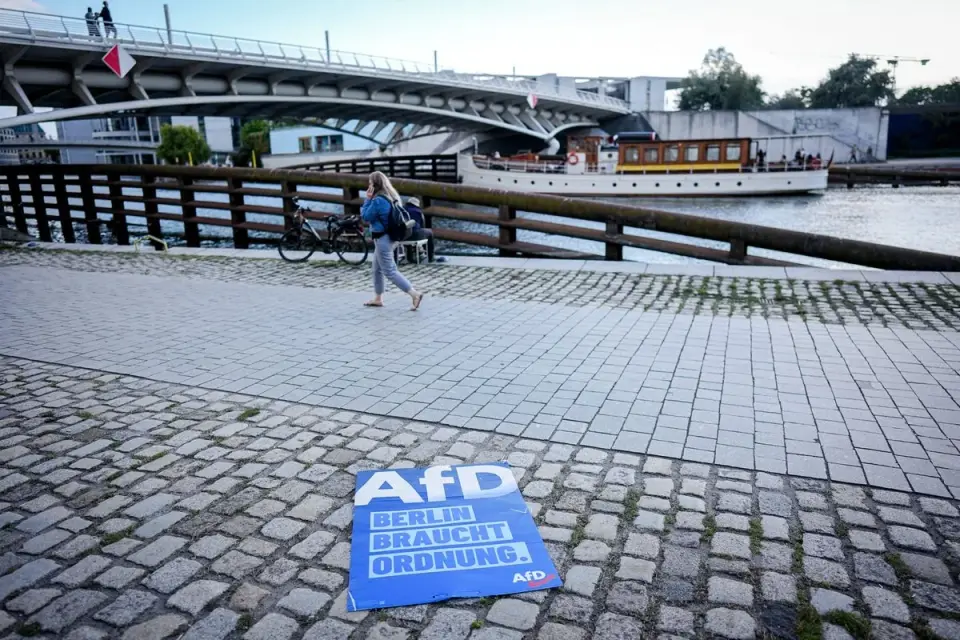
The Alternative für Deutschland (AfD) has surged to 44% in Saxony-Anhalt, threatening Germany’s political 'firewall' against the far right. Analysts link this rise to a 'China Shock' in the auto sector, where Chinese competition has caused a 12% drop in German exports and mass layoffs. While the AfD dominates the East, economic decline in Western industrial hubs may soon mirror these results.
Key points
- AfD won 44% of the vote in Saxony-Anhalt, the highest share for a far-right party in a German state election since the 1930s.
- German exports to China have fallen by 12%, with auto exports dropping 66% between 2022 and 2025 due to Chinese EV dominance.
- Volkswagen plans to cut 30,000 jobs and close three factories, impacting a sector that accounts for 20% of Germany’s economic output.
- The AfD is polling at 37% in Mecklenburg-Vorpommern and 18% in Berlin, where it is actively courting voters with migration backgrounds.
- Economists compare the current situation to the US 'China Shock,' where deindustrialization fueled right-wing political shifts in the 2010s.
Background
Germany’s political establishment maintained a 'Brandmauer' or firewall, refusing to cooperate with the AfD to protect democracy. This consensus, rooted in the 'militant democracy' principles of the post-WWII era, has faced increasing pressure as the AfD gains ground in both Eastern and Western states. Previous coverage in our archive focused on unrelated US immigration enforcement issues, but the current German crisis highlights a broader European trend of right-wing populism fueled by economic anxiety and deindustrialization.
How outlets are covering it
Sources diverge on the primary drivers of the AfD’s success. Compact Magazine emphasizes the economic 'China Shock,' arguing that the collapse of German exports and auto-sector layoffs will soon push Western voters right, mirroring the US experience. The Guardian focuses on historical grievances, suggesting that East German voters are reacting to decades of perceived 'patronization' by the West and the failure of reunification promises, rather than just economic factors. The New Yorker highlights the failure of the 'firewall' strategy, noting that mainstream parties have focused on defense rather than addressing the social and economic alienation that fuels the AfD’s support. The Conversation points to a new strategy by the AfD to court immigrant voters in Berlin, using a 'conditional belonging' narrative that distinguishes between established and new migrants, a tactic that has seen mixed success in other European countries like Spain and France.
Why it matters
The AfD’s rise threatens to dismantle Germany’s post-war democratic consensus and could lead to the first far-right state government since the Nazi era. The economic fallout from the 'China Shock' risks destabilizing Germany’s export-dependent model, potentially leading to mass unemployment and further political polarization. If the AfD gains power in Western industrial states, it could reshape EU trade policy and Germany’s relationship with China, with significant implications for global supply chains and European security.
What to watch
Germany will hold state elections in Mecklenburg-Vorpommern and Berlin on September 20, 2026. The AfD is expected to perform strongly in both, potentially breaking the 'firewall' in Berlin. Federal elections are scheduled for 2029, where the AfD’s national vote share will determine whether it can influence federal policy or form a government. The German government is considering protectionist measures against Chinese EVs, but companies like Siemens and Volkswagen warn that such actions could trigger retaliatory measures that further harm German exports.
- Germany’s China Shock Will Push Voters Right compactmag.com
- I know why many east Germans vote AfD. And no, it’s not an inherited longing for dictatorship | Carolin Würfel theguardian.com
- How to Protect Democracy newyorker.com
- How Germany’s far-right AfD is courting the voters it promises to deport The Conversation
- The Rise of Germany’s Far Right Reflects a Systemic Crisis Jacobin
Want the full story? Read the original reporting
Read on compactmag.com