
Iceland’s ‘No’ Vote Exposes Limits of EU’s Security Pitch
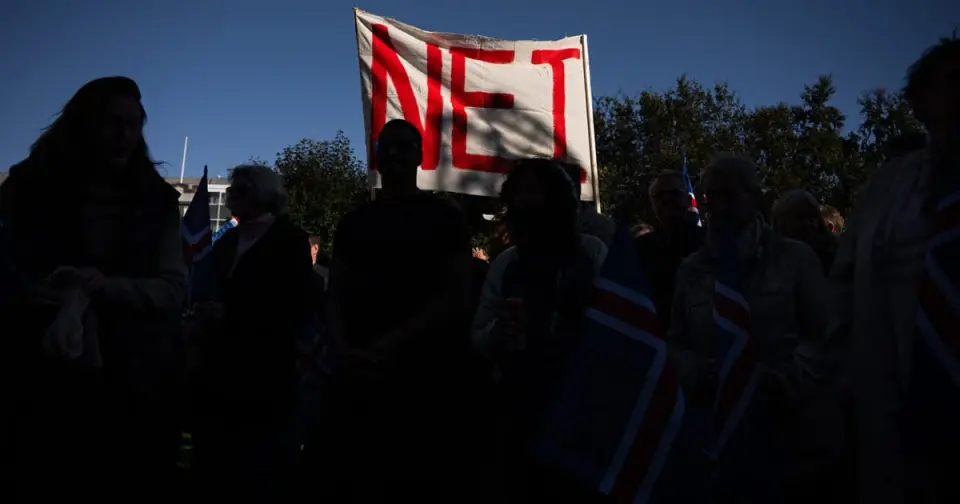
Icelanders rejected resuming EU accession talks in a narrow 52.8% to 47.2% referendum, marking the highest voter turnout in nearly two decades. The result challenges Brussels’ narrative that global instability would make EU membership more attractive. While the EU retains strong appeal for poorer eastern states, Iceland’s rejection highlights that wealthy nations already integrated via the EEA and Schengen may not value full membership enough to surrender sovereignty over key sectors like fishing.
Key points
- Iceland voted 52.8% against reopening EU accession negotiations, with 82.6% turnout, the highest since 2009.
- The EU framed the vote as a test of its global appeal amid rising security threats, but the result was a setback for Brussels.
- Iceland already adopts roughly 75% of EU law through the EEA and Schengen, making full membership’s marginal benefits less compelling.
- Fishing rights, sovereignty, and economic costs were primary reasons for the 'No' vote, outweighing security concerns.
- The result may slow momentum for other candidates like Montenegro, though the EU remains focused on eastern flank security.
Background
Iceland previously paused its EU bid in 2015 after a referendum, having opened 27 of 35 negotiating chapters. The 2026 vote followed renewed interest driven by geopolitical instability, including Russia’s war in Ukraine and US threats regarding Greenland. The EU had hoped Iceland’s return would signal broader appeal, but the outcome reflects a unique case where existing integration suffices.
How outlets are covering it
Politico and The New York Times emphasize the blow to the EU’s image, noting that security fears did not sway Icelanders. Euronews highlights that the result reflects Iceland’s specific economic circumstances rather than a broad rejection of the EU. The Guardian argues the vote is not a 'Brexit-style' rejection but a choice to maintain close ties without full membership, citing the success of the EEA model. Far-right leaders like Marine Le Pen and Nigel Farage seized on the result to argue for national sovereignty, while EU officials expressed disappointment but maintained support for other candidates.
Why it matters
The vote underscores that the EU’s appeal is not universal, especially for wealthy, integrated nations. It may force Brussels to rethink its enlargement strategy, focusing more on security-driven candidates in the east while acknowledging that existing partners like Iceland and Norway may not seek full membership despite global instability.
What to watch
The EU is expected to focus on advancing candidates like Montenegro, Albania, and Ukraine, while Iceland will remain a close partner through the EEA. The result may influence future debates on EU security and sovereignty, particularly as the bloc navigates relations with the US and Russia.
- What Iceland’s snub means for the EU’s place in the world politico.eu
- What does Iceland’s “No” vote mean for the EU’s enlargement policy? Euronews.com
- Iceland’s close ties with EU mean no vote is not a Brexit-style rejection The Guardian
- Iceland Votes to Steer Clear of European Union Talks The New York Times
- Iceland to seek new security partnerships after voters reject EU accession talks Reuters
Want the full story? Read the original reporting
Read on politico.eu