
Iceland Rejects EU Talks, Highlighting Limits of Union’s Appeal to Wealthy Nations
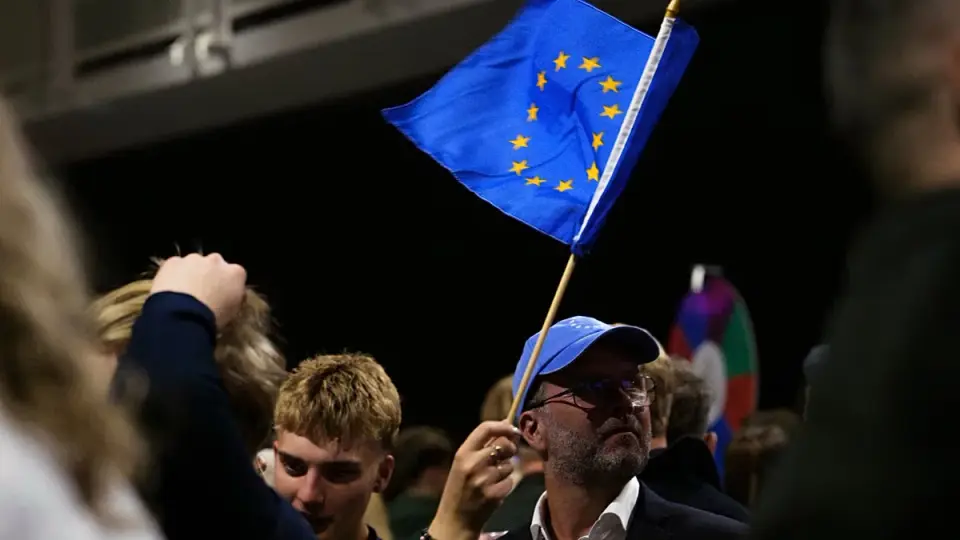
Icelandic voters rejected resuming EU accession talks on August 29, 2026, with 52.8% voting 'no' against 47.2% 'yes'. The result, which saw a record 82.5% turnout, signals that wealthy, stable democracies may not prioritize full EU membership over existing economic arrangements. While nine poorer candidate nations actively pursue accession, Iceland, Norway, and Switzerland prefer the European Economic Area (EEA) model, which offers single market access without political integration. The vote underscores that for prosperous nations, the political costs of joining outweigh the benefits, particularly regarding sovereignty and fisheries.
Key points
- Icelandic voters rejected restarting EU accession negotiations by a margin of 52.8% to 47.2%, with approximately 12,600 votes separating the sides.
- The referendum followed a 2009 application that was paused in 2013; the current government brought the vote forward due to geopolitical tensions, including US President Donald Trump’s rhetoric regarding Greenland.
- Fisheries policy was the decisive factor, with 90% of Icelandic fishing companies opposing membership due to fears of losing control under the EU’s Common Fisheries Policy.
- Iceland remains in the EEA and Schengen Area, retaining single market access and visa-free travel without joining the customs union or eurozone.
- Prime Minister Kristrún Frostadóttir stated the issue would not be revisited while her government remains in power, though the result does not permanently rule out future talks.
Background
Iceland initially applied for EU membership in 2009 following the 2008 financial crisis but halted talks in 2013 after a change in government. The country has been part of the EEA since 1994, adopting roughly 75% of EU law without full political integration. This pattern mirrors Norway, which rejected membership in 1972 and 1994, and Switzerland, which relies on bilateral agreements. The current vote contrasts with nine candidate nations, including Ukraine and Montenegro, which are actively pursuing accession for security and economic stability.
How outlets are covering it
Euronews and the BBC emphasize that the 'no' vote reflects a structural limit to the EU’s appeal, where economic integration does not automatically lead to political membership. They highlight that wealthy nations like Iceland have viable alternatives to full membership. CNN focuses on the geopolitical context, noting that while security concerns regarding Arctic tensions and US actions influenced the debate, economic and sovereignty issues dominated voter decisions. National Review argues that the result validates Iceland’s existing arrangements, suggesting that the EU’s offers were insufficient to offset the loss of sovereignty and control over fisheries. All sources agree that the vote was close, with polls showing a near tie before the final count, and that the outcome was driven by domestic economic interests rather than broader geopolitical fears.
Why it matters
The Icelandic vote challenges the EU’s narrative that it is attractive to all European democracies, not just those seeking rescue or reform. It highlights a potential ceiling for enlargement among wealthy, stable nations that already benefit from the single market. For Brussels, this complicates the argument that the EU is a universal geopolitical project, suggesting that political integration requires a stronger value proposition than economic access alone. The result also reinforces the importance of sector-specific concerns, such as fisheries, in shaping national identity and policy decisions in small, resource-dependent economies.
What to watch
Iceland will remain in the EEA and Schengen Area, maintaining its current trade and travel arrangements. Prime Minister Frostadóttir has stated that EU membership will not be revisited during her term, but the door is not permanently closed. The EU may need to refine its communication strategy to better explain the benefits of political integration to wealthy candidates. Meanwhile, other candidate nations like Montenegro and Albania will continue their accession processes, potentially using Iceland’s rejection as a cautionary tale for the political costs of joining.
- Why so many countries want to join the EU, except Europe’s richest Euronews.com
- A tiny nordic nation weighs moving closer to Europe under the shadow of Trump CNN
- Iceland votes against restarting EU membership talks BBC
- EU enlargement hits an Icelandic snag economist.com
- We’ll Keep the Fish, Thanks National Review
Want the full story? Read the original reporting
Read on Euronews.com