
India’s government pivots from crackdown to Gen Z outreach after youth protests force ministerial resignation
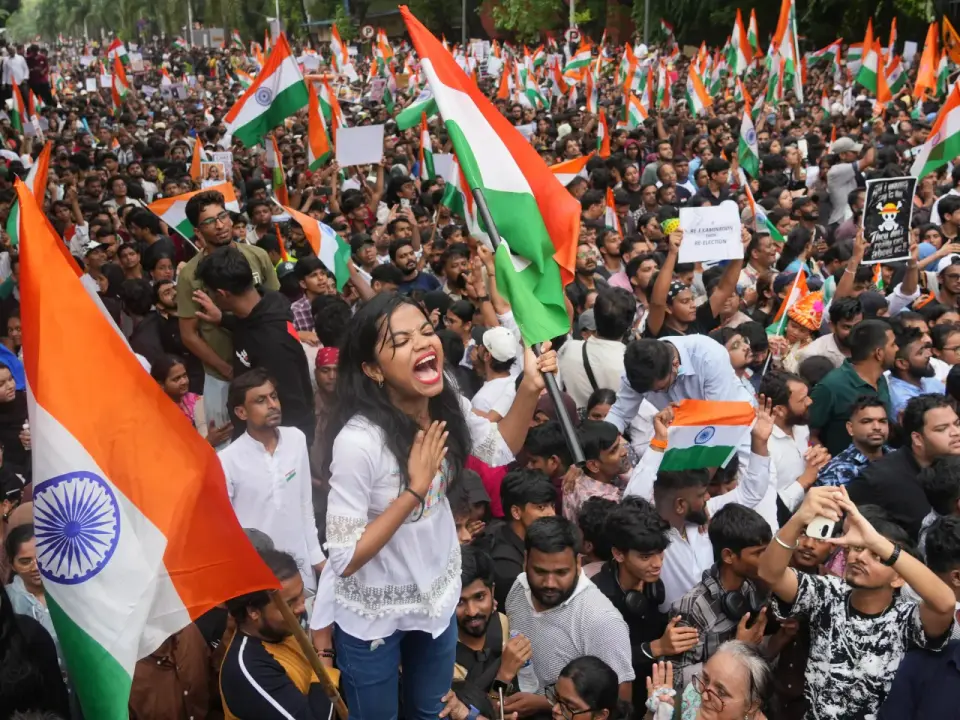
Following weeks of mass demonstrations, the Indian government has halted arrests and launched a social media campaign to win back young voters after the Cockroach Janta Party (CJP) forced Education Minister Dharmendra Pradhan to resign. While the Supreme Court ordered the release of minors and an independent investigation into police brutality, authorities continue to file cases against protesters for online criticism. The movement, sparked by leaked medical exam papers and a judge’s slur, has exposed deep structural issues in India’s education and job markets, challenging Prime Minister Narendra Modi’s long-standing political dominance.
Key points
- The Supreme Court ordered the release of all under-18s arrested during the protests and mandated an independent investigation into police use of force, including pellet guns and tear gas.
- BJP-led state governments in West Bengal, Maharashtra, Bihar, and others have withdrawn cases against protesters, though the central government has not provided written assurances that all First Information Reports (FIRs) will be dropped.
- Delhi Police filed FIRs against social media users for 'derogatory' posts against Prime Minister Modi, demanding user data from X, while activists have petitioned courts to declare mass surveillance unconstitutional.
- The government launched a new social media campaign targeting Gen Z, using pop culture references and casual video formats to counter protest narratives and highlight infrastructure achievements.
- The protests were triggered by leaked medical entrance exam papers, which forced students to retake tests, and were amplified by Chief Justice Surya Kant’s comparison of unemployed youth to 'cockroaches'.
Background
The current unrest follows the resignation of Education Minister Dharmendra Pradhan in late July 2026, a rare concession for the Modi government. Earlier in the month, activist Sonam Wangchuk was forcibly removed from a hunger strike at Jantar Mantar, escalating tensions. The movement has roots in the CJP’s viral online presence, which gathered millions of followers after a judge’s slur against unemployed youth. Previous protests against the Citizenship Amendment Act in 2019 were led by specific community groups, whereas the current movement draws support from a broader base, including Hindu students who previously supported the BJP.
How outlets are covering it
Al Jazeera emphasizes the government’s dual strategy of a 'measured crackdown' on arrests and a new effort to 'woo' youth through social media, noting that while cases were withdrawn in several states, digital surveillance and FIRs for online speech continue. The Guardian highlights the movement’s success in damaging Modi’s image as a 'strongman' and notes that the protests focused on universal grievances like exam corruption, unlike previous targeted movements. Time Magazine provides a structural analysis, arguing that the protests exposed the failure of India’s 'meritocracy' myth and the lack of jobs for graduates, noting that the CJP’s non-partisan nature allowed it to mobilize a broader demographic than traditional opposition parties.
Why it matters
The protests mark a significant shift in Indian politics, as the youth, a core demographic for the ruling BJP, have openly challenged the government’s authority. The resignation of a cabinet minister under public pressure is unprecedented for Modi’s tenure. The government’s pivot to digital outreach and the Supreme Court’s intervention highlight the tension between state control and democratic accountability. The underlying issues of education quality and youth unemployment remain unresolved, suggesting that the political instability may persist despite the immediate concessions.
What to watch
The government will likely continue its social media campaign to regain youth support while monitoring the Supreme Court’s investigation into police conduct. Protest leaders have demanded written assurances that no further legal action will be taken against demonstrators. The long-term impact depends on whether the government implements the promised education reforms or if the movement reorganizes to address deeper structural issues like unemployment and curriculum changes.
- How has the Indian government responded to ‘Cockroach’ protests? aljazeera.com
- Opinion | India’s Gen Z just made Modi blink The Washington Post
- Cockroach protests rattle Modi: inside the 31 July Guardian Weekly The Guardian
- How India’s Young Faced Down Modi Time Magazine
- India’s youth have broken Modi’s spell aljazeera.com
Want the full story? Read the original reporting
Read on aljazeera.com