
India’s voter purge sparks mass unrest as 130 million names vanish from rolls
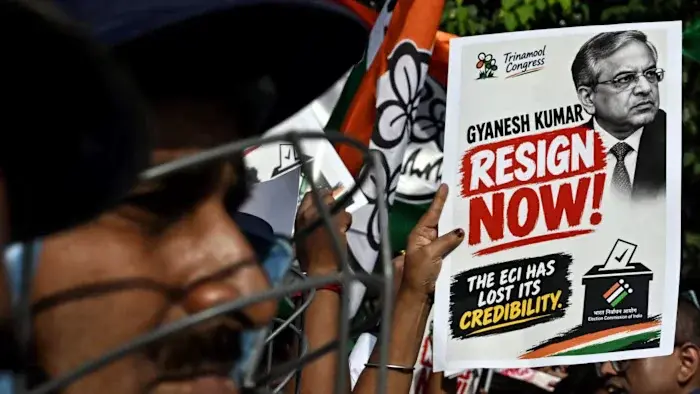
India’s Special Intensive Revision (SIR) has removed 130 million names from voter rolls, triggering nationwide protests. Critics allege the purge disproportionately targets Muslims and benefits the ruling BJP, while the government defends it as a necessary cleanup of duplicates and deceased voters.
Key points
- The Election Commission’s SIR exercise has deleted 130 million entries, a 15% drop in the electorate, with critics calling it the largest disenfranchisement in history.
- Protests led by the youth-led 'Cockroach Janta Party' have forced the resignation of the Education Minister and now demand the ouster of Chief Election Commissioner Gyanesh Kumar.
- Critics argue the SIR disproportionately removes Muslims, women, and migrants, potentially altering election outcomes in states like West Bengal and Bihar.
- The government defends the SIR as a standard cleanup of duplicates and deceased voters, while the opposition alleges political manipulation and 'vote theft'.
- The SIR requires voters to prove citizenship, a first in India, shifting the burden of registration onto individuals and disproportionately affecting the poor and undocumented.
Background
India has conducted eight major voter roll updates since 1950, but the current SIR is the first to centralize verification and require existing voters to prove their eligibility. Previous updates, such as the 2002-2004 revision, were managed at the state level and did not challenge the eligibility of those already on the rolls. The SIR follows a pattern of democratic backsliding concerns, including the 2019 Citizenship Amendment Act and the Assam National Register of Citizens, which critics argue targeted Muslims.
How outlets are covering it
The Financial Times and Al Jazeera emphasize the disproportionate impact on Muslims and the potential political benefit to the BJP, citing data from West Bengal and Hyderabad. The New Yorker highlights the cross-sectional nature of the protests, including middle-class and upper-caste youth, and the government's heavy-handed crackdown. GZERO Media frames the SIR as part of a broader 'cockroach problem' for Modi, linking it to youth unemployment and economic anxieties. The government and BJP officials, including Ravi Shankar Prasad, defend the SIR as a necessary cleanup, while the Election Commission claims its decisions are 'unanimous' and 'standard administrative practice'.
Why it matters
The SIR threatens the integrity of India's world's largest democracy, potentially altering the outcome of upcoming state and national elections. The mass disenfranchisement and political polarization could undermine public trust in the electoral process and exacerbate social divisions, particularly between Hindus and Muslims. The protests also signal a shift in Indian politics, with youth-led movements challenging the status quo and demanding democratic reforms.
What to watch
The Election Commission is expected to release the final voter rolls in the coming months, with some states, like Telangana, in the third phase of the SIR. The government may face further legal challenges from the opposition, including petitions to the Supreme Court. The protests are likely to continue, with the 'Cockroach Janta Party' demanding the resignation of Gyanesh Kumar and broader democratic reforms.
- Inside India’s electoral overhaul that removed 130mn voters Financial Times
- What is fuelling India's protests over changes to voter lists? Reuters
- Is This the Beginning of the End of Indian Democracy? The New Yorker
- Modi’s Cockroach Problem GZERO Media
- India’s mass voter purge is hollowing out democracy Al Jazeera
Want the full story? Read the original reporting
Read on Financial Times