
Brazil Amazon Deforestation Hits Record Low Amid Election Uncertainty
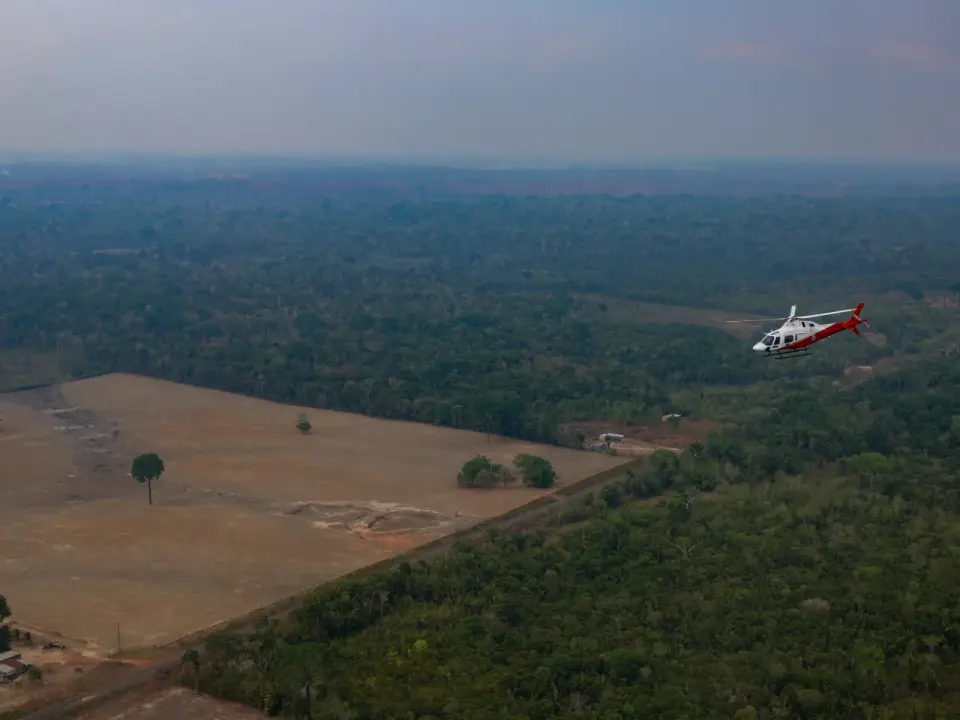
Brazil’s Amazon deforestation has reached its lowest level since records began in 1988, with forest clearance dropping 42 percent to 3,335 square kilometers. This historic decline, attributed to stricter enforcement under President Lula da Silva, provides a significant political boost ahead of the October 25 presidential runoff against Flavio Bolsonaro, who advocates for weaker environmental protections.
Key points
- Inpe’s Prodes satellite data shows 3,335 sq km of Amazon forest cleared in the 12 months through July, a 42 percent drop from the previous year and the lowest since 1988.
- The previous record low was 4,571 sq km in 2011-12; annual losses peaked at nearly 30,000 sq km in the mid-1990s.
- Deforestation has fallen every year since 2022, with a cumulative 71.2 percent decrease over four years, driven by increased monitoring and penalties for illegal logging.
- The Cerrado savanna also saw its lowest deforestation since 2001, dropping 24 percent to 5,517 sq km, reversing a trend where it served as a substitute for Amazon clearance.
- President Lula da Silva aims for zero illegal deforestation by 2030, while his opponent, Flavio Bolsonaro, pledges to end illegal deforestation by 2029 but opposes 'radical environmental agendas' and prioritizes extractive industries.
- Pará, Mato Grosso, and Amazonas recorded the highest deforestation levels in 2026, but all saw declines of over 45 percent compared to the previous year; only Roraima saw a slight increase.
Background
This development follows a period of significant environmental regression under former President Jair Bolsonaro (2019-2022), during which Amazon deforestation rose by nearly 60 percent compared to the prior four years. Lula da Silva took office in 2023 with a pledge to reverse these trends, implementing stronger enforcement measures that have led to consistent annual declines since 2022. The current record low stands in stark contrast to the peak losses of nearly 30,000 sq km in the mid-1990s and the 11,600 sq km average annual loss during Bolsonaro’s term.
How outlets are covering it
Al Jazeera and BBC highlight the 'stratospheric' and 'historic' nature of the drop, crediting Lula’s enforcement policies and framing it as a major political victory ahead of the election. The Guardian emphasizes the 'knife edge' uncertainty, noting that while the data is a success, the outcome depends on the October 25 runoff. The Guardian also details the stark contrast between Lula’s sovereignty-focused stance and Flavio Bolsonaro’s alignment with US interests and extractive industries, warning that a Bolsonaro victory could reverse these gains. All sources agree on the magnitude of the decline but differ in emphasis: Al Jazeera and BBC focus on the achievement, while The Guardian focuses on the political risk and regional disparities, such as the slight increase in Roraima, a Bolsonaro stronghold.
Why it matters
The record low in Amazon deforestation demonstrates that political will and enforcement can significantly curb forest loss, offering a model for other nations. However, the upcoming election poses a direct threat to these gains, as the opposing candidate advocates for policies that prioritize resource extraction over environmental protection. The outcome will determine whether Brazil continues its trajectory toward zero illegal deforestation by 2030 or reverses course, with implications for global climate stability and biodiversity.
What to watch
The presidential runoff on October 25 will determine the future of Brazil’s environmental policies. If Lula da Silva wins, he is expected to continue his enforcement strategies and pursue his 2030 goal. If Flavio Bolsonaro wins, he may weaken environmental protections, potentially leading to a resurgence in deforestation. Conservation groups are closely monitoring the election results, as they will dictate whether Brazil moves toward the end of deforestation or the end of the forest.
- Brazil’s Amazon deforestation hits lowest level on record Al Jazeera
- Brazil sees record fall in Amazon deforestation as key election looms BBC
- Brazilian Amazon deforestation falls to lowest on record as pivotal vote looms The Guardian
- Deforestation in Brazil's Amazon falls to all-time low Reuters
- Brazil: Amazon deforestation lowest in nearly 40 years DW.com
Want the full story? Read the original reporting
Read on Al Jazeera