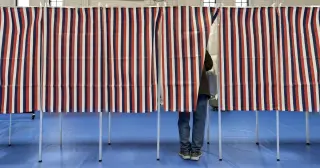
Despite 16 years of electoral tinkering by Viktor Orban and his Fidesz party—redistricting, voting-rule changes, and other tactics—the liberal opposition in Hungary could still win the April 12 election, according to our analysis of how the system works and how it might be beatable.
International observers urged a violence-free Serbia local election after clashes between police and voters in Crvenka during voting on March 29, 2026, warning that unrest could undermine the process and draw scrutiny over security and democratic legitimacy.
Viktor Orbán’s four-decade-rule in Hungary faces a potential end in the April 12 vote, as Péter Magyar’s Tisza party leads polls and draws huge crowds. The Bulwark argues Hungary is an autocratic, crony state where Orbán controls the constitution, judiciary, media and electoral rules, so only a genuinely clean election can determine the outcome. Magyar’s energetic, nationalist campaign challenges the regime’s legitimacy, but Orbán may resort to drastic measures, including disinformation and alleged voter intimidation by local officials to tilt the results. A narrow Magyar win could force a coalition with the far-right Mi Hazánk; a landslide could topple the regime, though Kremlin-linked campaigns and external interference add uncertainty. Polls vary, with some showing Magyar ahead and others favoring Fidesz, making the race a pivotal test for Hungary’s democratic trajectory.
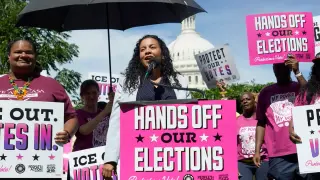
No Kings protests drew more than 3,300 rallies across all 50 states in a nonviolent push against what organizers call Trump-era authoritarianism, as the president’s approval ratings hit new lows.
AZ Sen. Ruben Gallego called Attorney General Merrick Garland a 'coward' for taking too long to prosecute Jan. 6 participants, arguing the DOJ sacrificed democracy to protect the department. Garland’s 2022 appointment of Special Counsel Jack Smith is cited by Gallego amid Democratic frustration with the pace of investigations into Trump, a critique echoed in a broader live-feed of Capitol Hill news.
Tens of thousands gathered at Prague’s Letná Park, with organizers estimating up to 200,000, to protest Prime Minister Andrej Babiš's new coalition. They warned the government threatens democracy and could steer the Czech Republic toward autocracy, opposing his stance on Ukraine, backing a Russian-style foreign-agent law, and raising concerns about plans to fund public broadcasters—alongside immunity votes that keep Babiš from standing trial until 2029.
Prominent German philosopher Jürgen Habermas has died at 96, leaving seven decades of influence on democracy theory, the rule of law, and European integration; famed for his work on the public sphere and democratic consensus, his ideas shaped debates across Germany and beyond, including critiques of political leaders. His last book, Things Needed to Get Better, appeared last December. He died in Starnberg near Munich and is survived by two of his three children.
A record about 280 political parties had registered by the deadline to participate in Haiti’s first general election in ten years, though not all will qualify for the ballot, signaling a crowded and potentially fragmented race.
As Nepal gears up for its March election, former king Gyanendra’s public appearances and royalist rhetoric spotlight a lingering but limited appeal for a constitutional monarchy, with a small party pushing for Hindu-state restoration while critics say the monarchy remains obsolete in a secular republic, despite nostalgia among some voters and ongoing political volatility.
60 Minutes interviews Reza Pahlavi in Paris after Ayatollah Khamenei’s death, with him arguing the moment offers Iran’s “chance” for a democratic transition and saying he would serve as a transitional leader rather than king. He outlines four core principles—territorial integrity, separation of religion from state, equality under the law, and a democratic process—supports dismantling Iran’s nuclear program, and says some security forces could defect with amnesty as Iranians push for change, while praising Trump for intervention and stressing that change must come from within Iranians, not foreign endorsement.
Antonio Tejero, the Guardia Civil officer who led the failed 1981 assault on Spain’s Congress, has died at 93 on the same day the government released 153 declassified documents about the coup. The files show intelligence figures were involved or aware, and some plotters sought to implicate King Juan Carlos, who refused to back the uprising and defended democracy in a televised address. Tejero, who had earlier been linked to a 1978 attempt, served a prison sentence before his release. The declassification aims to illuminate Spain’s transition and ongoing memory of the Franco era.
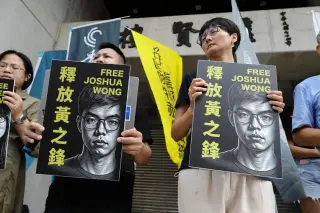
Kwok Yin-sang, 69, the father of US-based democracy activist Anna Kwok, was sentenced to eight months in prison under Hong Kong’s national security law after he tried to terminate his daughter’s insurance policy and withdraw HK$88,609. He was found guilty of attempting to deal with funds for an absconder—the first person in the city charged and convicted under that offense. Anna Kwok leads the Washington-based Hong Kong Democracy Council and condemned the move as despicable, noting the broader push under Hong Kong’s Article 23 security regime enacted in 2020 and 2024.
Democrats staged a two‑front media counterattack to Trump’s address: a live, Capitol-front rally dubbed the “People’s State of the Union” organized by MoveOn and MeidasTouch, and a humorous “State of the Swamp” rebuttal at the National Press Club with Defiance.org and Courier, all while maintaining traditional rebuttals (spanishing Spanberger and Padilla) afterward. The effort leverages left‑leaning media ecosystems and viral clips (Epstein messaging, ICE, affordability) to widen reach beyond TV, with hundreds of thousands or millions tuning in online. It signals Democrats treating information warfare as a key tactic, though it remains unclear whether these parallel broadcasts will sway voters in the midterms.
Venezuela’s post‑Maduro rebound could be durable only if a credible, inclusive political settlement is reached between the government and opposition to rebuild institutions, secure property rights, and implement reforms to debt and inflation. Without a broad political bargain and rule‑of‑law guarantees, an oil‑led recovery will remain fragile and vulnerable to reversals, even as international actors should support a balanced, inclusive path rather than a rushed electoral fix.
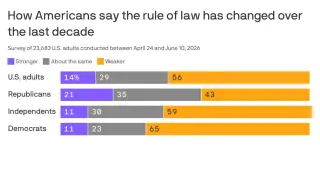
A PBS News/NPR/Marist poll taken Jan. 27–30, 2026 finds about two-thirds of Americans say the system of checks and balances isn’t working well, up sharply across parties as Trump expands executive power. Despite a Supreme Court ruling striking down his tariffs, most see Trump’s policies changing the country for the worse (55%). Analysts differ on whether this signals constitutional erosion or a return to pre-Watergate norms. The survey, which included 1,462 adults and 1,326 registered voters, notes Trump has signed 243 executive orders this term, and it comes ahead of his State of the Union and the midterms.