
Israel’s 2026 Election Deadlock: Polling Failures and Coalition Stalemate
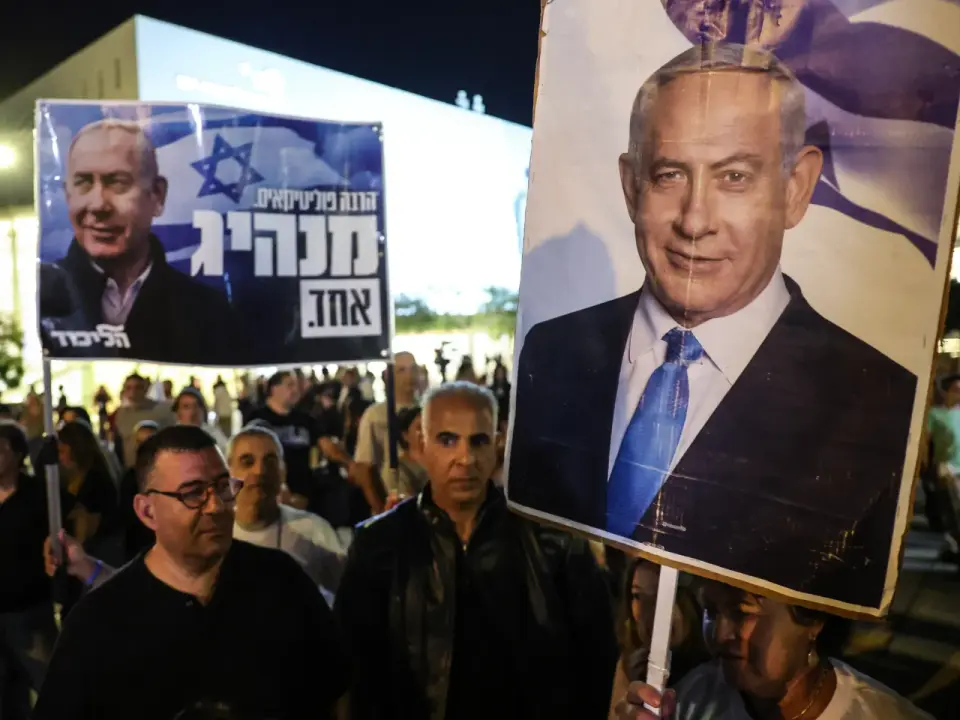
Israel’s October 27, 2026, election resulted in a fragmented parliament with no clear winner. Benjamin Netanyahu’s right-wing bloc holds 53 seats, while Gadi Eisenkot’s opposition bloc has 48, leaving both eight seats short of the 61 needed for a majority. The 19 seats held by Arab-led parties are pivotal for forming a government, but coalition talks remain deadlocked. President Isaac Herzog must decide who to task with forming a government, a process complicated by Netanyahu’s claims of electoral irregularities and the opposition’s internal divisions. Major broadcasters significantly misread the election, with polls underestimating Likud’s strength and Arab voter turnout.
Key points
- Netanyahu’s right-wing coalition secured 53 seats, while Eisenkot’s opposition alliance won 48 seats, leaving both blocs eight seats short of the 61-seat majority required in the 120-seat Knesset.
- Arab-led parties, the Joint List and Ra’am, achieved a historic 19 seats, making them crucial for any coalition, though they remain politically isolated and contentious within the opposition.
- Netanyahu’s Likud party claims the election was manipulated by foreign interference, a claim discounted by police but still under investigation by the Shin Bet, complicating coalition negotiations.
- President Isaac Herzog must decide who to task with forming a government, balancing Netanyahu’s request for a pardon in his corruption trial against the need to form a stable government.
- Major Israeli broadcasters significantly misread the election, with polls underestimating Likud’s strength and Arab voter turnout, leading to a 'Yom Kippur' moment for pollsters.
Background
This deadlock follows Israel’s October 27, 2026, general election, which resulted in a fragmented parliament with no clear winner. Previous coverage highlighted the uncertainty surrounding coalition formation, with Netanyahu remaining caretaker prime minister and Eisenkot struggling to assemble a majority. The 2026 election is the seventh in eight years, reflecting ongoing political instability.
How outlets are covering it
Al Jazeera emphasizes the political deadlock and the pivotal role of Arab and ultra-Orthodox parties in forming a government, noting the contentious nature of Arab support within the opposition. The Jerusalem Post focuses on the failure of major broadcasters to accurately predict the election results, highlighting the significant underestimation of Likud’s strength and Arab voter turnout. While Al Jazeera discusses the potential for an Eisenkot-led government with Arab support, The Jerusalem Post critiques the polling industry’s reliance on familiar providers and the need for more diverse survey methods.
Why it matters
The deadlock threatens to prolong political instability in Israel, potentially leading to a seventh election in eight years or a minority government. The role of Arab parties in coalition formation could reshape Israeli politics, while the polling failures highlight the need for more accurate and diverse survey methods. The outcome will also impact Israel’s relationship with the United States, particularly in the context of potential renewed conflict with Iran.
What to watch
President Isaac Herzog will begin consultations with all parties after the results are certified on Wednesday, November 4, 2026. The new Knesset is due to be sworn in on November 10, 2026. Coalition negotiations will continue, with the possibility of an Eisenkot-led government with Arab support or a Netanyahu-led government with ultra-Orthodox defections. The outcome will depend on the willingness of parties to cooperate and the potential impact of external factors, such as US midterm elections and renewed conflict with Iran.
- Israel political deadlock leaves Netanyahu’s future hanging in the balance Al Jazeera
- A Test for Israeli Democracy: Should Jews Ask Arabs to Join the Government? The New York Times
- Israel's polling failure: How major broadcasters misread the election The Jerusalem Post
- Israel’s opposition leaders back Eisenkot to oust Netanyahu Al Jazeera
- Opposition chiefs meet, agree to launch coalition talks, but path remains unclear The Times of Israel
Want the full story? Read the original reporting
Read on Al Jazeera