
Israel’s October 27 Election Hinges on Coalition Deadlock and War Fatigue
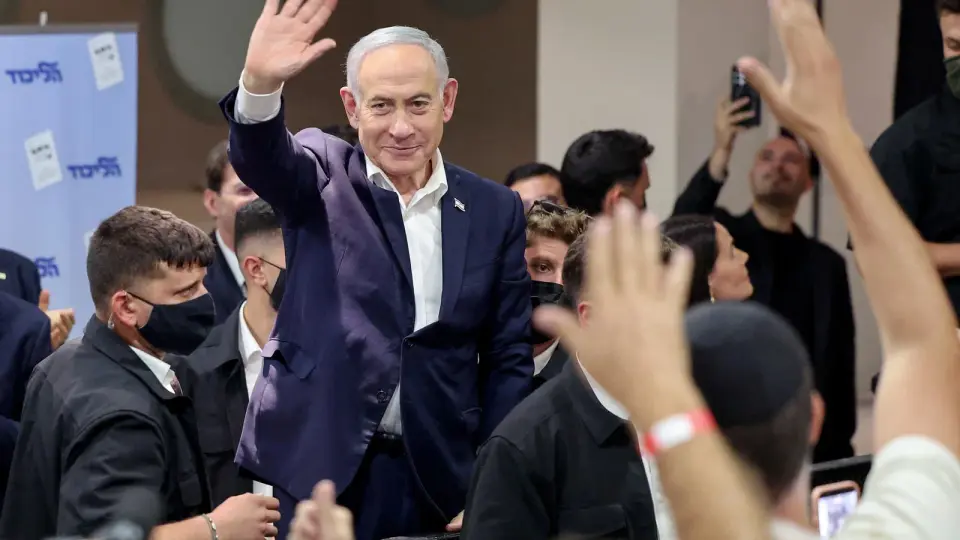
Israelis vote on October 27 in a pivotal election following the 2023 Hamas attacks and subsequent wars. Polls indicate a likely deadlock, as neither Prime Minister Benjamin Netanyahu’s bloc nor challenger Gadi Eisenkot’s coalition is projected to secure the 61 seats required for a majority. The outcome will likely depend on smaller parties, Arab voter turnout, and complex coalition negotiations.
Key points
- Neither Netanyahu’s right-wing bloc nor Eisenkot’s centrist opposition is projected to reach the 61-seat majority needed to form a government, making smaller parties and Arab votes potentially decisive.
- The election is viewed as a referendum on Netanyahu’s leadership, particularly regarding the security failures of October 7, 2023, and the ongoing wars in Gaza and Iran.
- Key issues include the conscription of ultra-Orthodox men, the economic cost of prolonged military spending, and the 2023 judicial overhaul, though the economy has not been a central campaign theme until recently.
- International implications are significant, with Netanyahu facing an ICC warrant and global isolation, while an opposition government might ease tensions but is unlikely to reverse core foreign policy stances on Palestinian statehood.
- Coalition negotiations may take weeks or months, with the possibility of a minority government, a unity government, or a second election if no majority is formed.
Background
This election follows Israel’s first vote since the October 7, 2023, Hamas attacks and the subsequent U.S.-Israeli war with Iran. Previous coverage highlighted the tight race between Netanyahu and Eisenkot, with polls showing a near-deadlock. President Isaac Herzog has rejected U.S. pressure to favor Netanyahu, vowing to base his decision on domestic facts. The complex coalition math and expatriate votes have been central to recent discussions.
How outlets are covering it
CNBC emphasizes the economic toll of the war and the role of smaller parties in breaking the deadlock, noting that both blocs are hawkish on security but differ on strategy. AP News highlights the focus on Netanyahu’s moral character and the ultra-Orthodox conscription issue, noting that the economy is a major concern for voters but not a central campaign theme. CNN provides a detailed analysis of the coalition math, noting that the opposition is fragmented and that Arab voter turnout could be pivotal. It also highlights the international isolation of Netanyahu’s government and the potential for an opposition government to ease tensions without reversing core policies. NBC News notes the personal stakes for Netanyahu, including his criminal cases, and the focus on security and accountability.
Why it matters
The outcome will determine Israel’s direction on security, the economy, and international relations. A Netanyahu victory could intensify the current hardline policies, while an opposition government might ease tensions but is unlikely to reverse core stances. The complex coalition negotiations could lead to prolonged political instability, affecting Israel’s ability to manage ongoing conflicts and international relations.
What to watch
Coalition negotiations will begin immediately after the election, potentially taking weeks or months. The outcome will depend on whether a majority can be formed, with the possibility of a minority government, a unity government, or a second election. International reactions will also be closely watched, particularly regarding the ICC warrant and global isolation.
- How war, security and coalition math are shaping the Israeli election CNBC
- Opinion | The Millions of Israelis in Netanyahu’s Corner The New York Times
- What to know about Israel’s election and the key ballot measures for the midterms: Morning Rundown NBC News
- A look at the main issues in Israeli elections seen as a referendum on Netanyahu AP News
- Israel is holding its most important election in years. Here’s what’s at stake CNN
Want the full story? Read the original reporting
Read on CNBC