
Binturong Profile: The Popcorn-Scented Arboreal Carnivore of Southeast Asia
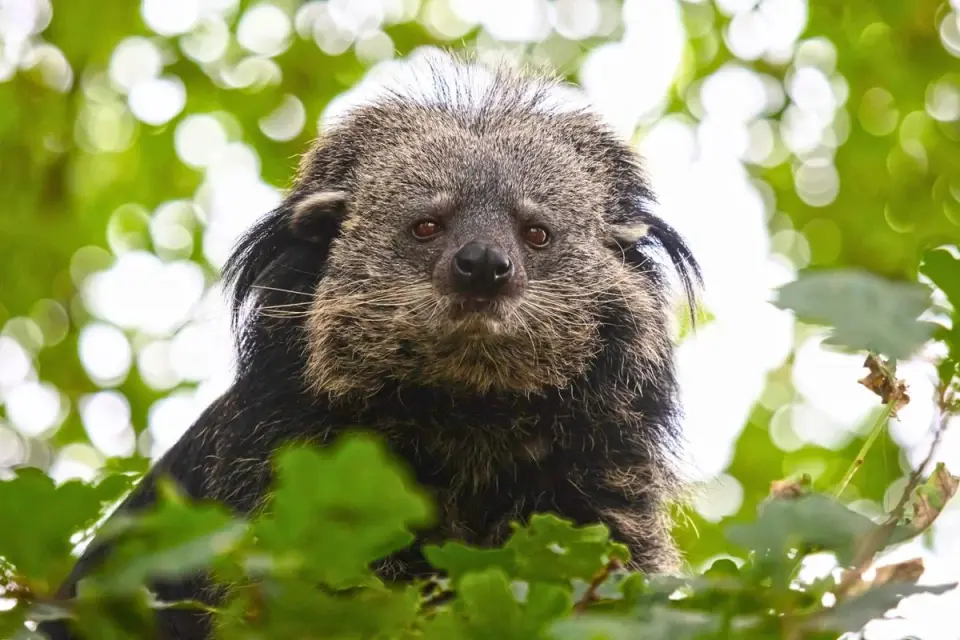
The binturong is a solitary, nocturnal mammal native to Southeast Asian rainforests, distinct from bears and cats despite its common name. It belongs to the Viverridae family, shares traits with civets, and possesses a prehensile tail for arboreal navigation. Its diet is primarily frugivorous, playing a key role in seed dispersal. The species is classified as Vulnerable due to habitat loss and illegal trade, and is known for a distinctive popcorn-like scent derived from urine compounds.
Key points
- Taxonomically, the binturong (Arctictis binturong) is a member of the Viverridae family, closely related to civets and genets, rather than being a bear or cat.
- Physical traits include shaggy black fur, a body length of 60 to 96cm, and a prehensile tail that functions as a fifth limb for gripping branches and hanging upside down.
- The species is omnivorous but primarily frugivorous, consuming figs and other fruits, which makes it a critical seed disperser for forest ecosystems.
- Binturongs are classified as Vulnerable on the IUCN Red List, facing threats from deforestation, palm oil plantations, and the illegal wildlife trade.
- The animal emits a scent resembling buttered popcorn, caused by the chemical 2-acetyl-1-pyrroline in its urine, which is used for territorial marking and communication.
Background
Recent coverage in our archive has focused on domestic cat health and invasive species, such as the Clean Label Project’s findings on heavy metals in cat food and the capture of a large reticulated python in Puerto Rico. In contrast, this briefing addresses the binturong, a wild carnivore that is often confused with domestic cats due to its nickname but is biologically distinct. While previous articles highlighted pet safety and invasive predators, this story focuses on the conservation status and unique biological traits of a native Southeast Asian species.
Why it matters
Understanding the binturong highlights the impact of habitat loss on specialized forest species. As a key seed disperser, its decline threatens the regeneration of tropical forests. Additionally, the species serves as an indicator of the broader threats posed by logging and the illegal wildlife trade in Southeast Asia.
What to watch
Conservation efforts will continue to focus on habitat protection, enforcing wildlife trade regulations, and public education. Captive breeding programs in zoos may also play a role in preserving genetic diversity, though wild populations remain under pressure from ongoing deforestation.
Want the full story? Read the original reporting
Read on BBC Wildlife Magazine