
Jamaica submits legal petition to King Charles demanding slavery reparations
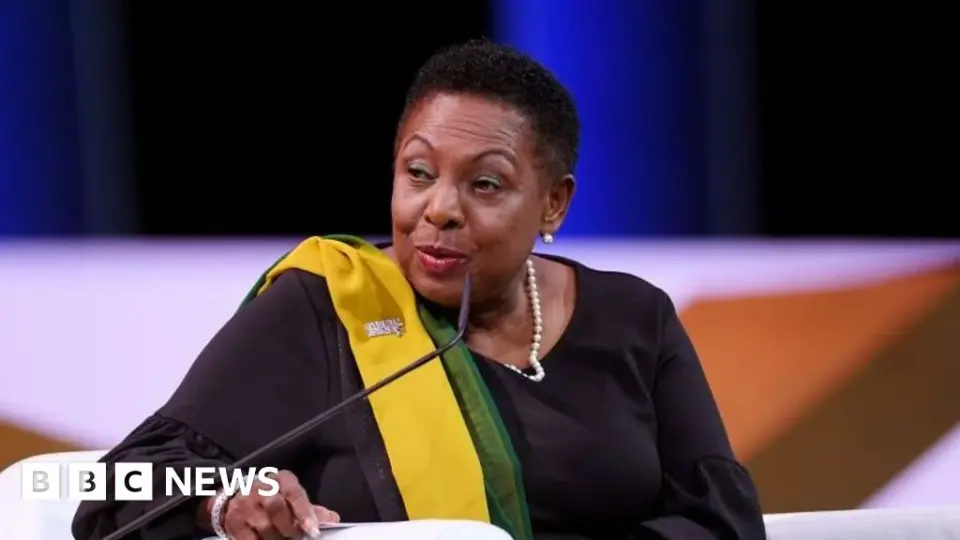
Jamaica has formally submitted a petition to King Charles III, its head of state, requesting a legal review of the transatlantic slave trade. The petition asks the Judicial Committee of the Privy Council to determine if slavery was legal under English law and if Britain owes redress. Jamaica’s culture minister, Olivia Grange, led the delegation to London, emphasizing that the move seeks a legal basis for reparations rather than immediate payment. The UK government acknowledged the petition but noted the monarch has no discretion in the referral. The visit also includes discussions on repatriating colonial-era artefacts from the British Museum.
Key points
- Jamaica’s National Council on Reparations submitted a petition to King Charles III on Monday, asking him to refer three questions to the Judicial Committee of the Privy Council.
- The questions ask whether the enslavement of Africans in Jamaica was legal under English law, violated international law, and if Britain has a legal duty to provide redress.
- Culture Minister Olivia Grange stated the petition is not a direct demand for payment but a step to establish a legal framework for future reparations claims.
- Jamaica estimates it is owed approximately $10 billion in reparations, while the UK previously paid slave owners £20 million in 1833, a debt not fully repaid until 2015.
- The delegation also met with British Museum officials to discuss the repatriation of artefacts taken from Jamaica during the colonial era.
Background
This development follows a series of international efforts to address the legacy of slavery. In March 2026, 123 nations voted for a UN resolution describing chattel slavery as a crime against humanity, though the UK abstained. In June 2026, the Caribbean launched a manifesto for reparations. Jamaica established its National Council on Reparations in 2009, making it the first Caribbean nation to create such a mechanism. Previous UK leaders, including David Cameron in 2015 and Keir Starmer in 2024, have resisted formal reparations demands, with Cameron calling slavery 'abhorrent' but urging a move forward.
How outlets are covering it
BBC and The Guardian emphasize the legal strategy of using the Privy Council to establish a precedent, with Grange stressing that the petition is a step toward a 'long outstanding settlement.' Al Jazeera highlights the financial stakes, noting Jamaica’s $10 billion estimate and the historical context of the UK paying slave owners in 1833. The Guardian also notes the broader Caribbean context, including upcoming conferences in Barbados and UN advocacy, while Al Jazeera points out that the UK has repeatedly refused to pay for historical slavery. All sources agree that King Charles has no personal discretion in the referral, but The Guardian adds that the visit includes meetings with UK MPs and a remembrance service in Brixton, highlighting a broader diplomatic effort.
Why it matters
This petition represents a significant legal and diplomatic step by a Commonwealth nation to hold the UK accountable for the transatlantic slave trade. If successful, it could set a precedent for other former colonies seeking reparations and force a legal reckoning with the legacy of slavery. The outcome could influence ongoing debates in the UN and Commonwealth about historical justice and reparations, potentially reshaping the relationship between former colonies and their former imperial powers.
What to watch
The Judicial Committee of the Privy Council will review the three questions posed by Jamaica. The outcome of this review will determine the next steps in Jamaica’s reparations claims. The delegation is also expected to continue discussions with UK MPs and the British Museum on artefact repatriation. Upcoming events include a Caribbean reparations conference in Barbados and advocacy at the UN General Assembly and Commonwealth heads of government meeting in Antigua in November.
- Jamaican officials to bring reparations petition to King Charles BBC
- Jamaican delegates arrive in UK to hand slavery reparations petition to King Charles The Guardian
- Jamaica to file slavery reparations petition during UK visit Al Jazeera
- British Museum to hold talks with slavery campaigners over artefacts’ return The Telegraph
- Jamaica to push King Charles for answers on slavery reparations The Times
Want the full story? Read the original reporting
Read on BBC