
Lavrov Questions UK's Viability Amid Devolved Nations' Independence Push
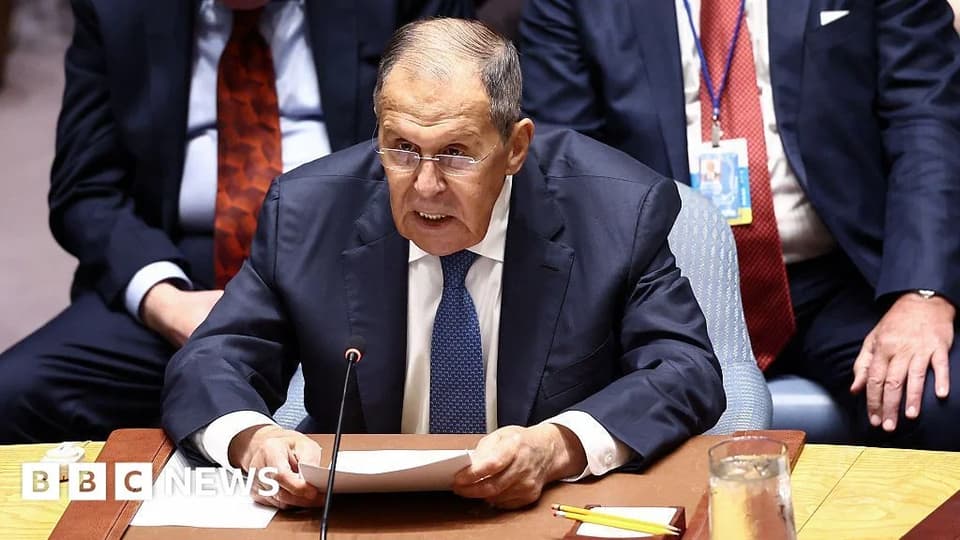
Russian Foreign Minister Sergey Lavrov has publicly questioned the future of the United Kingdom, suggesting its cohesion is weakening as its constituent nations pursue independence. Speaking at a youth conference in Yekaterinburg, Lavrov stated he did not know what would become of 'Great Britain' and noted that 'the Celts' (Wales, Ireland, and Scotland) are seeking referendums. He also criticized the UK's diminished global influence, arguing it no longer justifies its permanent seat on the UN Security Council. These remarks follow a recent agreement among the first ministers of Wales, Scotland, and Northern Ireland to assert that Westminster cannot block democratic self-determination. While UK political parties rejected the Kremlin's interference, the comments highlight the tension between Moscow's geopolitical interests and the UK's internal constitutional shifts.
Key points
- Sergey Lavrov stated at a youth conference in Yekaterinburg that he does not know the future of the UK, citing the push for independence referendums in Wales, Scotland, and Ireland.
- Lavrov argued that the UK's historical empire has diminished to the point where its continued presence as a permanent member of the UN Security Council is questionable.
- The comments follow a recent memorandum signed by the first ministers of Wales, Scotland, and Northern Ireland, declaring that Westminster has no right to block democratic decisions on constitutional status.
- Plaid Cymru responded by stating that Wales' future is a matter for its people and not for the Kremlin to exploit, while also condemning Russia as an 'existential threat to modern democracy.'
- SNP external affairs minister Stephen Gethins emphasized Scotland's commitment to democratic self-determination, drawing parallels to the right of the Ukrainian people to determine their own future.
Background
This development occurs against a backdrop of heightened tensions between the UK and Russia, including recent UK support for Ukraine's missile production capabilities, which Moscow warned could lead to retaliation. Additionally, the UK has been navigating debates over political funding and foreign influence, with recent controversies involving large donations to political parties. The current push for independence in the UK's devolved nations represents a significant shift in domestic politics, with pro-independence parties gaining electoral strength in Wales, Scotland, and Northern Ireland.
Why it matters
Lavrov's remarks signal Moscow's attempt to leverage the UK's internal constitutional instability to undermine its international standing and influence. By questioning the UK's viability and its UN Security Council seat, Russia aims to weaken a key adversary in the ongoing conflict with Ukraine. The response from UK political parties underscores the sensitivity of the issue, as they seek to assert democratic autonomy while distancing themselves from Russian interference. This episode highlights the complex interplay between domestic politics and international relations, particularly in the context of the war in Ukraine and the broader geopolitical struggle for influence.
What to watch
The UK government and devolved administrations are likely to continue emphasizing their commitment to democratic processes while firmly rejecting any foreign interference. The first ministers of Wales, Scotland, and Northern Ireland may proceed with their agreed-upon initiatives to strengthen democratic cooperation, potentially leading to further discussions on constitutional status. Meanwhile, the UK may face continued pressure from Russia to challenge its international standing, particularly regarding its role in the UN Security Council and its support for Ukraine. The outcome of these dynamics will depend on the pace of domestic political developments and the broader geopolitical context.
Want the full story? Read the original reporting
Read on bbc.com