Lavrov says there is no realistic path to negotiations with Kyiv now, arguing Western support and battlefield momentum will decide the war rather than diplomacy; Zelensky’s public open letter is cited as proof Kyiv doesn't want talks, while Putin mocks the idea of a direct meeting.
Senior Russian officials on June 8 rejected Ukrainian and European peace proposals, signaling Moscow’s focus on battlefield gains over diplomacy. Lavrov said negotiations are unlikely “against this backdrop” as front-line fighting shapes the war, while Ukraine and European leaders had outlined a framework for a just peace with an immediate ceasefire and talks based on the current front line. Moscow pressed for Ukrainian withdrawals from parts of Donbas, a precondition Kyiv rejected, and Dmitry Peskov criticized European support for Ukraine. US mediation has been largely frozen, with Kyiv seeking a larger European role and Moscow floating Gerhard Schroder as a mediator—a proposal Kyiv and Europe rejected. Putin also dismissed Zelensky’s overtures, claiming there was no point in meeting, and Zelensky accused him of avoiding peace. The piece also notes Kyiv Independent’s ongoing fundraising drive to support independent Ukrainian journalism.
Lavrov said Kyiv’s open letter to Putin shows Ukraine has no interest in negotiations and argued that the war’s outcome will be decided by battlefield actions, not diplomacy; Putin rejected direct talks, while Western leaders urged a ceasefire and negotiations under conditions. Moscow also criticized the US for not honoring past understandings and highlighted divided Western views on mediation as Washington maintains support for Ukraine.
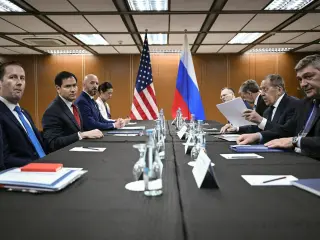
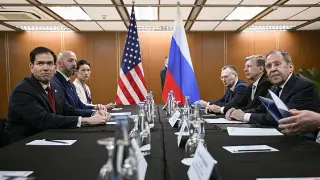
Russia warned U.S. and other diplomats in Kyiv to flee the city, threatening 'systematic strikes' on the capital after a weekend of heavy bombardment. Lavrov relayed the warning to Rubio as European allies rejected the demand and pledged to stay. The move comes amid ongoing Russian strikes that have battered Kyiv, killed civilians, and complicated stalled peace talks.
Russia told U.S. diplomats and other foreign citizens to evacuate Kyiv after Moscow said it would launch systematic and consistent strikes on Ukrainian military facilities and so-called decision-making centers, a warning Lavrov conveyed to Secretary of State Marco Rubio. The move follows stalled peace talks and highlights the ongoing threat to Kyiv amid Russia’s invasion, with U.S. officials saying talks aren’t ongoing but could resume if constructive; other leaders have suggested a possible end to the conflict, though fighting persists.
Russia's Foreign Minister Sergei Lavrov has been largely sidelined from negotiations on ending the war in Ukraine, with Kirill Dmitriev and Yuri Ushakov taking the lead in Moscow's outreach to Washington. Lavrov's hardline stance and public statements have clashed with other channels, including a collapsed Budapest summit triggered by a Lavrov-Rubio call. Washington says it engages with multiple Russian interlocutors, and Kyiv officials see little point in talking to Lavrov directly as Moscow relies on other figures to shape policy and diplomacy.
Chinese President Xi Jinping called China-Russia ties “precious” in the current international context during talks with Russia’s Foreign Minister Sergei Lavrov in Beijing, signaling reinforced bilateral cooperation amid a turbulent global environment.
The European Commission urged Hungary to clarify reports that Foreign Minister Péter Szijjártó routinely briefed Russian counterpart Sergei Lavrov on closed EU Council discussions, a claim that raises concerns about trust and confidentiality as Hungary faces elections and maintains Kremlin ties; Budapest denies the allegations, while the Council assesses potential rule breaches.
ISW reports that Moscow rejects meaningful Western security guarantees for Ukraine, sticking to the 2022 Istanbul Protocol framework; Russia reportedly plans a limited Summer 2026 offensive in southern/eastern Ukraine, but reserves and weather constraints may limit its success. Frontline progress remains slow and concentrated around Slovyansk–Kramatorsk and Orikhiv–Zaporizhzhia, with Hulyaipole reportedly captured but not rapidly expanded; SpaceX’s block of unregistered Starlink terminals is hindering Russian operations; an assassination attempt targeted GRU deputy head Vladimir Alekseyev in Moscow. Ukrainian forces have lately advanced near Borova, while Russian drones and missiles continue to strike infrastructure across Ukraine.
Lavrov derided Emmanuel Macron's plan to resume direct talks with Vladimir Putin as 'pathetic diplomacy,' saying Putin would only respond to serious proposals and would take calls that matter. Macron had sent his diplomatic adviser to Moscow to restart dialogue on Ukraine, with Europe seeking engagement with Moscow amid U.S.-brokered talks in Abu Dhabi and EU debates over Russia's role.
Russian Foreign Minister Sergey Lavrov dismissed France’s bid to restart dialogue with Moscow as “pathetic diplomacy” after Macron’s adviser visited Moscow to lay groundwork for talks with Putin. Macron says technical talks are underway and Europe should engage Moscow, but no direct talks have occurred since Russia’s 2022 invasion. Two EU diplomats confirmed the visit; the Kremlin did not confirm details, highlighting Europe’s cautious push to reopen dialogue amid stalled Ukraine negotiations.
Russian Foreign Minister Lavrov criticized Europe as an obstacle to peace amid upcoming US-Ukraine talks at Mar-a-Lago, where Zelenskiy and Trump aim to advance a peace proposal. Meanwhile, Russia continues military strikes in Ukraine, and Putin asserts Russia's willingness to use force to achieve its goals, as diplomatic efforts intensify.
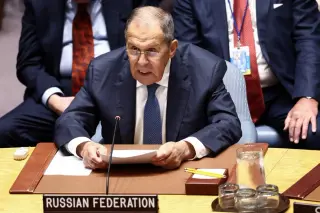
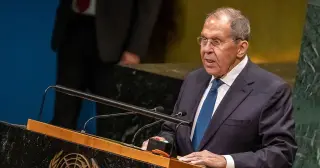
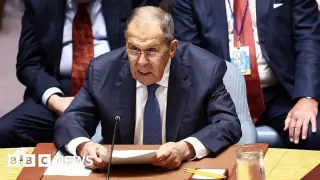
Russia's Foreign Minister Sergei Lavrov accused NATO and the EU of waging a 'real war' against Russia via Ukraine at the UN, claiming Western actions provoked the conflict, while Western officials dismissed these claims as distortions. Tensions remain high along Europe's eastern border, with recent airspace incursions and ongoing fighting in Ukraine, amid mixed international reactions to recent statements by U.S. and European leaders.
Russian Foreign Minister Sergey Lavrov claimed that Ukraine's President Zelensky lacks legitimacy to sign peace agreements, as Russia continues to reject negotiations and Zelensky's government is portrayed as illegitimate by Moscow. This stance complicates efforts by the US and others to mediate peace, with Russia demanding maximalist territorial concessions and refusing to accept Zelensky's authority, further delaying potential negotiations amid ongoing conflict.
Russia's top diplomat Sergei Lavrov defended Russia's actions in Ukraine on 'Meet the Press,' criticizing Western allies and downplaying prospects for peace talks, while emphasizing Russia's stance and blaming Ukraine for setbacks in negotiations.