
Lula and Flavio Bolsonaro Launch Fierce Campaigns Amid US Tensions
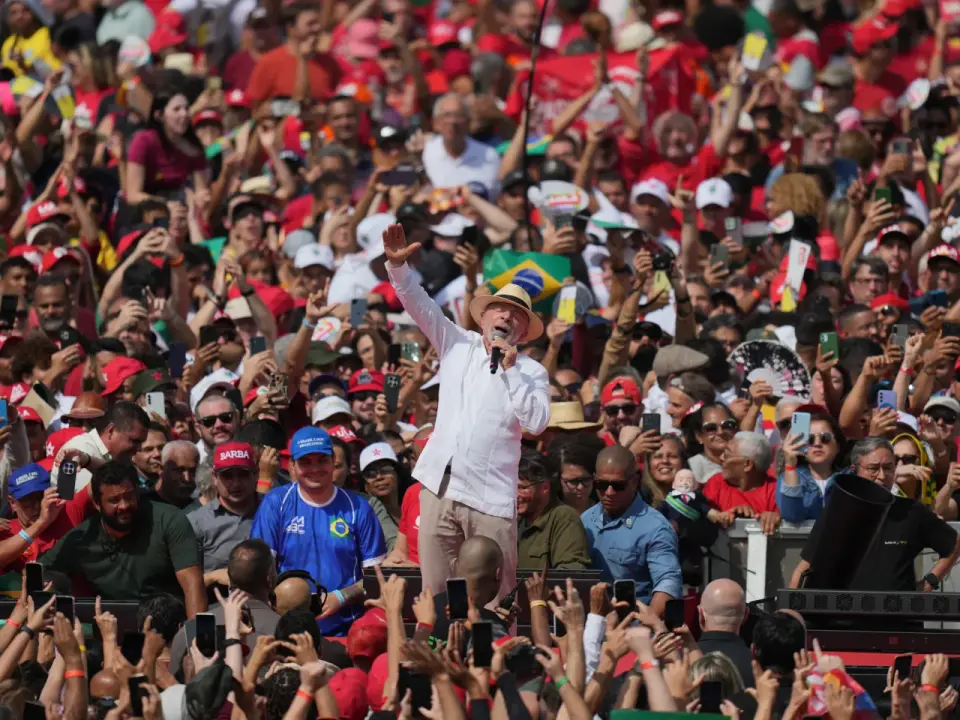
Brazil’s 2026 presidential race has officially begun with campaign launches for incumbent Luiz Inacio Lula da Silva and Senator Flavio Bolsonaro. Lula, seeking a fourth non-consecutive term, emphasized national sovereignty and gender equality, while Flavio Bolsonaro, whose father is imprisoned, focused on trade deals and security. The race is tight, with polls showing Lula holding a slight lead, and is heavily influenced by US foreign policy and domestic violence statistics.
Key points
- Lula launched his campaign in Sao Bernardo do Campo, his political birthplace, addressing 10,000 supporters and promising to develop rare minerals for Brazil’s benefit.
- Flavio Bolsonaro launched his bid on Copacabana Beach in Rio, wearing a bulletproof vest and promising to negotiate trade deals with the US, China, and other nations.
- Lula pledged to combat femicide, noting 400 cases in Q1 2026, and promised new gender-responsive policies within 10 days.
- Flavio Bolsonaro’s father, Jair Bolsonaro, is under house arrest following a 27-year sentence for plotting a coup, and did not attend the rally.
- Polls show Lula leading Flavio Bolsonaro 43% to 40% in a simulated runoff, with the first round scheduled for October 4.
Background
The 2026 election follows a period of intense political polarization. Lula previously served two terms (2002-2010) and one (2023-2026), defeating Jair Bolsonaro in 2022. Bolsonaro was imprisoned in 2025 for plotting a coup after the 2022 election. Recent polls from August 2026 showed a narrowing gap between the two candidates, with Lula’s lead shrinking to within the margin of error. Diplomatic tensions with Argentina and the US have also escalated, with US officials designating Brazilian crime groups as terrorist organizations.
How outlets are covering it
Al Jazeera highlights the symbolic nature of the campaign launches, focusing on Lula’s nostalgia and Flavio Bolsonaro’s international alliances. The Guardian emphasizes the historical context, noting Lula’s rise from a union leader and the impact of US foreign policy, including Trump’s threats to the region. AP News provides a factual overview of the campaign launches and polling data, noting the tight race and the influence of US actions on Brazilian politics. All sources agree on the key facts but differ in emphasis, with Al Jazeera focusing on gender violence, The Guardian on US-Brazil tensions, and AP News on the overall race dynamics.
Why it matters
The 2026 Brazilian presidential election is seen as a pivotal moment for Latin American politics, with implications for US foreign policy and regional stability. The outcome will determine Brazil’s direction on issues such as gender violence, environmental policy, and international trade. The tight race and external interference from the US and Argentina add to the significance of the election.
What to watch
The first round of voting is scheduled for October 4, 2026. If no candidate secures 50% of the vote, a runoff will take place on October 25. Both candidates are expected to continue campaigning, with Lula focusing on gender equality and national sovereignty, and Flavio Bolsonaro emphasizing trade and security. The outcome will likely be influenced by US foreign policy and domestic violence statistics.
- Brazil: Lula, Bolsonaro return to strongholds to launch runs for president Al Jazeera
- Brazil’s Lula launches historic fourth term bid – but son of jailed Bolsonaro stands in his way The Guardian
- Brazil's Lula launches reelection bid, aims to win back workers to his Workers Party Reuters
- Brazil's Lula and Flávio Bolsonaro return to their strongholds to kick off presidential campaigns AP News
- Lula’s Lead Over Bolsonaro Narrows in Brazil Election Poll Bloomberg.com
Want the full story? Read the original reporting
Read on Al Jazeera