
Mélenchon’s 2027 Bid: A Radical Blueprint Meets a Polarized French Electorate
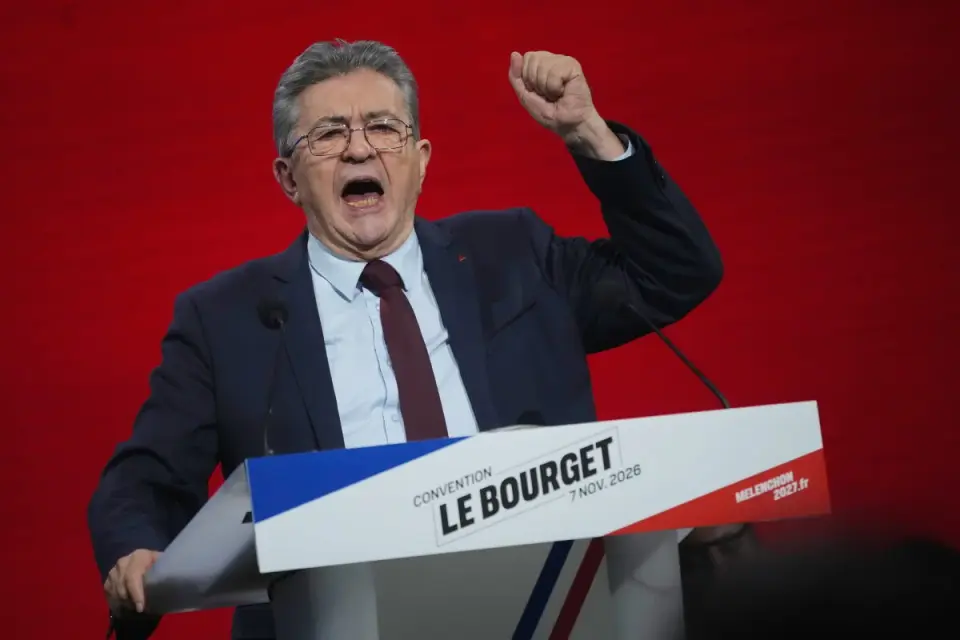
Jean-Luc Mélenchon has launched his fourth presidential campaign with a sweeping manifesto titled 'The Future Together,' aiming to replace the Fifth Republic constitution and withdraw France from NATO. Polling at 17.5–18%, he leads the left but trails far-right rival Marine Le Pen, who holds a significant advantage in head-to-head matchups. His platform includes lowering the voting age to 16, restoring retirement at 60, and raising the minimum wage to €1,700. While he has gained momentum by aligning with youth-led protests, critics warn his fiscal policies could destabilize markets and that his refusal to compromise hinders broad support. A runoff between Mélenchon and Le Pen could leave traditional center parties sidelined, potentially reshaping France’s geopolitical alignment and domestic stability.
Key points
- Mélenchon’s manifesto proposes a new constitution written by a citizen assembly, allowing ordinary voters to force referendums or oust presidents between elections.
- The platform calls for France’s gradual withdrawal from NATO’s integrated military command, a move that could impact transatlantic relations and European defense.
- Economic proposals include a moratorium on artificial intelligence, capping essential food prices, and refusing to repay debt owed to the European Central Bank.
- Polls show Mélenchon leading the left at 17.5–18%, but Le Pen leads in a hypothetical runoff by a margin of 70% to 30%.
- The candidate has faced accusations of stoking unrest and antisemitism, charges he rejects, while former allies describe his leadership style as authoritarian.
Background
Mélenchon’s campaign emerges amid a period of significant social unrest in France, including student protests over school conditions and cost-of-living riots that escalated into looting and arson in multiple cities in late 2026. The traditional political order has weakened, with the Socialist and Republican parties winning only 6.5% of the first-round vote in 2022. Mélenchon, a 75-year-old former Socialist and Trotskyist, has positioned himself as the voice of the 'New France,' targeting young voters in poorer suburbs like Seine-Saint-Denis. His previous three presidential bids ended short of the runoff, with the 2022 loss to Emmanuel Macron decided by just 421,308 votes. The current campaign is framed as a final attempt to upend the political landscape before potential term limits or age-related constraints.
How outlets are covering it
AP News emphasizes Mélenchon’s potential to upend France’s political order, noting that a loss to Le Pen could inadvertently hand the far-right the Élysée Palace and command of France’s nuclear arsenal. France 24 highlights the specific policy details of his manifesto, including the restoration of retirement at 60 and the phase-out of nuclear power, while noting that polls indicate he would lose in a second round. Le Monde focuses on his foreign policy, pointing out that his manifesto sidelines the war in Ukraine in favor of a focus on Gaza, which has alienated some left-wing allies. Al Jazeera presents a balanced view, quoting analysts who describe his economic plans as 'radical' but not historically unprecedented, while also noting concerns about his combative style and the party’s lack of internal democracy. The outlets agree on his polling position but differ on the primary risks: AP and Le Monde focus on geopolitical and antisemitism concerns, while Al Jazeera and France 24 emphasize fiscal instability and electoral viability.
Why it matters
Mélenchon’s campaign could fundamentally alter France’s role in Europe and the world. If he reaches the runoff, he could challenge the dominance of the far-right and center-right, potentially forcing a choice between two movements that have never governed France. His proposals to withdraw from NATO and defy European Central Bank rules could trigger market volatility and strain transatlantic relations. Domestically, his focus on youth and social justice could mobilize a new electorate, but his refusal to compromise may limit his ability to build a broad coalition. The outcome of the 2027 election could determine whether France moves toward a more interventionist, anti-globalist model or remains aligned with traditional Western alliances.
What to watch
Mélenchon must consolidate support among the left, which is currently fractured over his stance on Gaza and fiscal policies. He faces competition from center-left candidate Raphaël Glucksmann and other smaller parties. The next few months will see increased focus on his ability to translate protest energy into votes, as well as scrutiny of his fiscal plans and foreign policy positions. A key test will be whether he can secure a second-round spot, which depends on his ability to outperform other left-wing candidates in the first round. The campaign will also likely intensify debates over antisemitism, police tactics, and the role of the state in the economy.
- He fought France's far right for half a century. Now Melenchon's presidential bid may hand it power AP News
- 'We must change everything,' French far-left presidential candidate Mélenchon says France 24
- Jean-Luc Mélenchon puts Gaza at heart of foreign policy proposals, sidelines Ukraine Le Monde.fr
- French presidential hopeful Melenchon pledges economic stimulus, renews NATO exit call Reuters
- ‘Radical’ or ‘hero’?: France debates leftist candidate Jean-Luc Melenchon Al Jazeera
Want the full story? Read the original reporting
Read on AP News