
Meloni demands unified EU voice on Ukraine, citing fragmented diplomacy
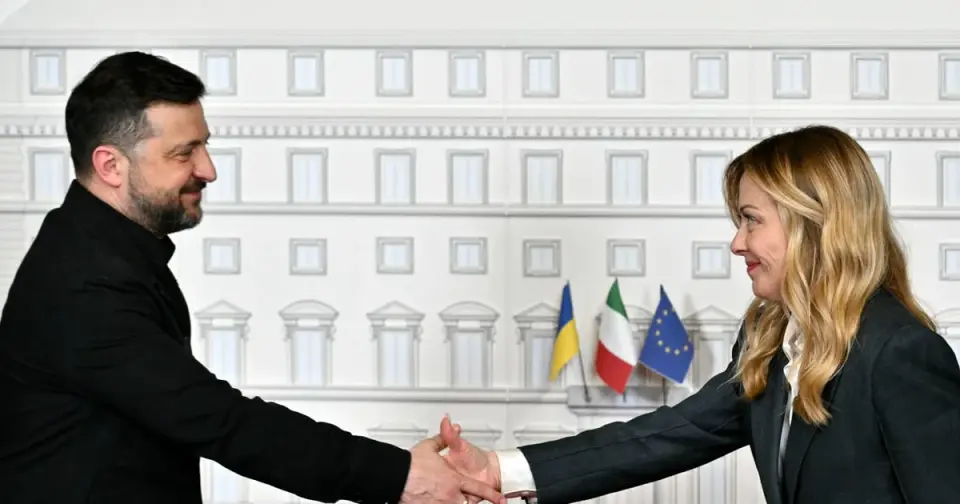
Italian Prime Minister Giorgia Meloni has called on the European Union to coordinate its approach to Ukraine peace negotiations, criticizing the bloc’s fragmented diplomatic efforts. In a letter to European Council President António Costa, she urged that the issue be added to the agenda of an informal leaders’ meeting in Dublin on November 13, arguing that overlapping forums and inconsistent messaging undermine European credibility. Meloni highlighted that Italy has been excluded from key bilateral and trilateral discussions, such as the E3 (France, Germany, UK) meetings, while participating in broader groups like the E5. She argued that a unified European position is essential to safeguard security interests and prevent a lopsided deal with Russia.
Key points
- Meloni wrote to European Council President António Costa, urging that the EU’s fragmented approach to Ukraine be addressed at the informal European Council in Dublin on November 13.
- She criticized the proliferation of overlapping diplomatic formats, including meetings in Miami and Oslo, as undermining European credibility and serving the interests of those who want the war to continue.
- Italy has been excluded from the E3 (France, Germany, UK) consultations on Ukraine peace talks, though it participates in the E5 (adding Italy and Poland) and other broader forums.
- Meloni has long advocated for a special EU envoy to negotiate with Russia, a proposal supported by France, Austria, Czechia, and Luxembourg, but not yet adopted by the bloc.
- The EU has not agreed on a single leader or institution to spearhead Ukraine negotiations, despite insisting on having a 'seat at the table' to protect regional interests.
Background
Italy has emerged as a vocal advocate for a unified EU stance on Ukraine, with Meloni first proposing a special envoy in January 2026. The country’s exclusion from key E3 discussions has raised concerns about its influence in European security decision-making, particularly as the EU establishes large-scale financial and military support mechanisms for Ukraine. Previous archive coverage noted Meloni’s focus on domestic and legal issues, but her current push reflects a broader strategic concern about Italy’s diplomatic standing in transatlantic and European security frameworks.
How outlets are covering it
POLITICO emphasizes Meloni’s frustration with the EU’s 'disorganized' approach and her call for a unified voice, highlighting Italy’s exclusion from E3 talks. Il Foglio frames Italy’s absence from the E3 as a potential long-term diplomatic disadvantage, warning that negotiating tables can become entrenched and that Italy must offer tangible contributions to regain influence. The secondary source from debuglies.com provides a more nuanced analysis, noting that Italy’s exclusion from E3 does not equate to general diplomatic isolation, as it remains active in the E5 and other broader forums, though its influence over specific security guarantees may be limited by the absence of operational or command responsibilities.
Why it matters
The EU’s fragmented approach to Ukraine peace talks risks weakening its negotiating position and undermining its credibility with both Kyiv and Moscow. A unified European stance could strengthen its ability to safeguard regional security interests and ensure a balanced outcome in any potential negotiations. For Italy, the issue is not merely diplomatic but also strategic, as its influence in European security decision-making is increasingly tied to its ability to participate in and shape the mechanisms that implement security guarantees and financial commitments.
What to watch
The informal European Council in Dublin on November 13 will likely address the issue of EU coordination on Ukraine, as urged by Meloni. The European Political Community meeting on November 12 may also provide a platform for broader discussion. The outcome of these meetings could determine whether the EU adopts a unified approach or continues to rely on overlapping, fragmented diplomatic formats. Italy’s future influence in European security will depend on its ability to secure a defined role in the implementation of any agreed-upon security arrangements.
- Meloni urges ‘disorganized’ EU to speak with one voice on Ukraine POLITICO.eu
- Italy's Meloni warns Europe risks irrelevance in Ukraine peace talks Reuters
- Giorgia Meloni hits out at EU’s ‘disjointed’ approach to Ukraine talks Financial Times
- Italy’s Influence in European Security: E3 Exclusion - E5 Inclusion and the Changing Architecture of Transatlantic Power https://debuglies.com
- In the European ‘mini’ format on Kyiv, Italy is (for now) not included. This is not good news Il Foglio
Want the full story? Read the original reporting
Read on POLITICO.eu