
Merz rallies EU budget hawks as Costa seeks compromise on 2028-2034 framework
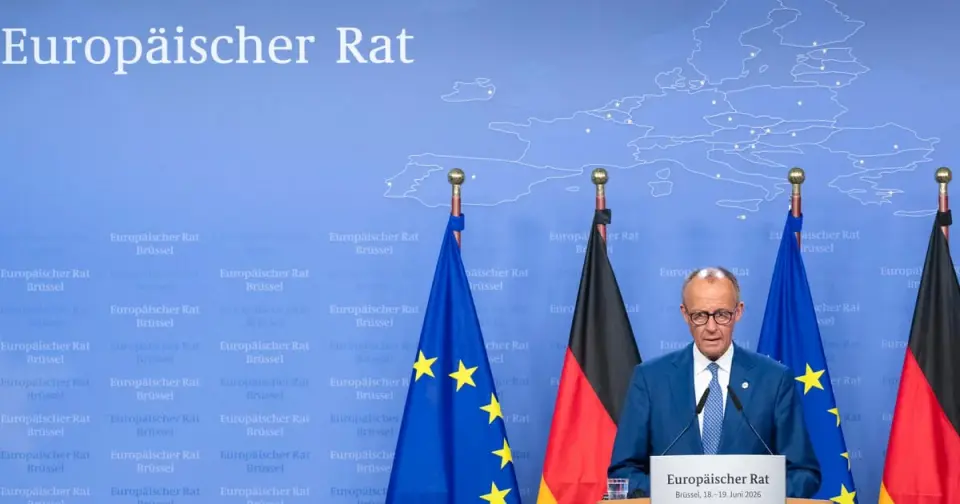
German Chancellor Friedrich Merz is convening a bloc of fiscally conservative leaders to demand significant cuts to the EU's next multi-annual budget, while European Council President António Costa tours capitals to broker a compromise. The core dispute involves the total size of the 2028-2034 budget, the shift of spending from agriculture to defense, and the introduction of new EU revenue streams. A deal is required by year-end to avoid funding disruptions, but domestic political pressures in Germany and other nations complicate negotiations.
Key points
- Merz has gathered leaders from the Netherlands, Finland, Austria, Denmark, and Sweden in Berlin to push for reductions of hundreds of billions of euros from the proposed near-€2 trillion budget.
- The 'budget-cutters' group also seeks to redirect funds away from agriculture toward defense and security, and to impose conditions linking funding to democratic standards.
- Costa is touring capitals, including Prague and Vilnius, to find a middle ground, arguing that the gap between positions is smaller than public rhetoric suggests.
- Ireland, currently holding the Council presidency, is expected to present new compromise figures in October ahead of a summit.
- There is growing openness among traditionally skeptical Eastern European nations to new EU taxes ('own resources') if they fund defense and regional development.
- The deadline for agreement is year-end 2026 to allow time for legislative implementation before the 2028 budget cycle begins.
Background
This negotiation follows the European Commission's proposal for the 2028-2034 budget in July. Previous coverage of EU budget discussions often highlighted tensions between member states over spending priorities, but the current cycle is uniquely constrained by upcoming national elections in France, Spain, and Italy, as well as state elections in Germany. The archive does not contain specific background on this current budget cycle, but general EU budget negotiations have historically involved trade-offs between cohesion, agriculture, and new policy areas.
How outlets are covering it
Politico emphasizes the sharp divide between Merz's hardline stance and Costa's diplomatic efforts, noting that Merz's rhetoric may be more severe than his actual demands, as he has not specified exact cut figures. Costa, in his op-ed and press statements, frames the budget as a balance between traditional priorities (agriculture, cohesion) and new imperatives (defense, competitiveness), stressing the need for new revenue streams to avoid excessive national contributions. The EU Neighbours East outlet highlights the broader context of EU autonomy and support for Ukraine, linking budget decisions to strategic resilience. There is a noted divergence in emphasis: Merz's group focuses on total size and conditionality, while Costa and some Eastern European leaders like Lithuania and Estonia are more open to new taxes if they support defense and regional development. Spain, for instance, resists cuts to agriculture, while the 'budget-cutters' want to reduce it significantly.
Why it matters
The outcome of these negotiations will determine the EU's financial capacity for defense, security, and strategic autonomy in the 2028-2034 period. Failure to reach a deal by year-end could disrupt funding for farmers, businesses, and other recipients, and risk a political crisis in the EU. The introduction of new revenue streams could mark a significant shift in EU financing, potentially reducing reliance on national contributions and enhancing the EU's fiscal autonomy. The domestic political pressures in Germany and other nations make this a high-stakes negotiation that could influence the EU's long-term trajectory.
What to watch
Ireland will present new compromise numbers in October. The Berlin meeting is expected to produce a united front but not precise figures. Costa will continue his tour, including stops in Berlin, Paris, and Rome. The real 'horse-trading' is expected to begin closer to the October summit, as countries attach hard numbers to their demands. The outcome of the Saxony-Anhalt state election in Germany and the Swedish general election could also influence the negotiations.
- Merz unites EU budget-cutters as Costa gropes for deal politico.eu
- Listening to Europe, building its future eKathimerini.com
- Press statement by President Costa following the meeting with President of Lithuania, Gitanas Nausėda PubAffairs Bruxelles
- Press statement by President Costa following the meeting with Prime Minister of Slovakia, Robert Fico consilium.europa.eu
- President of European Council Costa visits EU capitals to discuss priorities, including support to Ukraine EU NEIGHBOURS east
Want the full story? Read the original reporting
Read on politico.eu