
Merz Defies Leadership Crisis as CDU Faces Historic Defeats in Berlin and Mecklenburg-Vorpommern
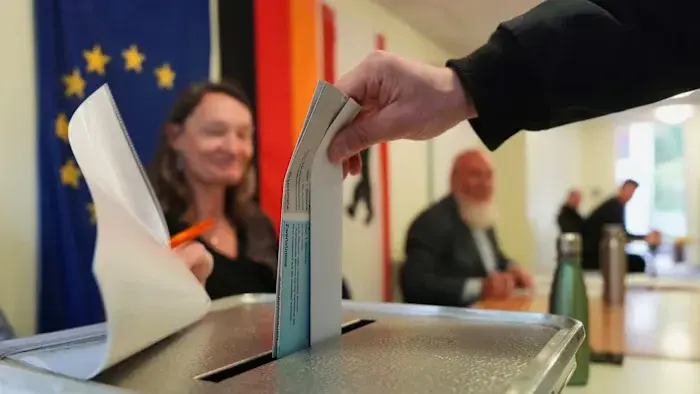
German Chancellor Friedrich Merz vowed to remain in office despite his Christian Democratic Union (CDU) facing historic losses in the Berlin and Mecklenburg-Vorpommern state elections. Polls indicate the CDU may fall below the 5% parliamentary threshold in Mecklenburg-Vorpommern and lose power in Berlin to the far-left Die Linke. These results follow the far-right AfD’s recent victory in Saxony-Anhalt, intensifying pressure on Merz, whose approval rating has dropped to approximately 14%. While some party insiders suggest a leadership change, Merz has convened an emergency meeting to demand loyalty and continue his reform agenda.
Key points
- Merz’s CDU is polling at 6% in Mecklenburg-Vorpommern, dangerously close to the 5% threshold for parliamentary representation, and is trailing Die Linke in Berlin.
- The AfD is expected to double its support in Berlin to 18% and is neck-and-neck with the SPD in Mecklenburg-Vorpommern, following its 44% victory in Saxony-Anhalt two weeks prior.
- Merz’s approval rating has fallen to roughly 14%, with critics blaming his communication style and policy failures for the party’s decline.
- Merz has cancelled a trip to the UN General Assembly to hold an emergency party meeting, vowing that 'giving up is not an option' despite internal calls for his resignation.
- Potential successors, including North Rhine-Westphalia premier Hendrik Wüst and Bavarian premier Markus Söder, face their own electoral challenges, complicating any leadership transition.
Background
These elections follow the AfD’s historic 44% win in Saxony-Anhalt in September 2026, which marked the first time the far-right party came close to forming a regional government. The current crisis is part of a broader trend of declining support for traditional parties across Europe, with the AfD gaining traction in former communist eastern states due to economic anxiety and anti-immigration sentiment. Merz’s government, which took power 16 months ago, has struggled to implement welfare and infrastructure reforms amid a narrow coalition majority.
How outlets are covering it
The Financial Times emphasizes the potential for a full-blown leadership crisis if the CDU is ejected from Mecklenburg-Vorpommern’s parliament, noting that a change in chancellor could destabilize EU and NATO relations. The New York Times highlights Merz’s characterization of the results as a 'disaster' and his insistence on staying in office despite record-low popularity. The BBC focuses on the 'chancellor swap' rumors, noting that while no open challenge has been made, discontent is growing among party members who view Merz as out of touch. Al Jazeera underscores the international implications, noting that Merz’s fall could trigger further instability in Europe, particularly regarding support for Ukraine, as the AfD’s success in Saxony-Anhalt has sent shockwaves through European political circles.
Why it matters
The outcome of these elections could determine whether Merz remains chancellor or faces a constructive vote of no confidence, potentially leading to a mid-term change in leadership. A CDU defeat in Mecklenburg-Vorpommern would be its worst postwar state election result, signaling a fundamental shift in German politics. The rise of the AfD and the decline of the CDU could impact Germany’s role in the EU, NATO, and its support for Ukraine, as well as influence upcoming elections in France, Italy, Spain, and Poland.
What to watch
Merz is expected to address his party at an emergency meeting in Berlin on Sunday evening, seeking to confront critics and demand loyalty. The CDU’s eight state premiers have signed a letter backing him, but the party’s narrow 12-seat majority in the Bundestag makes any leadership change difficult. If Merz remains, he will continue pushing through welfare and infrastructure reforms, though his ability to do so may be hampered by internal dissent and low public approval.
- German states go to the polls in high-stakes test for Friedrich Merz Financial Times
- Germans Are Voting Again, Amid a Far-Right Surge. Here’s What to Watch. The New York Times
- German elections under way which could decide fate of Chancellor Merz BBC
- Germany: Polls open in two key state elections DW.com
- Germany’s Berlin, Mecklenburg-Western Pomerania states head to polls Al Jazeera
Want the full story? Read the original reporting
Read on Financial Times