
Netanyahu Faces Coalition Deadlock After Inconclusive Israeli Election
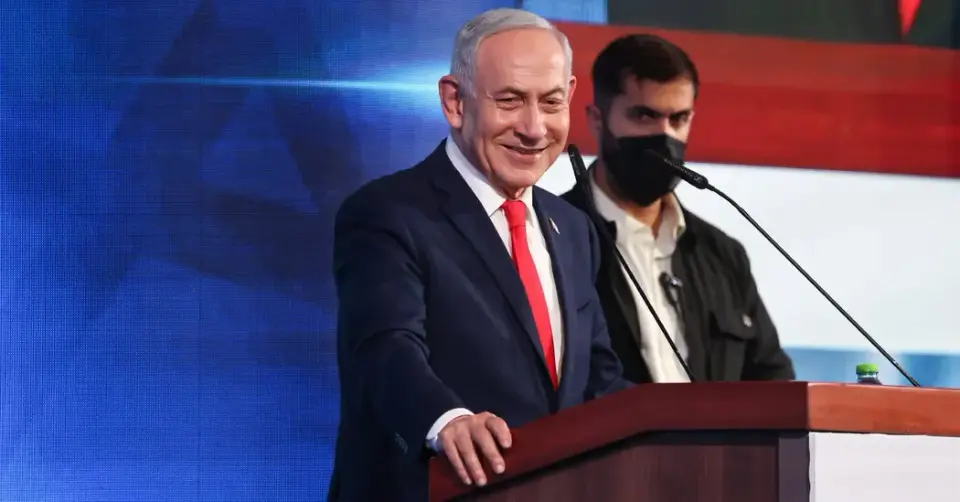
Israeli Prime Minister Benjamin Netanyahu’s Likud party emerged as the largest bloc with 27 seats, but the election results are inconclusive, making the formation of a new government highly uncertain. Netanyahu must secure 61 seats to retain power, a task complicated by significant losses for his hawkish coalition. While his right-wing bloc holds a slight numerical advantage over opposition leader Gadi Eisenkot’s change bloc, neither side has a clear path to a majority, leaving the political future of Israel in a state of limbo.
Key points
- Likud retained the status of the largest party in the Knesset with 27 seats, despite losing nearly a sixth of its previous parliamentary representation.
- Netanyahu requires 61 seats to form a government, a threshold that appears difficult to reach given the fragmented results.
- The right-wing bloc secured 53 seats, while the opposition 'change' bloc led by Gadi Eisenkot won 48 seats, resulting in a stalemate.
- President Isaac Herzog has not yet granted Netanyahu the mandate to attempt coalition talks, a decision that remains pending.
- The election outcome defied expectations in liberal Tel Aviv, where many anticipated a decisive victory for the opposition.
Background
Recent coverage highlighted Netanyahu’s efforts to secure US support from President Trump ahead of the vote, while President Herzog asserted his authority to select the government-forming candidate without external interference. Polls prior to the election had projected a slight advantage for the opposition, making the current inconclusive result a significant shift in the political landscape.
How outlets are covering it
The New York Times emphasizes the mechanical difficulty of coalition-building, describing the task as assembling a puzzle with ill-fitting pieces due to Likud’s seat losses. The Atlantic focuses on the cultural and political implications, noting that the liberal, cosmopolitan sector of Israel, which had been a center of protest against Netanyahu, was disappointed by the lack of a decisive change. The Atlantic highlights that the left is now a marginalized label in Israeli politics, with only 12 to 15 percent of the population identifying as such, while the right-wing bloc’s narrow lead suggests a deep societal divide rather than a clear mandate for either side.
Why it matters
The inability to form a stable government could lead to political instability in Israel, potentially affecting regional security policies and international relations. The inconclusive results suggest that neither the status quo nor a radical shift in policy is guaranteed, leaving key issues such as judicial reforms and foreign policy in a state of uncertainty. This deadlock may force further negotiations or lead to a second election, prolonging political uncertainty.
What to watch
President Isaac Herzog must decide whether to grant Netanyahu the mandate to form a government. If Netanyahu fails to secure 61 seats, the president may turn to Gadi Eisenkot or other candidates. The outcome of these negotiations will determine whether Israel moves toward a new government or faces a repeat election.
- Netanyahu’s Bid to Stay in Power Will Test His Political Savvy The New York Times
- Herzog: Party leaders must 'face the reality' of results, find solutions to prevent another election The Times of Israel
- The Bursting of the Tel Aviv Bubble The Atlantic
- Israel’s election results are in. Here’s what could happen next AP News
- Gadi Eisenkot is the bereaved general trying to outmaneuver Netanyahu The Washington Post
Want the full story? Read the original reporting
Read on The New York Times