
Netanyahu urges unity talks without preconditions as Eisenkot rejects PM's 'spin' and pushes for new Knesset speaker
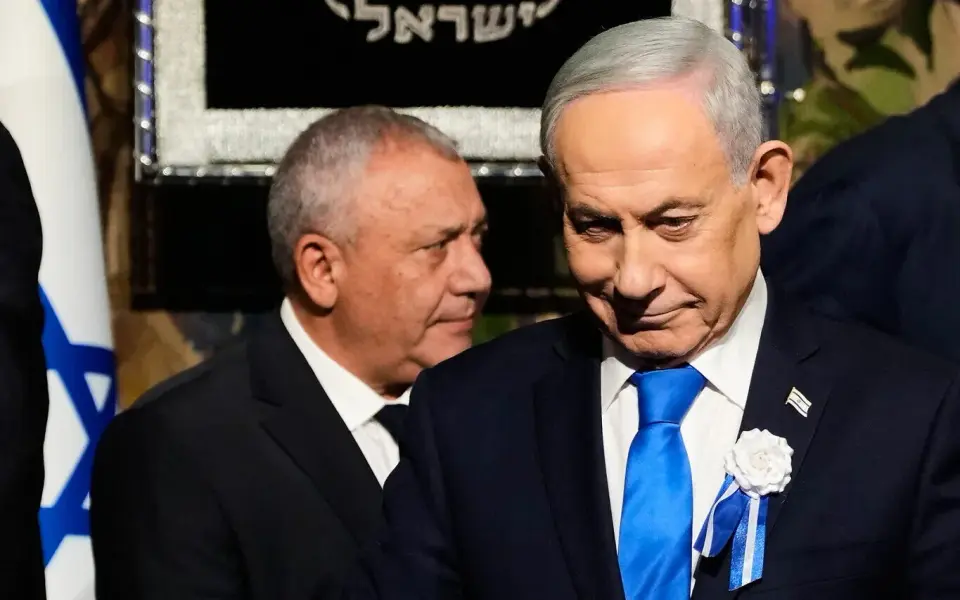
Prime Minister Benjamin Netanyahu called for unity government talks without preconditions, arguing that a coalition relying on Arab parties cannot address the Iranian threat. Gadi Eisenkot, who holds the mandate to form a government, dismissed the call as 'spin' and emphasized that Likud and Yashar negotiating teams had already scheduled a meeting. Eisenkot stated that Likud could join an emergency government he leads only if it accepts his principles and breaks with extremists. Meanwhile, a freshman Likud lawmaker set up a protest tent outside the Knesset demanding a unity government led by Netanyahu.
Key points
- Netanyahu urged Eisenkot to enter a unity government without preconditions, citing the Iranian threat and the need for national security.
- Eisenkot rejected the call as 'spin,' noting that Likud and Yashar negotiating teams had already scheduled a meeting for Sunday.
- Channel 13 reported that Yashar plans to offer Likud a chance to join a unity government led solely by Eisenkot, without a rotation agreement.
- Eisenkot stated that Likud could join an emergency government he leads only if it accepts his principles and breaks with extremists, including Otzma Yehudit.
- A freshman Likud lawmaker, Elishai Madan, set up a protest tent outside the Knesset demanding a unity government led by Netanyahu.
Background
The 26th Knesset was sworn in on November 10, 2026, after the October 27 election resulted in a fragmented parliament. Netanyahu’s bloc holds 53 seats, the opposition led by Eisenkot has 48, and Arab-led parties hold 19. Eisenkot was given the mandate to form a government by President Isaac Herzog. Previous coverage noted that Eisenkot canceled unity talks after Netanyahu’s divisive Knesset address, and that the opposition is pushing for a new Knesset speaker and term limits for the prime minister.
How outlets are covering it
The Times of Israel highlights Netanyahu’s call for unity talks and Eisenkot’s rejection, noting that Channel 13 reported Yashar plans to offer Likud a role in a government led by Eisenkot. The New York Times focuses on the potential damage to the U.S.-Israel relationship if Eisenkot takes power. The Guardian emphasizes the opposition’s efforts to seize control of the Knesset, including votes for a new speaker and legislation to reverse Netanyahu’s policies. CBS News provides context on the broader U.S.-Iran conflict, noting that the Trump administration has framed Iran’s nuclear program as a primary justification for the war, which Netanyahu cites as a reason for a unity government.
Why it matters
The outcome of these negotiations will determine whether Israel forms a new government or faces another election. Eisenkot’s success in forming a coalition could lead to significant policy changes, including a state inquiry into the October 7, 2023, attacks and term limits for the prime minister. Netanyahu’s continued push for a unity government reflects his efforts to maintain power despite losing his parliamentary majority. The broader U.S.-Iran conflict adds urgency to the debate over national security and coalition-building.
What to watch
Likud and Yashar negotiating teams are scheduled to meet on Sunday. Eisenkot’s next test is Tuesday’s vote on appointing Yashar MK Matan Kahana as Knesset speaker. If Eisenkot fails to form a government within six weeks, a second candidate, probably Netanyahu, will get a second chance. Further failure is likely to lead to another election.
- Netanyahu urges talks ‘without preconditions’ on unity government; Eisenkot rejects PM’s ‘spin’ The Times of Israel
- Live Updates: Netanyahu says it's time to remove Iran threat "once and for all" CBS News
- The U.S.-Israel Relationship Is Broken. Here’s How Eisenkot Could Fix It. The New York Times
- Israeli opposition hurries to seize control as new Knesset is sworn in The Guardian
- Israel's parliament sworn in as Eisenkot tries to forge a government Reuters
Want the full story? Read the original reporting
Read on The Times of Israel