
Netanyahu’s Knesset Address Denounces Arab Parties, Citing Threats to Israel’s Existence
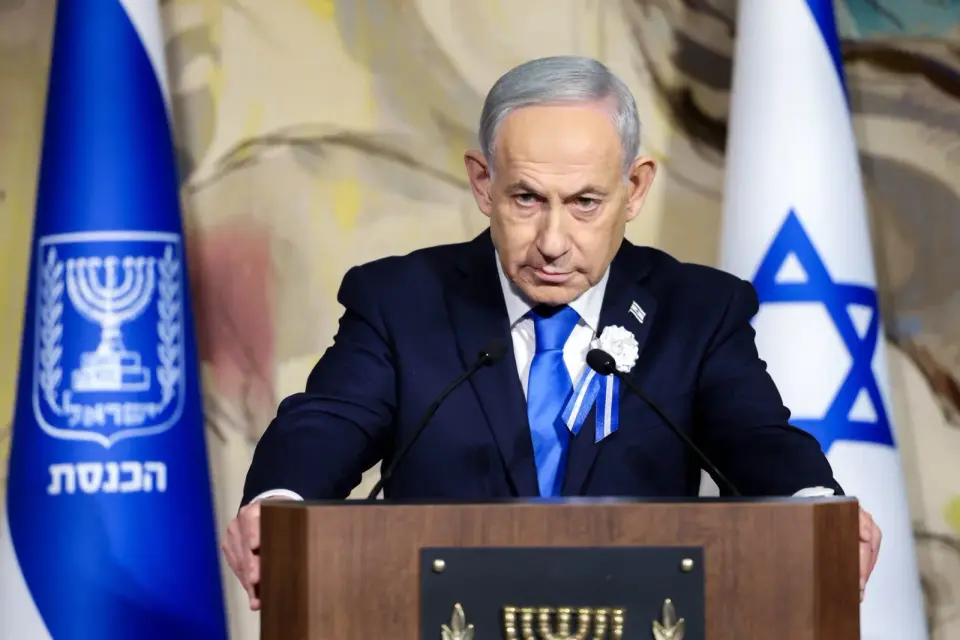
Prime Minister Benjamin Netanyahu delivered a fiery speech at the opening of the 26th Knesset on November 10, 2026, urging the formation of a national unity government while vehemently opposing any coalition that includes Arab-led parties. He characterized these parties as seeking to destroy the Jewish state, a stance that opposition leader Gadi Eisenkot condemned as divisive and unfit for democratic discourse. The address occurred amid a parliamentary deadlock, where neither Netanyahu nor Eisenkot holds a majority, and Arab parties hold the balance of power with 19 seats.
Key points
- Netanyahu called for a broad national unity government to address security threats from Iran and other regional actors, arguing that only such a coalition could ensure Israel’s survival.
- He explicitly rejected cooperation with Ra’am and the Joint List, labeling their members as 'terror supporters' and claiming their ultimate goal is the destruction of the Jewish state.
- Netanyahu cited past statements by Arab party leaders, including Mansour Abbas, to argue that they support a 'democratic caliphate' and reject Israel’s right to exist.
- He demanded the lifting of attorney general restrictions on investigating alleged foreign interference in the 2026 elections, specifically citing Qatari funding.
- Opposition leader Gadi Eisenkot canceled scheduled coalition talks with Likud following the speech, calling Netanyahu unfit for office and accusing him of endangering national security through division.
- Netanyahu’s speech was met with heckling from Naftali Bennett and walkouts from some MKs, including Yair Golan, highlighting deep internal fractures in the Knesset.
Background
The 2026 Israeli election resulted in a fragmented parliament where Netanyahu’s bloc holds 53 seats and Eisenkot’s holds 48, with Arab parties securing a record 19 seats. Prior to the Knesset opening, protests in Tel Aviv demanded an Arab-Jewish coalition to oust Netanyahu, while counter-protests rejected such partnerships. Analysts had previously suggested that a unity government or minority coalition might be necessary to avoid a second election, but political egos and ideological divides had stalled negotiations. Netanyahu had previously accused Arab parties of electoral fraud and Qatari funding, claims denied by Qatar and election officials.
How outlets are covering it
The Times of Israel presented Netanyahu’s speech as a direct appeal for national unity against existential threats, emphasizing his arguments about the ideological goals of Arab parties. The Forward, however, framed the speech as a counterproductive move that made a unity government under Netanyahu’s leadership less plausible. Dan Perry of The Forward argued that Netanyahu’s rhetoric erased distinctions between political opposition and existential threats, ignoring the integration of Arab citizens into Israeli society. While Netanyahu portrayed Arab parties as a security risk, The Forward noted that Ra’am leader Mansour Abbas had previously joined a coalition in 2021 and accepted Israel as a Jewish state. The sources diverge on the impact of the speech: The Times of Israel focused on Netanyahu’s security rationale, while The Forward highlighted the political fallout and the perception of Netanyahu as a divisive figure.
Why it matters
The speech underscores the deep polarization in Israeli politics and the difficulty of forming a stable government in a fragmented Knesset. Netanyahu’s rejection of Arab parties may harden opposition against his leadership, potentially leading to a second election or prolonged instability. The debate over Arab participation in government reflects broader tensions between security concerns and democratic inclusion, with implications for Israel’s internal cohesion and international standing.
What to watch
Coalition negotiations between Likud and opposition parties are likely to stall, as Eisenkot has canceled talks following the speech. Netanyahu’s call for a unity government may face resistance from both Arab and centrist parties. The investigation into alleged foreign interference in the elections could become a focal point, depending on whether the attorney general lifts restrictions. A second election may become more likely if no coalition is formed within the prescribed timeframe.
- Netanyahu: The Arab parties seek to destroy the Jewish state. They must not be part of a government The Times of Israel
- Eisenkot says Netanyahu refusing to give him security briefings, asks AG to intervene The Times of Israel
- Analysis • Netanyahu's Knesset outburst showed he has little left but incitement Haaretz
- Netanyahu called for unity. His anti-Arab speech to the Knesset may have made it impossible. The Forward
- Eisenkot urges Netanyahu to avoid non-urgent military action; PMO calls warning ‘irresponsible’ i24NEWS
Want the full story? Read the original reporting
Read on The Times of Israel