
UK House of Commons narrowly rejects assisted dying bill, ending current legislative push
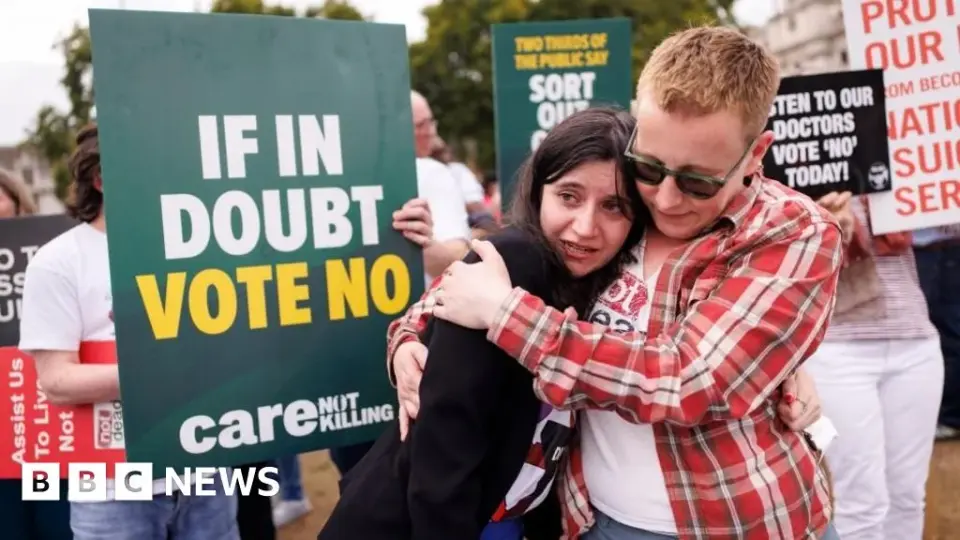
The UK House of Commons voted 286 to 270 to reject the Terminally Ill Adults (End of Life) Bill, ending the current attempt to legalise assisted dying in England and Wales. The bill, which would have allowed adults with fewer than six months to live to request assistance to die, failed despite emotional debates and personal testimonies. Prime Minister Andy Burnham did not vote, prioritising palliative care improvements. Supporters argue the law is unjust, while opponents cite insufficient safeguards. The issue is expected to resurface in future parliamentary sessions.
Key points
- The House of Commons voted 286 to 270 against the Terminally Ill Adults (End of Life) Bill, a majority of 16.
- The bill would have allowed adults with fewer than six months to live to apply for assisted dying, subject to safeguards including approval from two doctors and an expert panel.
- Prime Minister Andy Burnham did not vote, stating that improving end-of-life care should be the priority before considering legalisation.
- The previous attempt to pass the bill stalled in the House of Lords after peers tabled over 1,200 amendments.
- Supporters, including Labour MP Lauren Edwards and Dame Esther Rantzen, expressed deep sadness, while opponents, including Labour MPs Ashley Dalton, Dame Meg Hillier, and Jess Asato, welcomed the vote.
- The debate was a free vote, meaning MPs were not required to vote along party lines.
Background
Assisted dying has been a contentious issue in the UK for years, with previous attempts to legalise it failing in the House of Lords. The current bill was tabled by Labour MP Lauren Edwards, following a similar bill in the previous parliamentary session that was supported by MPs but stalled in the Lords. The debate has been ongoing for hundreds of hours in Parliament over the last two years, with significant public and political division.
How outlets are covering it
BBC reported the vote as a narrow defeat, highlighting emotional speeches and the personal stories shared by MPs. The Washington Post, in an opinion piece, framed the rejection as a step back from the assisted-suicide brink, noting the dominance of opponents' concerns about patients being encouraged to die. The Guardian analysed the failure, attributing it to a lack of government support from Prime Minister Burnham and the perception that the bill was not a priority for the Labour administration. ABC News was unavailable, so no perspective could be extracted from it.
Why it matters
The rejection of the assisted dying bill represents a significant moment in UK political and social policy, reflecting deep divisions within Parliament and society. The outcome underscores the ongoing debate over end-of-life care, the balance between individual autonomy and state protection, and the prioritisation of palliative care improvements. The issue is likely to resurface in future parliamentary sessions, given the strong public support for change and the emotional intensity of the debate.
What to watch
Supporters of assisted dying, including Labour MP Kim Leadbeater, have indicated that another attempt could be made as soon as next year. The issue is expected to remain a prominent topic in UK politics, with ongoing debates about the adequacy of safeguards and the need for improved palliative care. The next parliamentary session may see renewed efforts to pass legislation, potentially using the Parliament Act if the bill is approved twice by the Commons and opposed by the Lords.
- MPs vote against fresh attempt to legalise assisted dying BBC
- Opinion | Britain walks back from the assisted-suicide brink The Washington Post
- Why did the assisted dying bill fail in the Commons? | Rowena Mason The Guardian
- UK lawmakers vote down bill to allow assisted dying in England and Wales ABC News - Breaking News, Latest News and Videos
- 'Military jet tripped chaos' and 'A failure for dying people' BBC
Want the full story? Read the original reporting
Read on BBC