
Poland’s Constitutional Tribunal Crisis Deepens as Tusk and Nawrocki Clash Over Judicial Control
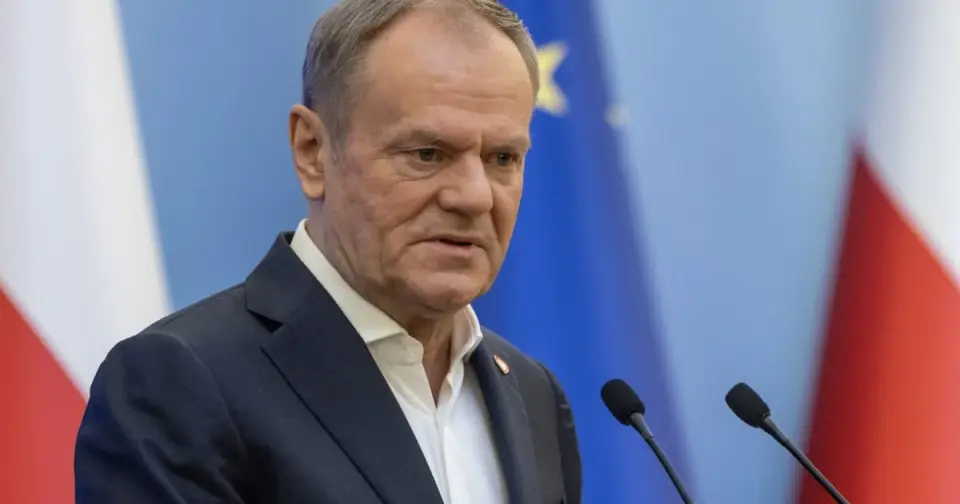
Poland’s political crisis intensified on November 3, 2026, as Prime Minister Donald Tusk and President Karol Nawrocki engaged in a bitter dispute over the control of the Constitutional Tribunal. Tusk’s government suspended the court’s leadership to install new judges, a move Nawrocki condemned as an illegal coup. The conflict, rooted in a decade-long judicial dispute, has drawn international attention and deepened Poland’s political divisions ahead of the 2027 elections.
Key points
- Tusk’s government suspended Constitutional Tribunal President Bogdan Święczkowski and his deputy to install new judges, a move Nawrocki called an illegal coup.
- Nawrocki accused Tusk of using the court dispute for a power grab, while Tusk defended his actions as vital to preserving the rule of law.
- The European Commission supported Tusk’s move, while the US ambassador urged restraint to avoid further escalation.
- Polish Catholic bishops called for reconciliation and prayer, warning that the crisis threatens the stability of the state.
- The dispute has deepened Poland’s political divisions ahead of the 2027 parliamentary elections, with Tusk and Nawrocki both consolidating their voter bases.
Background
The dispute over the Constitutional Tribunal dates back to 2015, when the right-wing Law and Justice (PiS) party appointed judges to seats already filled by the previous government. In 2021, the European Union warned that PiS’ actions posed a 'systemic risk to the rule of law in Poland' and froze $137 billion in EU funding. Tusk’s pro-European Civic Coalition was elected in 2023, promising to restore the Tribunal’s independence. Nawrocki, a PiS member, was elected president separately last year. The current crisis is the latest chapter in a long-running dispute over the rule of law in Poland.
How outlets are covering it
POLITICO emphasizes the heated exchanges between Tusk and Nawrocki, with Nawrocki accusing Tusk of an illegal power grab and Tusk defending his actions as vital to preserving the rule of law. CNN highlights the long-running nature of the dispute and the international attention it has drawn, including the US ambassador’s call for restraint. The New York Times focuses on Russia’s exploitation of the political turmoil, with Tusk accusing his opponents of finding support among pro-Russian forces. The National Catholic Reporter highlights the role of Polish Catholic bishops in calling for reconciliation and prayer, warning that the crisis threatens the stability of the state.
Why it matters
The crisis over the Constitutional Tribunal has deepened Poland’s political divisions and drawn international attention to the country’s rule-of-law issues. The dispute has also consolidated the voter base for both Tusk and Nawrocki ahead of the 2027 parliamentary elections, with the nationalist right aligning against Tusk and the pro-EU camp consolidating support. The crisis has also raised concerns about Poland’s stability and its relationship with the European Union and the United States.
What to watch
The crisis is expected to continue as Tusk and Nawrocki remain at odds over the control of the Constitutional Tribunal. Tusk has offered Nawrocki a one-on-one meeting to reduce tension, but it is unclear if the two will reach a compromise. The 2027 parliamentary elections will likely be a key moment for the crisis, with the outcome potentially determining the future of Poland’s judicial system and its relationship with the European Union.
- Clash intensifies between Tusk and Nawrocki over Poland’s top court POLITICO.eu
- Poland’s top court: Long-running spat between pro-Europe PM and pro-Trump president erupts CNN
- Russia Senses Opportunity in Polish Political Turmoil The New York Times
- As Poland's constitutional crisis spills into streets, bishops plead for reconciliation National Catholic Reporter
- Russia trying to foment 'instability' in Poland, PM Tusk says Reuters
Want the full story? Read the original reporting
Read on POLITICO.eu