
Portadown Standoff: 28-Year Ban on Orange Order March Lifted, Sparking Political Crisis
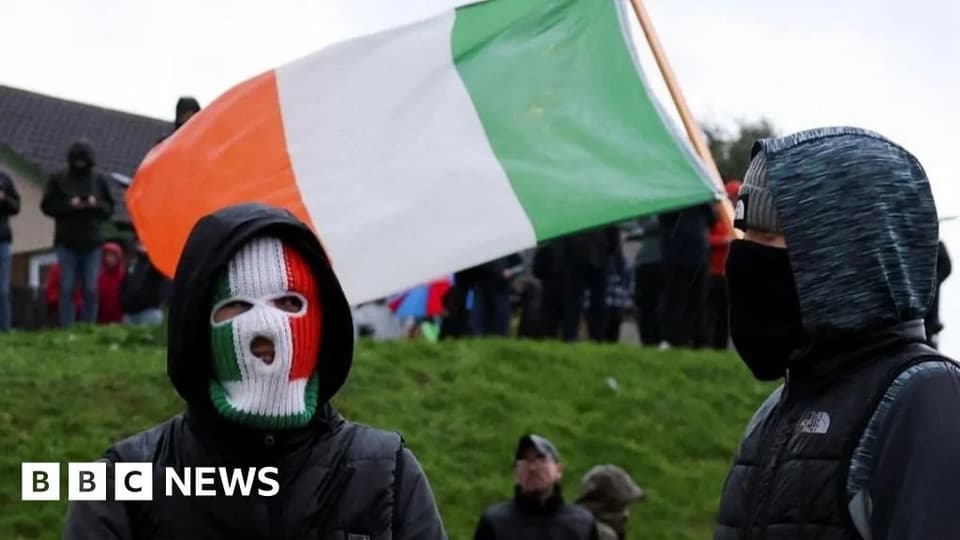
The Orange Order’s first march down Portadown’s Garvaghy Road in 28 years was authorized by the Parades Commission and upheld by the High Court at 2:15 a.m. Sunday. Hundreds of nationalist protesters, including Sinn Féin leaders, blocked the route, causing a tense standoff. Unionist politicians demanded respect for the rule of law, while nationalists called the decision a threat to the peace process. UK and Irish leaders appealed for calm as the dispute reignited deep-seated community divisions.
Key points
- The Parades Commission approved a scaled-back Orange Order march on Garvaghy Road in Portadown for the first time since 1998, limiting participants to 35 and requiring silence.
- The High Court overturned a judge’s ban on the march in a late-night sitting, concluding at 2:15 a.m. Sunday, citing respect for the commission’s judgment.
- Hundreds of nationalist protesters, including Sinn Féin president Mary Lou McDonald and First Minister Michelle O’Neill, blocked the route, calling the decision 'madness' and a threat to the peace process.
- DUP leader Gavin Robinson and MP Carla Lockhart accused Sinn Féin of inciting unlawful protests and undermining the rule of law.
- UK Prime Minister Andy Burnham, Irish Taoiseach Mícheál Martin, and Northern Ireland Secretary Chris Bryant all called for calm, with Martin calling the commission’s decision 'incomprehensible and wrong.'
- The dispute, dormant for nearly 30 years, reignited after a legal challenge in summer 2026, threatening the power-sharing arrangements at Stormont.
Background
The Drumcree parade dispute in Portadown has been a flashpoint since the mid-1990s, nearly derailing the 1998 Good Friday Agreement. The Orange Order, a Protestant pro-British organization, has sought to march down Garvaghy Road, a predominantly Catholic nationalist area, for over 30 years. The Parades Commission consistently denied permission until 2026. The dispute resurfaced after a legal challenge in summer 2026, reigniting tensions between unionists and nationalists. The Good Friday Agreement, which ended the Troubles, established a power-sharing government in Stormont, but the Drumcree issue has historically strained these arrangements. Recent political tensions, including a Stormont election next year, have made compromise difficult.
How outlets are covering it
Sinn Féin and nationalist residents view the march as a triumphalist act that reopens old wounds and threatens the peace process. Sinn Féin president Mary Lou McDonald called the decision 'madness' and 'primitive treatment of any community in the year 2026.' First Minister Michelle O’Neill questioned how the peace process works if such decisions are made. The DUP and unionist politicians, including leader Gavin Robinson and MP Carla Lockhart, defended the march as a legal right and accused Sinn Féin of inciting unlawful protests and undermining the rule of law. The BBC framed the dispute as a clash of political cultures that could affect power-sharing at Stormont. The Guardian emphasized the tense standoff and the involvement of high-profile politicians. CBS News highlighted the historical context of the Troubles and the competing identities in Northern Ireland. The Parades Commission and courts upheld the march, while the Irish Taoiseach Mícheál Martin called the decision 'incomprehensible and wrong.'
Why it matters
The Drumcree dispute is a microcosm of the deeper divisions in Northern Ireland. The march’s approval and the subsequent standoff threaten to destabilize the power-sharing arrangements at Stormont, which are already strained by political tensions. The dispute could spill over into other parts of Northern Ireland, as it did in the 1990s. It also raises questions about the effectiveness of the peace process and the ability of institutions to manage community tensions. The involvement of high-profile politicians from both sides, and the calls for calm from UK and Irish leaders, underscore the potential for the dispute to escalate and affect broader political stability.
What to watch
The Orange Order may attempt to march again, potentially leading to further confrontations. The Parades Commission and courts may face additional legal challenges. Political leaders at Stormont may need to negotiate a compromise to prevent the dispute from derailing the power-sharing government. The UK and Irish governments may intervene to mediate the situation. The dispute could influence the upcoming Stormont election, with parties digging in rather than seeking compromises. Community relations in Portadown and other parts of Northern Ireland may remain tense as the dispute continues to play out.
- Orange Order march row goes to heart of ongoing divisions in Northern Ireland BBC
- Drumcree: NI secretary of state calls for 'compromise' as Orange Order march blocked by protesters BBC
- Tense standoff over loyalist march in Portadown as protesters block route The Guardian
- Controversial Northern Ireland march set to be held for first time since Good Friday Agreement CBS News
- Protesters block Orange Order from marching through Catholic area in Northern Ireland Reuters
Want the full story? Read the original reporting
Read on BBC