
Serbia’s Student Coalition Demands Purge of Security and Judiciary Elites
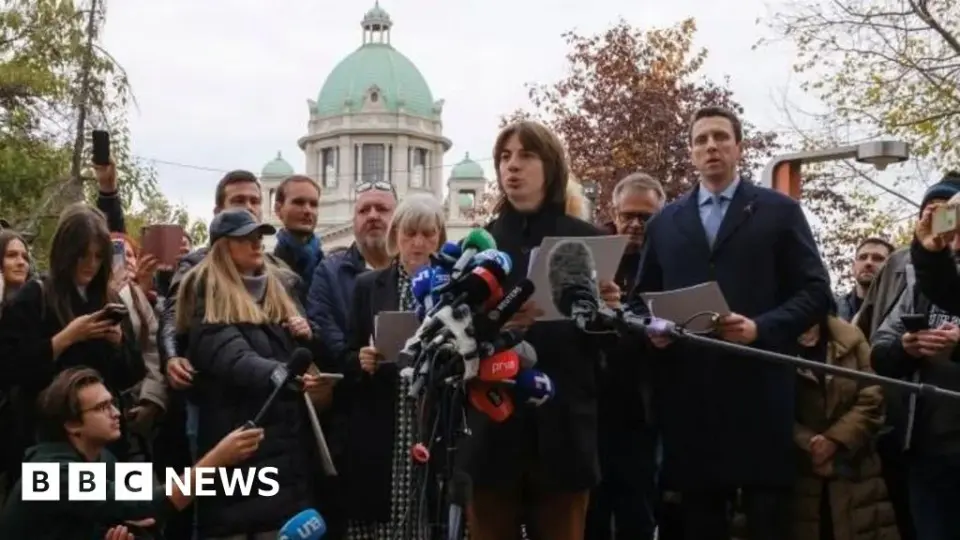
The newly elected Student List in Serbia has demanded the immediate dismissal of top police, intelligence, and anti-terror officials, aiming to dismantle the apparatus of former president Aleksandar Vučić. While the movement seeks rapid institutional reform, critics warn that a hasty purge could undermine the rule of law. The transition faces challenges from entrenched loyalists, including acting president Ana Brnabić, who accuses the new MPs of seeking 'revolutionary justice.'
Key points
- Student List MPs called for the removal of heads of the police, BIA security agency, and anti-terror unit, citing past illegal actions.
- The movement, born from protests over the 2024 Novi Sad railway station collapse, promises to halt corruption and return stolen assets to the state budget.
- Acting President Ana Brnabić criticized the demands as 'revolutionary justice' rather than rule of law, warning of media crackdowns.
- Economist and MP Dejan Šoškić advocated for a 'lustration law' to ban corrupt officials from public office within six months.
- The Student List, comprising 141 candidates including professors and doctors, lacks a single leader but operates under a 1,200-page manifesto.
Background
This political shift follows a period of intense authoritarian rule under Vučić, who governed for nearly 15 years. The current crisis originated in November 2024 when a railway station canopy collapsed in Novi Sad, killing 16 people and sparking widespread protests against corruption. The Student List emerged from these demonstrations, eventually challenging Vučić in the recent election. This transition contrasts with recent student-led unrest in Albania, where protests against Prime Minister Edi Rama have turned violent without resulting in a change of government.
How outlets are covering it
BBC News highlights the immediate demand for a purge of security and judicial figures, noting the risk of evidence destruction during the transition. The Guardian emphasizes the historic nature of the peaceful transfer of power, attributing Vučić’s concession to fear of popular resistance and internal security doubts. While BBC focuses on the practical challenges of implementing the 1,200-page plan, The Guardian stresses the need for European support to consolidate democracy, noting that previous EU tolerance for Vučić hindered democratic progress. Both sources agree on the significance of the event but differ in emphasis: BBC on institutional mechanics, The Guardian on the broader geopolitical and civil society implications.
Why it matters
The success of Serbia’s transition will determine whether the region can stabilize democratic governance in the Western Balkans. A failed purge or return to authoritarianism could destabilize EU integration efforts and embolden other authoritarian regimes in the region. The outcome also sets a precedent for how civil society can challenge entrenched power structures in Europe.
What to watch
The Student List must navigate the handover of power over the coming weeks while preventing the destruction of evidence of wrongdoing. Presidential elections are scheduled for December, though Vučić is barred from running. The new MPs must implement reforms in media, anti-corruption, and judicial independence while balancing Serbia’s complex foreign policy relations with the EU, Russia, and China.
- Student-backed election winners demand sweeping resignations in Serbia BBC
- Serbia’s students found a new way to topple a strongman The Economist
- After Vucic ouster, Serbia’s weapons-buying habits are under the microscope Defense News
- Serbia's victorious students call for key state officials to resign, graft probes Reuters
- Serbia’s students achieved the impossible. Europe must not fail them now | Srđjan Cvijić The Guardian
Want the full story? Read the original reporting
Read on BBC