
Serbia's Vučić Concedes as Student List Wins Landslide in Historic Election
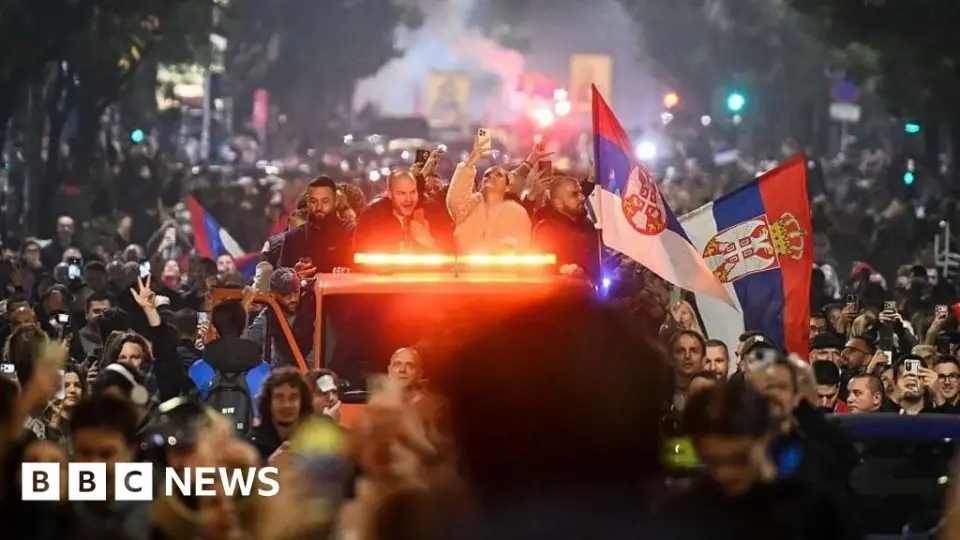
Aleksandar Vučić has conceded defeat in Serbia's snap parliamentary elections, ending his 14-year rule. The grassroots Student List, which emerged from protests over a 2024 train station collapse, is projected to win 141 of 250 seats with 52.9% of the vote. Vučić's Serbian Progressive Party is expected to secure 103 seats. The result, marked by record turnout of nearly 70%, triggers celebrations in Belgrade and prompts EU leaders to offer support for reforms, while Vučić faces the prospect of a second election to choose his presidential successor.
Key points
- Vučić admitted defeat late Sunday, stating it was 'clear' his party had lost, despite final results not yet being certified.
- The Student List is projected to win 141 seats (52.9% of the vote), well above the 126-seat majority threshold, while Vučić's list is projected at 103 seats (38.8%).
- Turnout reached 64.9% by 6 PM local time, with final projections nearing 70%, the highest since the breakup of Yugoslavia in 1992.
- The Student List, a leaderless movement including doctors, actors, and academics, campaigned on anti-corruption, media freedom, and purging officials who cracked down on protesters.
- Vučić's resignation as president to run for prime minister now necessitates a second election to choose his successor as head of state before the end of the year.
Background
This election followed two years of student-led protests triggered by the November 2024 collapse of a train station canopy in Novi Sad, which killed 16 people and was viewed as emblematic of state corruption. Vučić, who served two terms as president, stepped down in September to contest the parliamentary vote, aiming to return as prime minister. The move mirrored tactics used by Russian leader Vladimir Putin to maintain power, but Serbian voters rejected the strategy. Previous archive coverage noted concerns over electoral fairness and potential unrest, though the final result was a decisive shift away from Vučić's 'competitive authoritarian' system.
How outlets are covering it
BBC and Al Jazeera reported on the emotional aftermath, with BBC highlighting celebrations in Belgrade and Novi Sad, and Al Jazeera noting euphoria at Student List headquarters. The Guardian provided detailed projections, emphasizing the Student List's 141-seat majority and EU leaders' immediate support for reforms. Financial Times drew parallels with Hungary's recent ousting of Viktor Orbán, noting that while both movements were anti-corruption, the Student List lacks a single strong leader and has a more amorphous agenda. FT also highlighted Vučić's previous control of media and state resources, which failed to prevent his defeat. All sources agreed on the historic nature of the turnout and the end of Vučić's 14-year dominance.
Why it matters
The defeat of Vučić marks a significant shift in Serbian politics, potentially restoring democratic checks and balances and restarting the stalled EU membership bid. The Student List's victory signals a rejection of authoritarianism and corruption, but its lack of experienced political leaders and clear policy agenda may pose challenges in governance. The result also has regional implications, potentially affecting Serbia's relations with Russia, the EU, and neighboring countries like Bosnia and Kosovo.
What to watch
Serbia must hold a second election to choose Vučić's successor as president before the end of the year. The Student List will need to form a government and develop a policy program, facing challenges in managing its diverse coalition and addressing complex issues like corruption and EU integration. EU leaders have expressed readiness to support reforms, but the movement's ambiguous positioning on the EU may complicate the process.
- Serbia's Vučić concedes election defeat to student-led protest movement BBC
- Serbia's Vucic concedes defeat in historic election win for student protest movement Reuters
- ‘Door to EU is open’ new Serbian government told after Vučić concedes election – Europe live The Guardian
- Serbia’s Vucic concedes election defeat to student-led movement Al Jazeera
- After Hungary, Serbia takes its turn to show the power of the people Financial Times
Want the full story? Read the original reporting
Read on BBC