
Spanish Polls Show PP-Vox Coalition Securing Majority Ahead of November 29 Vote
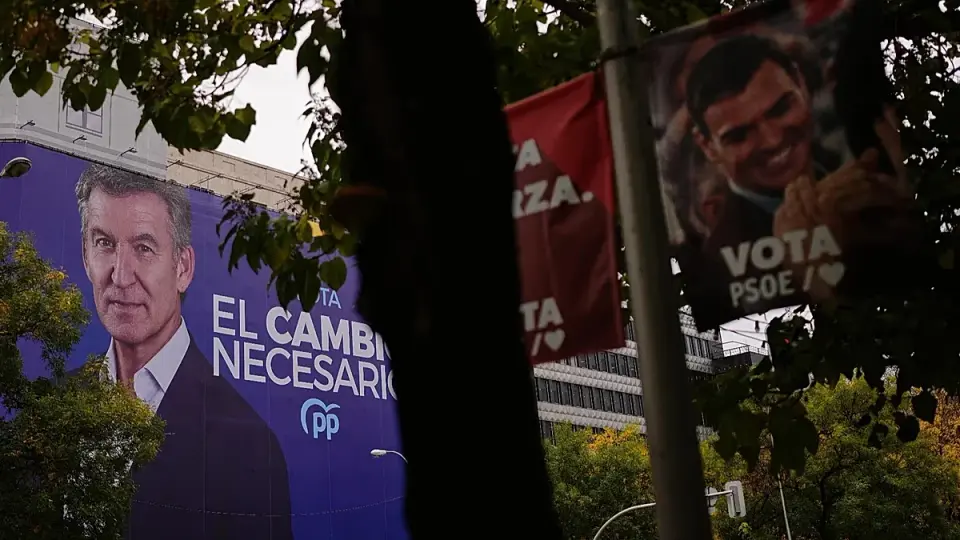
One week before Spain’s general election on 29 November, four major polls place the conservative Popular Party (PP) ahead of the incumbent Socialist Party (PSOE). All surveys indicate a PP-Vox right-wing coalition would secure an absolute majority in the 350-seat Congress of Deputies, with combined totals ranging from 190 to 210 seats. The PSOE is projected to win between 98 and 119 seats, while the far-right Vox party is estimated to gain between 63 and 80 seats. The left-wing Broad Front is projected as the fourth-largest force in some polls, but no survey assigns representation to the Sumar coalition. The gap between the PP and PSOE varies significantly across polls, ranging from 0.5 to 6.4 percentage points.
Key points
- Ipsos, Data10, GAD3, and Hamalgama Métrica all project the PP as the leading party, with vote shares between 30.3% and 32.1%.
- The PSOE is projected to receive between 25.4% and 29.8% of the vote, with seat estimates ranging from 98 to 119.
- Vox is projected to win between 63 and 80 seats, with vote shares ranging from 17.9% to 20.6%.
- A PP-Vox coalition is projected to secure between 190 and 210 seats, exceeding the 176 needed for an absolute majority.
- The Broad Front is projected to win between 6 and 10 seats in some polls, while Sumar is not assigned representation in any of the four surveys.
- The gap between the PP and PSOE ranges from 0.5 percentage points (Ipsos) to 6.4 percentage points (Hamalgama Métrica).
Background
Spain’s snap election follows eight years of Socialist-led rule under Prime Minister Pedro Sánchez, who called the vote eight months early to focus on the housing crisis. The left-wing coalition previously supporting the government fractured in October 2026, with the Broad Front and Podemos failing to unite. Recent events, including two deadly rail disasters and a migrant crisis in the Canary Islands, have impacted the campaign. The PP leader, Alberto Núñez Feijóo, has positioned himself as a pragmatic administrator, while Vox leader Santiago Abascal has emphasized immigration and border control. The outcome could mark the first Spanish government with far-right ministers since the end of the Franco dictatorship.
How outlets are covering it
Euronews reports that all four polls place the PP ahead of the PSOE, but differ on the gap and Vox’s result. The European Council on Foreign Relations notes that a PP-Vox government would end Madrid’s progressive exceptionalism and potentially shift foreign policy toward closer US ties. BBC highlights the impact of corruption scandals and rail disasters on Sánchez’s campaign, while noting Feijóo’s lack of English may limit his international profile. Vox leader Santiago Abascal denies his party is far-right, while critics describe its ideology as reminiscent of the Franco era. The Broad Front, led by Ada Colau, has lost support to the Socialists and is polling in fourth place.
Why it matters
The election outcome will determine whether Spain continues with a progressive government or shifts to a right-wing coalition. A PP-Vox majority could lead to stricter immigration policies, closer ties with the US, and a more centralized vision of the country. The PSOE’s potential loss of power would mark the end of eight years of Socialist-led rule and could impact Spain’s foreign policy and domestic priorities, including housing and social justice.
What to watch
The general election will take place on 29 November 2026. If the PP-Vox coalition secures a majority, Alberto Núñez Feijóo is expected to become prime minister. If the PSOE retains power, Pedro Sánchez will continue his sixth term in 11 years. Post-election negotiations may involve Catalan parties, such as Junts per Catalunya, which played a pivotal role in supporting the previous government.
- Polls favour Spain's Popular Party over socialists ahead of election Euronews.com
- Spain’s election will be a referendum on Pedro Sánchez The Economist
- On the Trail With Spain’s Prime Minister, as He Tries to Pull Out a Win The New York Times
- The end of the exception: The future of Spain’s foreign policy European Council on Foreign Relations
- Who to watch in Spain's election race BBC
Want the full story? Read the original reporting
Read on Euronews.com