
York University study reveals AI visual models use different internal mechanisms than human brains
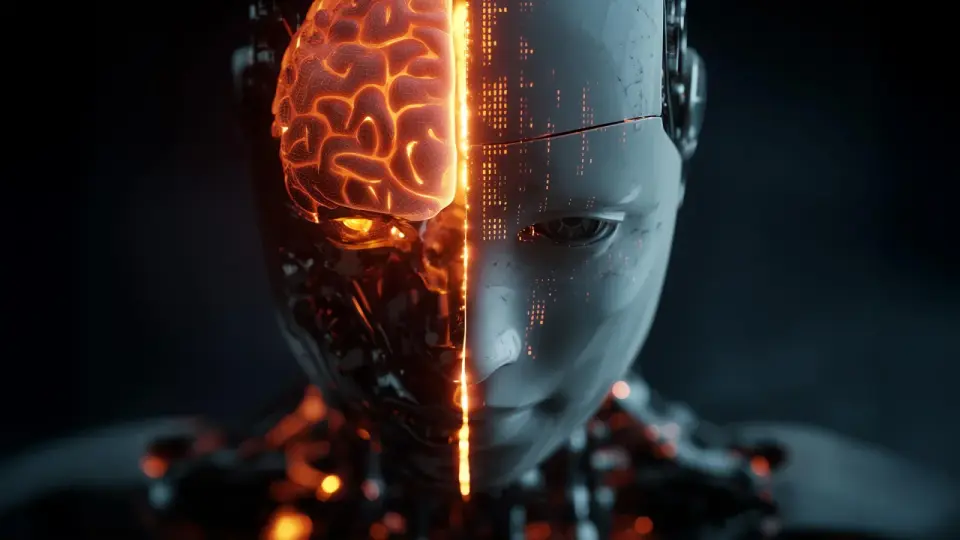
A new study from York University challenges the assumption that artificial neural networks (ANNs) process visual information similarly to the human brain. While ANNs can accurately predict neural activity related to object recognition, a new 'reverse predictivity test' shows that brain activity does not equally predict the internal features of these AI models. This asymmetry suggests that AI and biological vision rely on fundamentally different internal mechanisms, despite producing similar outputs. The findings, published in Nature Machine Intelligence, warn that current AI models may accumulate differences from primate brains over time, potentially undermining their utility in neuroscience and clinical research. The researchers have released a public toolkit to help developers identify which parts of AI models truly align with biological neural activity.
Key points
- York University researchers developed a 'reverse predictivity testing' method to evaluate the similarity between AI models and the human brain.
- The study found that while AI models can predict recorded neuron activity, the reverse is not true: neuron activity poorly predicts many internal features of the AI models.
- This asymmetry was not observed when comparing neural activity across different human brains, indicating a unique disconnect between AI and biological vision.
- The research used 1,320 natural photographs and 300 stylized images of 10 common objects (e.g., bear, elephant, face) to test these models.
- The findings suggest that AI systems may solve visual tasks using internal strategies that the primate brain does not employ.
- The team released a public testing toolkit to help AI developers evaluate and improve the biological fidelity of their models.
Background
This study builds on a decade of using artificial neural networks (ANNs) as leading tools in neuroscience to explain the brain's visual system. Previous research primarily focused on how well these models could reproduce patterns of brain activity. The new findings add a critical layer to this ongoing effort to understand the relationship between computational models and biological neural mechanisms, particularly in the context of developing more accurate models for conditions like autism and PTSD.
How outlets are covering it
Both ScienceDaily and UA.NEWS report on the same study from York University, published in Nature Machine Intelligence. They agree on the core finding: AI models can predict brain activity, but brain activity does not equally predict AI internal features. ScienceDaily provides more detail on the specific test methodology, including the use of 1,320 natural photographs and 300 stylized images, and quotes senior author Kohitij Kar extensively. UA.NEWS offers a more concise summary, focusing on the 'reverse predictability' concept and the release of a public toolkit, but lacks the specific quantitative details and direct quotes found in the primary source. Both sources highlight the implication that current AI models may not be as 'brain-like' as previously assumed.
Why it matters
The discovery is significant because it challenges a fundamental assumption in neuroscience: that AI models accurately mirror the brain's visual processing. If AI and brain mechanisms differ, researchers using these models to study human behavior, neurological conditions, or psychological disorders may draw misleading conclusions. This could impact the development of clinical research and the understanding of conditions like autism and PTSD, which rely on accurate models of neurotypical brain function. The findings also suggest a need for caution in applying AI models to other areas of neuroscience, such as hearing, language, and movement.
What to watch
The research team has released a publicly available testing toolkit to help AI developers evaluate their models and identify opportunities for improvement. This toolkit aims to help researchers focus on developing AI systems that more accurately reflect biological mechanisms. Future research may involve using this diagnostic metric to refine existing models and develop a new generation of AI that not only performs tasks accurately but also offers a more faithful picture of how the human brain processes information. The findings may also prompt a re-evaluation of how much AI models can reveal about the nervous system in other domains.
- AI may not work like the human brain after all, scientists discover ScienceDaily
- Researchers find a discrepancy between AI and brain mechanisms — ScienceDaily UA.NEWS
- Study finds AI processes visual information differently from human brain www.wam.ae
- Artificial Intelligence Models Differ From Brains, York Study Finds JournalArta
Want the full story? Read the original reporting
Read on ScienceDaily