
Thunberg joins fourth week of French school protests amid fiscal and political tensions
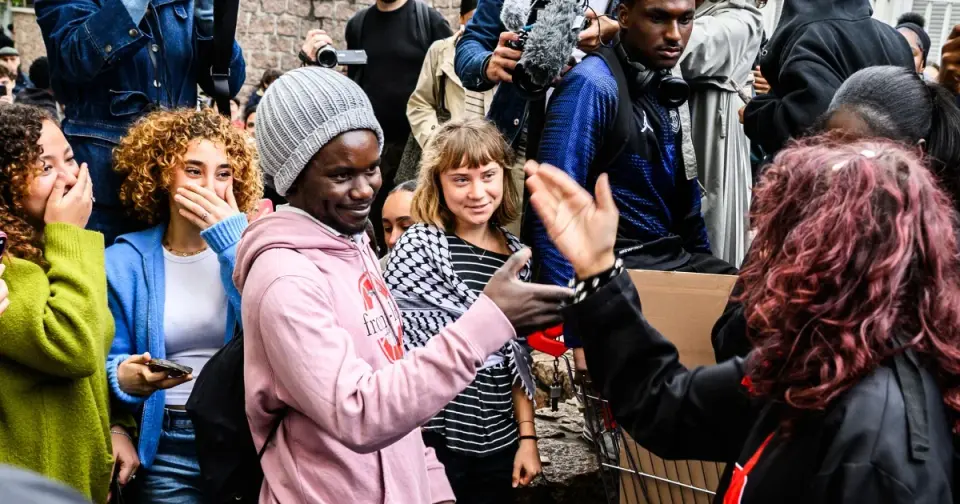
Swedish activist Greta Thunberg joined French students in Saint-Denis on Tuesday during the fourth week of nationwide protests over poor school conditions. The movement, which has involved marches and blockades, coincides with a government facing severe budget constraints and rising political uncertainty ahead of a presidential election. While Education Minister Edouard Geffray reported 200 school closures, Thunberg criticized the police response as violent and called for global support for young people demanding basic rights.
Key points
- Greta Thunberg participated in a demonstration outside Lycee Paul Eluard in Saint-Denis, a working-class suburb of Paris, where the protest movement first gained traction.
- The nationwide student movement is in its fourth week, focusing on teacher shortages, classroom overcrowding, and dilapidated facilities, with over 500 schools shut down according to some reports, though the Education Minister cited 200 closures.
- Thunberg described the police response as 'extremely violent,' noting that riot police have used tear gas and charged at protesters, resulting in hundreds of injuries and thousands of arrests.
- The government suspended the use of stun grenades last week after a teenager lost a hand in an incident in Lens, though conflicting accounts exist regarding the cause of the injury.
- France faces a fiscal crisis with borrowing costs at their highest in years, limiting the government's ability to address the students' demands, while far-right candidate Marine Le Pen leads opinion polls and promises to slash public spending.
- Thunberg stated that young people worldwide are inspired by the French students' demands for basic rights, linking the issue to broader themes of funding, climate crisis, and social injustice.
Background
This development follows a series of escalating incidents in France, including a September start to the protest movement and a critical incident in early October where a 15-year-old student lost a hand in Lens. Previous coverage highlighted the government's struggle to balance fiscal constraints with educational reform demands, as well as the political tension between the cash-strapped government and far-right candidate Marine Le Pen, who is positioned to potentially lead the first far-right government since World War II. Thunberg's involvement also aligns with her broader activism, including recent support for climate reparations in Nepal, where she argued for accountability from wealthy nations and fossil fuel firms.
Why it matters
The protests highlight a deepening crisis in French education and social policy, exacerbated by severe budget constraints and high borrowing costs. The government's limited room for maneuver, combined with the political threat posed by Marine Le Pen's promise to slash spending, creates a volatile environment. Thunberg's involvement internationalizes the issue, framing local educational grievances as part of a global movement for youth rights and social justice, while the police response remains a focal point of debate between left-wing critics and far-right defenders of order.
What to watch
The government has promised to act on the pupils' concerns but faces significant financial limitations. The protest movement is expected to continue, with further marches and potential clashes. The political landscape will be closely watched as the presidential election approaches, with Le Pen's campaign focusing on fiscal austerity, which could impact funding for education and other public services. The outcome of the protests and the government's response will likely influence the election dynamics and the future of French educational policy.
Want the full story? Read the original reporting
Read on NBC News