
Tusk vows no compromise on rule of law as Poland’s constitutional standoff intensifies
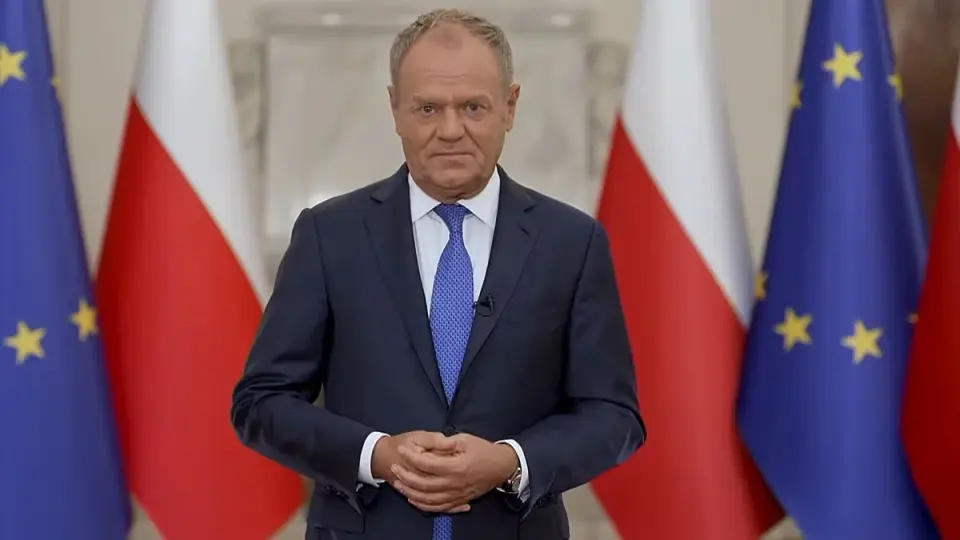
Prime Minister Donald Tusk addressed the nation on Saturday, vowing that the rule of law would prevail over violence following a violent confrontation at the Constitutional Tribunal. The crisis escalated after Judge Anna Korwin-Piotrowska suspended Tribunal President Bogdan Święczkowski, prompting President Karol Nawrocki to abort a trip to Senegal and physically enter the court building. While Tusk framed the move as necessary to restore judicial independence, the opposition and President Nawrocki accused the government of staging a coup. Tusk rejected compromise, stating that lawlessness cannot be negotiated away, while Nawrocki called for emergency meetings to stabilize the political situation. The dispute, rooted in a 2015 conflict over judicial appointments, has paralyzed the institution and drawn international attention to Poland’s deepening constitutional fracture.
Key points
- Tusk stated that restoring the rule of law is an obligation and that no compromise is possible in matters of lawlessness.
- Nawrocki aborted a state visit to Senegal to return to Warsaw and physically entered the Tribunal building, accusing the government of a forcible takeover.
- Judge Anna Korwin-Piotrowska suspended Tribunal President Bogdan Święczkowski and his deputy, Bartłomiej Sochański, for one month.
- The dispute stems from a 2015 conflict where the Sejm elected judges whose oaths Nawrocki refused to administer.
- Tusk warned that pro-Russian groups could exploit the political conflict and pledged to ensure the Tribunal operates independently.
Background
The current crisis is the latest phase of a decade-long dispute over the Constitutional Tribunal’s composition and leadership. The conflict began in 2015 when the Civic Platform and Law and Justice (PiS) parties clashed over the appointment of five judges. PiS, which governed from 2015 to 2023, was accused by critics and the EU of imposing political control over judicial institutions, leading to EU fines. Tusk’s pro-European government took power in 2023 with a mandate to restore judicial independence, but its efforts have been blocked by vetoes from successive PiS-aligned presidents, including Nawrocki. The Venice Commission has previously stated that the president’s role in administering judicial oaths is ceremonial and that he should not review parliament’s election of judges.
How outlets are covering it
Euronews highlights Tusk’s defiant tone, emphasizing his refusal to compromise on rule of law and his warning against pro-Russian exploitation of the crisis. CNN focuses on the physical confrontation, detailing the detention of three protesters and Nawrocki’s decision to turn back his plane to Senegal to support the suspended judge. TVP World provides a balanced view of the impasse, noting that both leaders doubled down on their positions and that the Tribunal itself is the primary casualty. It also highlights the broader political alignment, with Nawrocki meeting right-wing parties that found common ground on the issue, while Tusk argued that his government had attempted resolutions that were rejected. All sources agree on the core facts of the suspension and the physical clash but differ in framing the legitimacy of the government’s actions versus the opposition’s accusations of a coup.
Why it matters
The crisis threatens to further paralyze Poland’s top court, which is essential for resolving constitutional disputes. The confrontation between the government and the president raises fundamental questions about the separation of powers and the authority of the judiciary. As TVP World’s analyst Stuart Dowell noted, even if a compromise is reached, upcoming elections could lead to a reversal of changes, setting off another round of constitutional warfare. The dispute also has international implications, with the EU and Venice Commission closely monitoring the situation for its impact on judicial independence and rule of law in the region.
What to watch
Tusk has pledged to provide the Tribunal with the security and conditions needed to carry out its duties, but no concrete agreement with Nawrocki has been reached. Nawrocki has called for urgent meetings with parliamentary group heads to stabilize the political situation. The next steps will likely involve further political maneuvering and potential legal challenges as both sides attempt to assert their authority over the judiciary. The outcome of the upcoming elections could also influence whether the current impasse is resolved or exacerbated.
- Poland’s Tusk strikes defiant tone over court clash, vows rule of law Euronews.com
- Polish PM Tusk vows support for tribunal amid court crisis Reuters
- Police detain 3 protesters during overnight rally as Polish president backs suspended judge CNN
- Poland Deploys Riot Police in Standoff Over Country’s Top Court The New York Times
- 'No compromise': Poland's top court row between government and president deepens TVP World
Want the full story? Read the original reporting
Read on Euronews.com