
Ukraine Advances in Donetsk as Russia Escalates Strikes and Closes Novaya Gazeta
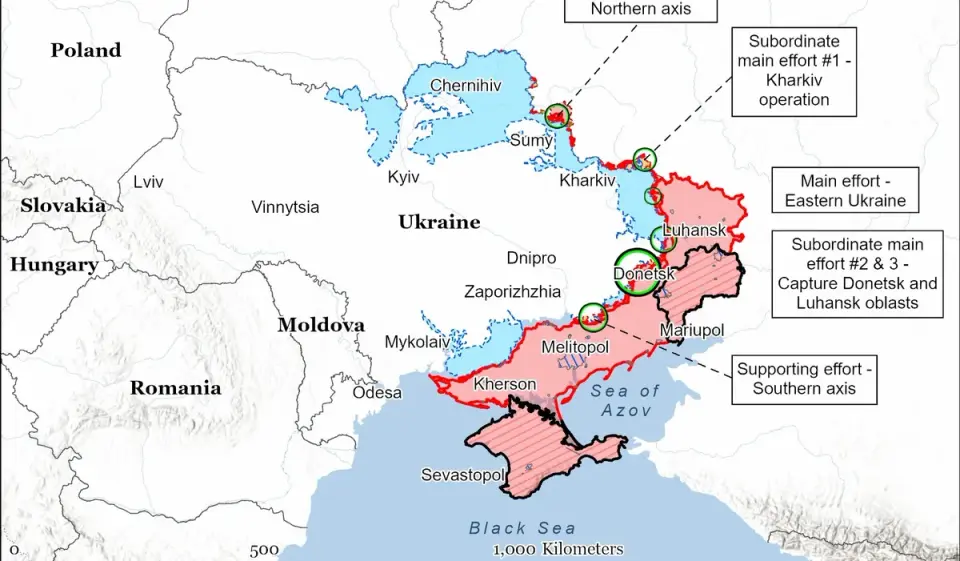
The Institute for the Study of War (ISW) reports that Russian forces have suffered 698,740 casualties since March 2025 while gaining only 4,122 square kilometers, leading the Kremlin to reject ceasefire proposals. On October 30, a Ukrainian delegation arrived in occupied Oleshky to facilitate a humanitarian ceasefire in Kherson Oblast, which has held for 80 hours without violations. Meanwhile, the Kremlin forced independent media outlet Novaya Gazeta to close on November 9 following years of crackdowns. Militarily, Ukrainian forces advanced south of Oleksandrivka and west of Kostyantynivka, while Russian forces made gains near Hulyaipole and Orikhiv. Russia launched 113 drones and four cruise missiles against Ukraine overnight, while Ukrainian forces struck the Novokuibyshevsk Oil Refinery in Samara Oblast, angering the Trump administration.
Key points
- Kremlin rejects large-scale ceasefire despite 698,740 Russian casualties and limited territorial gains since March 2025.
- Ukrainian delegation arrived in occupied Oleshky on October 30 to facilitate humanitarian ceasefire in Kherson Oblast, which has held for 80 hours.
- Kremlin forced independent media outlet Novaya Gazeta to close on November 9 after years of crackdowns, including seizing its printing press and declaring it a foreign agent.
- Ukrainian forces advanced south of Oleksandrivka and west of Kostyantynivka, while Russian forces advanced near Hulyaipole and Orikhiv.
- Russia launched 113 drones and four cruise missiles against Ukraine overnight, while Ukrainian forces struck the Novokuibyshevsk Oil Refinery in Samara Oblast, 787 kilometers from Ukraine's border.
Background
This development follows Ukraine's Operation Vivaldi in September 2026, which reversed Russian gains and inflicted record casualties. In late September, ISW warned of Putin's winter strategy to force capitulation through massive drone strikes. In late October, Ukraine reclaimed ground in Donetsk while deep strikes hit Russian industry, including a petrochemical plant in Omsk. The current escalation in strikes and media crackdowns reflects the ongoing struggle for control of the information space and battlefield initiative.
How outlets are covering it
ISW emphasizes the Kremlin's rejection of ceasefire despite enormous casualties and limited gains, highlighting the humanitarian ceasefire in Kherson Oblast and the closure of Novaya Gazeta as key developments. The Economist focuses on the shift in the war, noting that while Ukraine is advancing modestly on the front lines, Russia is stepping up bombardment of Ukrainian cities and infrastructure, with long-range strikes tripling between June and September. Critical Threats highlights the devastating daytime drone strikes on October 29, killing at least 19 and injuring 82, and the Kremlin's attempt to drive a wedge between European countries and exclude them from peace talks. All sources agree on the intensity of Russian strikes and Ukrainian advances, but differ in emphasis: ISW focuses on the broader strategic picture, The Economist on the data-driven shift in the war, and Critical Threats on the immediate humanitarian impact and diplomatic maneuvering.
Why it matters
The closure of Novaya Gazeta signals the Kremlin's tightening control over Russia's information space, while the humanitarian ceasefire in Kherson Oblast offers a rare moment of cooperation. The escalation in strikes and the Kremlin's rejection of ceasefire proposals suggest that the war is far from over, with both sides seeking to gain leverage through military and diplomatic means. The strikes on Russian oil infrastructure and the Kremlin's attempt to drive a wedge between Ukraine and the United States highlight the growing complexity of the conflict and its impact on global energy markets and diplomatic relations.
What to watch
The next developments will likely include the outcome of the humanitarian ceasefire in Kherson Oblast, the Kremlin's response to Ukrainian strikes on Russian oil infrastructure, and the potential for European countries to be included in peace talks. The closure of Novaya Gazeta may lead to further crackdowns on independent media in Russia, while the escalation in strikes could lead to increased civilian casualties and infrastructure damage in Ukraine. The Kremlin's attempt to drive a wedge between Ukraine and the United States may also lead to a shift in US policy toward the conflict.
- ISW Russian Offensive Campaign Assessment, October 30, 2026 Kyiv Post
- Russian Offensive Campaign Assessment, October 30, 2026 Institute for the Study of War
- Stalled on the front lines, Russia hits Ukraine harder The Economist
- Russian Offensive Campaign Assessment, October 29, 2026 Critical Threats
- Russia unleashes killing spree against Ukrainian civilians on Thursday, targeting children, trains, and buses (Ukraine Battlefield update, Day 1,708) EUobserver
Want the full story? Read the original reporting
Read on Kyiv Post