
UK and EU finalize pragmatic trade and mobility deals as Burnham floats rejoining bloc
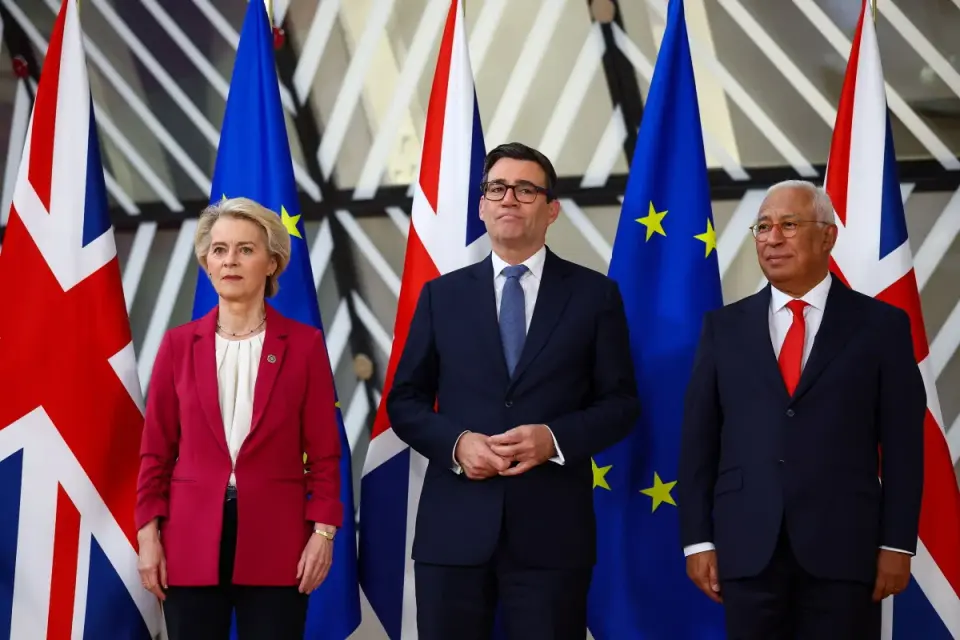
UK Prime Minister Andy Burnham and EU leaders agreed on a package of pragmatic deals to ease food trade, link emissions systems, and create a youth mobility scheme. While Burnham stated Brexit has failed and opened the door to future rejoining, he ruled out immediate changes to free movement or single market access. Critics warn the deals undermine sovereignty, while supporters argue they are necessary to address economic stagnation and security challenges.
Key points
- Burnham and EU leaders agreed to remove checks on food and agricultural products, link carbon emissions trading, and allow up to 100,000 young people from each side to live and work in the other for up to three years.
- Burnham declared that 'The Brexit we were given has not worked' and stated that all options, including rejoining the EU, should be on the table, though he ruled out rejoining in the current parliament.
- The agreement is contingent on resolving disputes over university tuition fees for EU students in the UK, with EU negotiators demanding domestic rates rather than higher foreign fees.
- Burnham estimated the deals could add 0.5% to the UK economy, a figure previously set at 0.4%, by reducing costs for consumers and exporters.
- The summit was the second formal UK-EU meeting since Brexit, aimed at mending fences after a decade of separation, with discussions on security and defense cooperation also taking place.
Background
This summit follows months of diplomatic work initiated by previous UK Prime Minister Keir Starmer, who was ousted this summer. Burnham, who took office four months ago, has adopted a more forceful stance on Europe, breaking a decade-long political silence on the possibility of rejoining the EU. Earlier this month, Burnham also became the first British leader to explicitly confirm that Russia interfered in the 2016 Brexit referendum, linking it to current concerns about disinformation. The current negotiations are part of a broader 'reset' of UK-EU ties, driven by economic stagnation and shifting global dynamics, including US trade policies and security challenges in Ukraine.
How outlets are covering it
AP News emphasizes the 'pragmatic' nature of the deals, highlighting Burnham's statement that 'The deal is done' and his focus on reducing costs for consumers and exporters. CNN frames the summit as a potential undoing of Brexit, noting that Burnham has staked out a more bullish position than his predecessor, but points out that the actual approach has not changed significantly from Starmer's cautious strategy. The New York Times focuses on the modest scope of the deals, noting that freedom of movement and trade policy remain off the table, and highlights the external drivers of the rapprochement, including US tariffs and global security challenges. Critics, including Nigel Farage and Kemi Badenoch, argue that the deals undermine British sovereignty and that Burnham has no mandate to negotiate closer ties, while supporters argue that the deals are necessary to address economic stagnation and security challenges. EU officials, including Kaja Kallas, have expressed weariness from the shifting demands of seven British prime ministers over the last decade and want real clarity about the UK's intentions.
Why it matters
The outcome of this summit could set the trajectory for UK-EU relations in the coming years, potentially leading to a closer partnership or even rejoining the EU. The deals on food trade, emissions, and youth mobility could have significant economic impacts, reducing costs for consumers and exporters and creating new opportunities for young people. The political implications are also significant, as Burnham's stance on Brexit has reignited a divisive debate in the UK, with critics arguing that the deals undermine sovereignty and supporters arguing that they are necessary to address economic stagnation and security challenges. The summit also highlights the broader shift in global dynamics, with the UK and EU seeking to strengthen their partnership in the face of US trade policies and security challenges in Ukraine.
What to watch
The UK and EU will continue negotiations on university tuition fees, with the goal of reaching an agreement within the next six months. Burnham has committed to beginning talks with the EU 'about options for our long-term relationship' after the summit, without providing further details or timeline. The UK government will publish a joint statement detailing the agreed deals, and the political debate over Brexit is likely to intensify, with critics and supporters arguing over the implications of the deals and the possibility of rejoining the EU. The UK and EU will also continue to cooperate on security and defense, with the summit providing an opportunity to discuss stronger cooperation on these issues.
- The UK and EU hold a rare summit to strengthen ties as Burnham seeks to mend Brexit damage AP News
- Ten years on, is the UK preparing to undo Brexit? CNN
- Britain and EU to launch reset with food and youth mobility deals Reuters
- Easing Back From Brexit: What to Expect at U.K. Summit With E.U. The New York Times
- European Union and UK hold a rare summit in bid to 'rebuild ties' after Brexit DW.com
Want the full story? Read the original reporting
Read on AP News