
UK-EU Summit Finalizes Trade and Mobility Deal, Sparking Debate on Future Integration
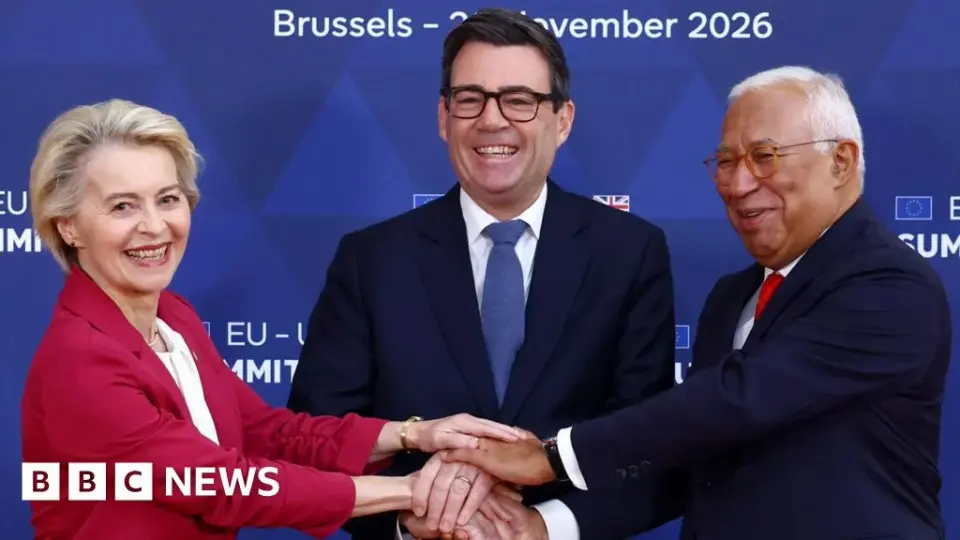
Prime Minister Andy Burnham and EU leaders agreed to a deal removing most checks on British food exports, linking emissions trading systems, and launching a youth mobility scheme. The UK government projects a £17bn annual economic boost, while critics argue it undermines sovereignty. Burnham signaled plans for an informal 'brainstorming' process on closer future ties, though he reaffirmed no return to the single market or free movement.
Key points
- The deal scraps most checks on British food exports in exchange for UK adherence to some EU regulations starting in 2028.
- A youth experience scheme will allow up to 100,000 EU and UK nationals aged 18-31 to work or study in each other's territories for up to three years, targeting availability by January 2030.
- The UK and EU agreed to link their emissions trading systems, with implementation targeted for 2028.
- The Treasury estimates the deal could add up to 0.5% to UK GDP, equating to a £17bn annual boost, a figure disputed by Conservative leader Kemi Badenoch.
- Burnham announced an informal 'brainstorming process' to explore long-term relationship options, with a 10-year plan to be published next month, but maintained the commitment to no return to the single market or free movement.
Background
This agreement follows a post-Brexit 'reset' of relations initiated under former Prime Minister Sir Keir Starmer. Earlier coverage in November 2026 highlighted the initial trade and mobility deal, noting the economic projections and sovereignty concerns. The current summit represents the finalization of these stages, with Burnham now pushing for deeper integration discussions ahead of the next UK-EU summit.
How outlets are covering it
Proponents, including Burnham and Foreign Secretary Ed Miliband, argue the deal reduces bureaucratic burdens and provides the UK with a greater say in EU regulations, particularly in food and agriculture. Miliband emphasized the 'worst of all worlds' scenario of being a 'rule taker' without market integration. Critics, including Conservative leader Kemi Badenoch and Reform UK's Nigel Farage, labeled the deal 'unfair' and a 'betrayal,' arguing it cedes regulatory control to Brussels and increases competition for jobs. Badenoch disputed the Treasury's economic projections, claiming the actual GDP impact is 0.0%. Liberal Democrat leader Ed Davey called the deal insufficient, urging a 'whole new deal' rather than incremental tweaks. The New York Times and NBC News framed the shift as a response to geopolitical changes, including Russian aggression and US distancing under Donald Trump, which have made European solidarity more critical.
Why it matters
The deal marks a significant pivot in UK-EU relations, moving from post-Brexit separation toward closer economic and regulatory alignment. It sets the stage for potential future negotiations on deeper integration, including possible discussions on EU membership, which could reshape the UK's geopolitical and economic strategy in the coming decade.
What to watch
Legislation to implement the deal is expected in the UK Parliament next week. Burnham will publish a 10-year plan next month outlining ambitions for reindustrialization and growth. An informal 'brainstorming process' will begin before the next UK-EU summit to explore long-term relationship options. Talks on tuition fees for EU and UK students will continue for another six months, with a potential agreement by January 2030.
- Andy Burnham: UK to explore even closer ties with EU after agreeing deal BBC
- Miliband says 'all options on table' for future EU relationship as he's quizzed on new deal BBC
- Closer EU ties will give UK say on Brussels decisions, says Ed Miliband The Guardian
- Britain and Brussels Have Begun a Brexit Rollback. How Far Will It Go? The New York Times
- Facing economic pain and Russia threats, U.K.’s Burnham looks to rewrite Brexit with new deal NBC News
Want the full story? Read the original reporting
Read on BBC