
UK PM Burnham seeks trade and mobility deals with EU in bid to reset post-Brexit ties
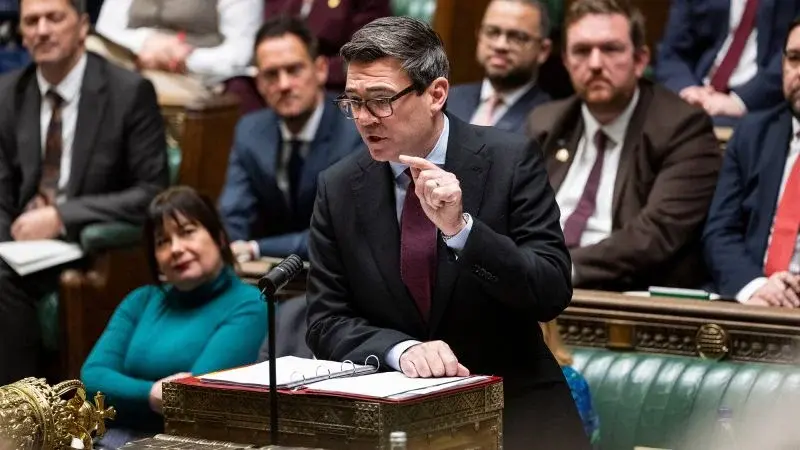
UK Prime Minister Andy Burnham is meeting EU leaders in Brussels to finalize agreements on food trade, emissions, and youth mobility. While Burnham has publicly questioned the value of Brexit and floated the idea of rejoining the EU, his government maintains strict limits against restoring free movement or joining the single market. The summit aims to reduce trade frictions, though significant political and regulatory hurdles remain.
Key points
- Burnham will meet EU Commission President Ursula von der Leyen and Council President Antonio Costa in Brussels on Friday to sign deals on food, carbon, and youth mobility.
- The UK government estimates that removing trade barriers for food and drink could save 5.1 billion pounds annually, while the overall package might add 0.4% to GDP.
- A youth mobility scheme is expected to allow 100,000 EU citizens to work in the UK for up to three years, a figure the UK initially sought to halve.
- Burnham stated that Brexit has not worked but ruled out rejoining the EU in the current parliament, adhering to Labour's 2024 manifesto red lines against the single market and customs union.
- The UK has agreed to rejoin the Erasmus student exchange program, though at a higher cost than previous arrangements, and is negotiating reduced tuition fees for EU students.
Background
The UK left the EU in 2020 following a 2016 referendum. Previous Prime Minister Keir Starmer pursued a cautious approach to 'make Brexit work' through limited regulatory alignment. Burnham replaced Starmer in 2026 and has adopted a more assertive stance, explicitly discussing the possibility of rejoining the bloc in the future, though he has not committed to it before the next election.
How outlets are covering it
Outlets highlight a divergence between Burnham's rhetoric and policy. CNN and The New York Times note that while Burnham has used forceful language to criticize Brexit, experts like Anand Menon argue his actual approach has not changed significantly from Starmer's. AP News emphasizes that Burnham has broken a decade-long taboo by openly discussing rejoining, while Al Jazeera details specific sticking points, such as the UK's resistance to full 'Made in Europe' rules and the EU's demand for home tuition fees. Opposition figures, including Nigel Farage and Kemi Badenoch, have condemned the moves as a betrayal of the 2016 vote, while pro-EU campaigners argue the process is too complex for a calm public debate.
Why it matters
The outcome of this summit will determine whether the UK can reduce trade frictions with its largest trading partner without compromising its post-Brexit sovereignty. Success could provide a modest economic boost, but failure to secure key deals could expose the limitations of the current 'reset' strategy. The political fallout may also intensify domestic debates over the UK's long-term relationship with Europe, potentially influencing the 2029 general election.
What to watch
Burnham is expected to outline options for the long-term UK-EU relationship later in 2026. The government will continue to negotiate on regulatory alignment, while pro- and anti-EU campaign groups mobilize to influence public opinion. The next general election, due by 2029, will likely feature the question of EU reintegration as a central issue.
- Ten years on, is the UK preparing to undo Brexit? CNN
- EU and Britain to agree steps towards relations reset Al Jazeera
- Jason White on Andy Burnham’s overtures to the EU – cartoon The Guardian
- The UK and EU are holding a summit to patch up ties after their bitter Brexit divorce AP News
- Easing Back From Brexit: What to Expect at U.K. Summit With E.U. The New York Times
Want the full story? Read the original reporting
Read on CNN