
Italy Unions and Students Stage Nationwide Strikes Amid Security Crackdown
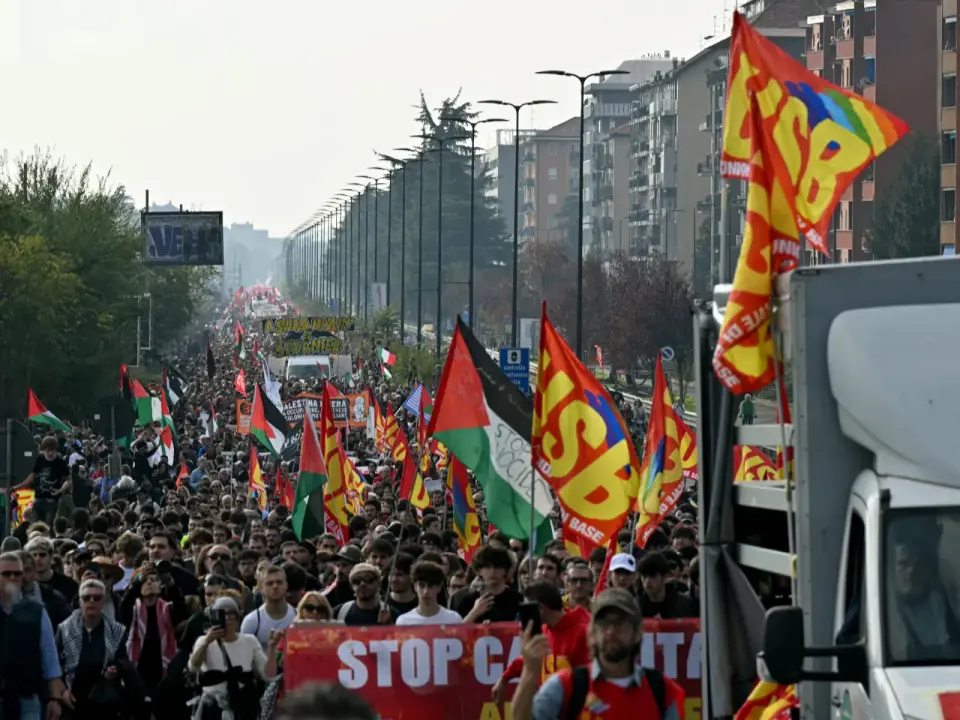
Tens of thousands of Italians joined nationwide strikes and protests on October 30, 2026, led by the USB union and students. Demonstrations in over 50 cities targeted soaring living costs, inadequate public services, and military spending. While the government deployed heavy security and tightened laws following recent violent clashes, most rallies remained peaceful despite isolated skirmishes. A global dockworkers' strike also targeted the militarization of ports, demanding an end to weapons transport to conflict zones.
Key points
- The Unione Sindacale di Base (USB) and Cobas unions organized a general strike across public and private sectors, excluding transport, to protest high costs and demand wage adjustments linked to inflation.
- Protests occurred in more than 50 cities, including Rome, Milan, and Turin, with specific demands varying by location, such as education funding in Bologna and port blockades in Genoa.
- The Italian government, led by Prime Minister Giorgia Meloni, increased security around landmarks like the Colosseum and Milan Cathedral, citing recent violent unrest in Milan on October 17-18.
- A coordinated global action by dockworkers in 17 countries aimed to block the transport of weapons and troops, with Italian ports like Genoa and Livorno participating in the mobilization.
- The government approved a 175 million euro aid package for truck drivers and farmers affected by fuel prices, and included a 2,500 euro annual bonus for workers under 30 in the draft 2027 budget.
Background
These protests follow a wave of unrest across Europe, particularly in France, where hundreds of thousands demonstrated in late September and October against cost-of-living issues and educational neglect. Italy had recently tightened laws on public gatherings and detention of minors after violent clashes in Milan in mid-October, where youth looted shops and smashed windows. The current mobilization reflects broader European discontent with rising prices and perceived government inaction on public services.
How outlets are covering it
Al Jazeera emphasizes the government's security response and the specific aid packages for affected sectors, noting the hard-right government's efforts to control potential unrest. CNN highlights the scale of the protests, mentioning over 50 cities and specific actions like farmers dumping manure in Turin, while noting that transport workers abandoned strikes after threats from Transport Minister Matteo Salvini. Euronews focuses on the logistical details of the strike, including rail and air disruptions, and the specific demands for wage adjustments and VAT reductions. All sources agree on the peaceful nature of most demonstrations despite isolated clashes, but differ in emphasis on the government's response versus the unions' demands.
Why it matters
The protests highlight deepening social tensions in Italy over economic hardship and military spending, testing the government's ability to maintain order while addressing public grievances. The global dockworkers' strike underscores international opposition to the militarization of trade routes, potentially impacting supply chains and diplomatic relations. The government's new budget measures and security laws may set precedents for handling future unrest in Europe.
What to watch
The government will likely monitor the impact of the 2027 budget measures on public sentiment, while unions may continue to press for wage adjustments and reduced military spending. Further protests could occur if the government's responses are perceived as insufficient, particularly given the ongoing cost-of-living crisis and military conflicts in the Middle East.
- Italy tightens security as students, unions launch nationwide protests Al Jazeera
- Major anti-government protests sweep across Italy CNN
- Italy’s PM deploys troops as nation faces widespread strikes and port blockades NBC News
- Mass protests sweep Italy during nationwide strike Reuters
- Italy to see major strikes against cost of living and war spending Euronews.com
Want the full story? Read the original reporting
Read on Al Jazeera