
Thunberg joins French student protests as police brutality allegations mount
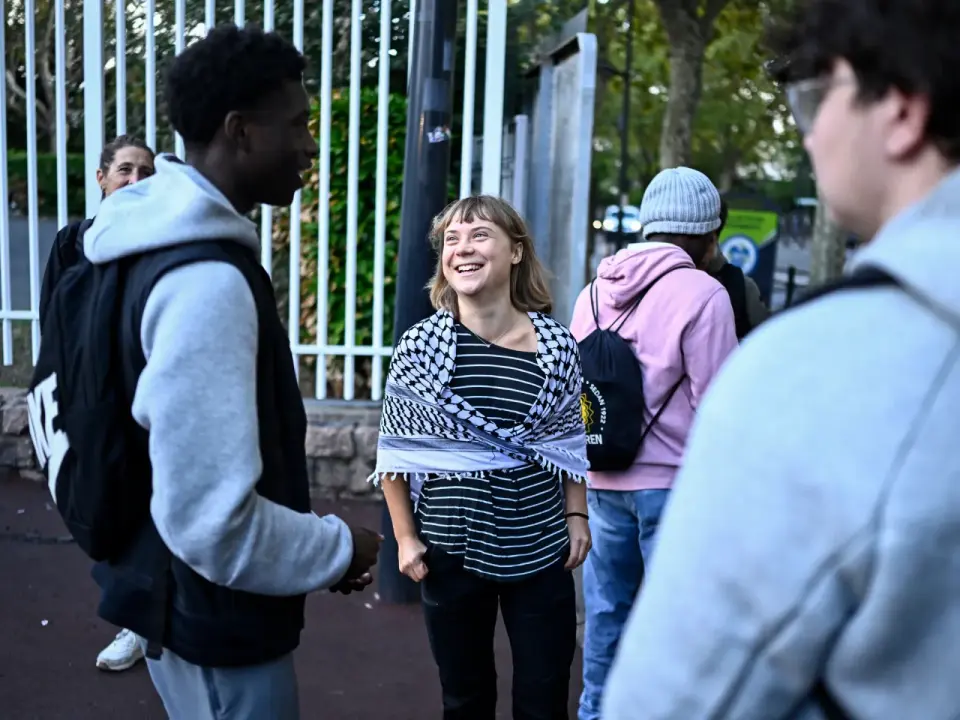
Swedish activist Greta Thunberg joined French student demonstrations in Saint-Denis on October 13, 2026, as part of a nationwide movement demanding better school conditions. The protests, which began in late September, have led to over 6,800 arrests and 24 police brutality investigations. While Education Minister Edouard Geffray reported 200 school closures, the government faces pressure to fund a €10 billion investment boost for high schools.
Key points
- Greta Thunberg arrived at Paul Eluard high school in Saint-Denis, stating that young people's futures are being 'robbed away' and criticizing police response as 'extremely violent.'
- The movement, now in its fourth week, involves blockades of hundreds of schools using bins and barriers, with over 70,000 participants in the previous major rally.
- More than 6,800 people, mostly minors, have been taken into police custody, and 24 allegations of police brutality are under investigation.
- The government has promised to deploy 3,000 substitute teachers to the 114 worst-affected high schools, with 35% already assigned.
- Students are demanding a €10 billion investment boost for lycées, while the government struggles with high borrowing costs and budget deficits.
Background
This development follows a series of escalating student protests in France since late September 2026, which our archive notes began as a crisis of education but were mischaracterized by some U.S. media as related to migration. Previous coverage highlighted police brutality, including the first prosecution of a police officer for using a grenade launcher against a 14-year-old, and the government's suspension of stun grenades after a teenager lost a hand. The unrest has intensified ahead of the 2027 presidential election, where far-right candidate Marine Le Pen is polling as the frontrunner.
How outlets are covering it
Al Jazeera and Euronews emphasize the humanitarian aspect, highlighting lawyers forming human chains to protect students and the government's promise to deploy substitute teachers. NBC News provides broader political context, noting that the protests add to uncertainty ahead of the presidential election and that the government has little fiscal room for maneuver. While all sources agree on the scale of the protests and the number of arrests, NBC News contrasts the left-wing criticism of police with far-right candidate Marine Le Pen's blame of violent protesters for damage to schools. Al Jazeera and Euronews focus more on the immediate actions of Thunberg and the students' demands, whereas NBC News frames the issue within the broader political and economic crisis in France.
Why it matters
The protests highlight a deepening crisis in France's education system and the government's inability to address it due to fiscal constraints. The involvement of international figures like Thunberg and the scale of the arrests suggest the movement could have significant political implications, potentially influencing the upcoming presidential election and the balance of power between left-wing and far-right factions.
What to watch
Wider public rallies against the rising cost of living are planned for Saturday, October 17, 2026. The government is expected to continue deploying substitute teachers, but the lack of a substantial funding increase may keep tensions high. The outcome of the presidential election in 2027 will likely be influenced by how the government handles the ongoing education crisis and the broader economic turmoil.
- Activist Greta Thunberg joins French student protests Al Jazeera
- Greta Thunberg joins French teens on new day of school protests NBC News
- Greta Thunberg backs French high school protests over run-down schools 10TV
- 'Our future is being robbed': Greta Thunberg joins France student protests against school conditions Euronews.com
- ‘My son was killed’ France faces backlash over proposed police firearms law Al Jazeera
Want the full story? Read the original reporting
Read on Al Jazeera