
AI Decodes Gödel’s Shorthand Notebooks, Revealing 663 Hidden Theorems
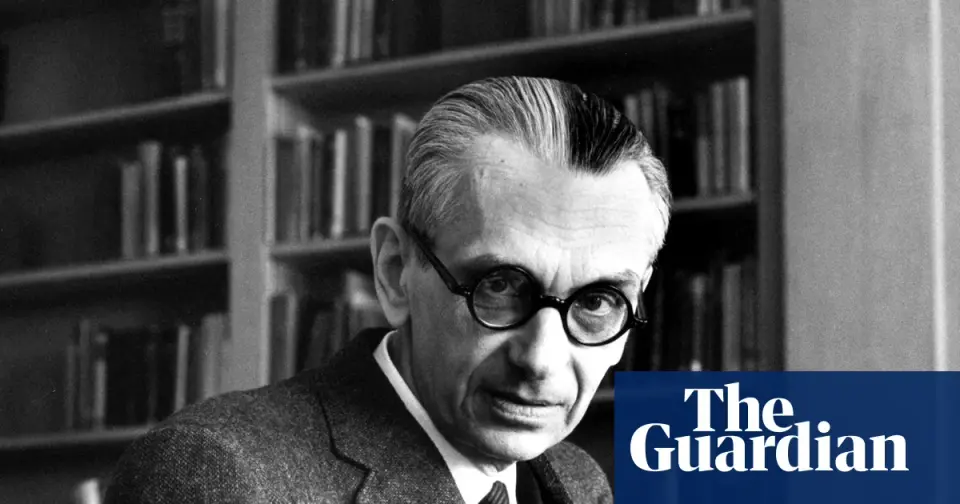
Finnish logician Jan von Plato used Anthropic’s Claude to decode 1,009 pages of Kurt Gödel’s 1940s notebooks written in obsolete Gabelsberger shorthand. The AI identified 663 theorems, including a near-complete proof of the axiom of choice’s independence that Gödel claimed in 1966. Von Plato verified the results using the Coq proof assistant, confirming that Gödel had discovered far more than historians previously knew.
Key points
- Jan von Plato’s team at the University of Helsinki had been transcribing Gödel’s notebooks at a rate of one page per week since 2017.
- In September 2026, von Plato fed transcriptions and secondary literature to Claude, which produced a 650-page analysis in days.
- Claude identified 663 theorems; approximately 400 were verified as correct, 200 required minor repairs, and 50 were false.
- The AI reconstructed a proof for the independence of the axiom of choice that was one definition away from completion, validating Gödel’s 1966 claim.
- Von Plato plans to use AI to analyze Gödel’s physics and cosmology notebooks next, which remain unstudied.
Background
Kurt Gödel’s 1931 incompleteness theorems laid the groundwork for modern computation, but his later unpublished work remained largely inaccessible due to its use of Gabelsberger shorthand. Recent AI breakthroughs in mathematics, including solutions to major open problems by OpenAI and Anthropic, have sparked debate about the role of AI in discovery. This project represents a shift from AI solving new problems to AI unlocking historical archives that were previously unreadable to humans.
How outlets are covering it
The Guardian and MLQ.ai emphasize the speed and scale of Claude’s analysis, highlighting how it connected disparate parts of Gödel’s work that humans could not retain. 36Kr adds a narrative focus on Gödel’s 'near miss' with the Fields Medal and includes details about his physics notes, such as early quantum mechanics calculations and time travel theories, which the other sources mention less prominently. The Russian source (ИФЗ РАН) frames the event as a broader victory for AI in historical preservation, noting that similar tools could decode other obscure archives, though it lacks specific details on the theorem verification process. All sources agree on the core finding of 663 theorems but differ in their emphasis on the historical implications versus the technical methodology.
Why it matters
This discovery demonstrates that AI can serve as a tool for historical recovery, not just new problem-solving. It suggests that many 'unsolved' problems in history may have been solved but lost due to communication or transcription barriers. The verification of Gödel’s near-proof of the axiom of choice challenges the historical narrative of Paul Cohen’s 1966 Fields Medal win and highlights the potential for AI to correct historical oversights in mathematics.
What to watch
Von Plato intends to apply similar AI techniques to Gödel’s physics and cosmology notebooks, which contain unexplored ideas on quantum mechanics and general relativity. Researchers will likely continue to verify the 200 'repaired' theorems and explore the 14 new logic themes identified by Claude. The academic community will debate the extent to which the discoveries belong to Gödel versus the AI, as noted by logician Joel David Hamkins.
- ‘Ahead of his time’: AI helps unlock discoveries hidden in notebooks of man who transformed maths The Guardian
- Claude helped decode Kurt Gödel's shorthand notebooks, turning up 663 theorems and a near-proof he claimed in 1966 MLQ.ai
- Why Artificial Intelligence Is Finally Decoding Kurt Gödel's Secret Notebooks ИФЗ РАН
- Claude deciphers Gödel's cryptic manuscript, 80 years of notes astound the mathematics community 36Kr
- Claude Deciphers Gödel Manuscripts as Helsinki Team Unearths 663 Proto-Theorems BigGo Finance
Want the full story? Read the original reporting
Read on The Guardian