
Dublin Professor Uncovers 13th-Century Castle Hidden Inside Modern University Building
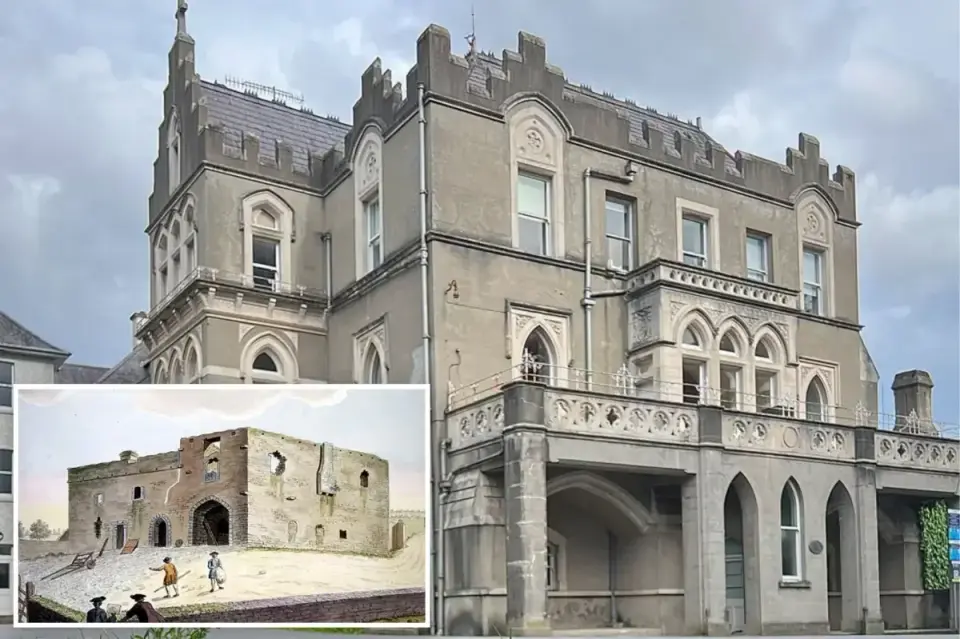
A medieval castle thought lost for centuries was discovered intact within a Victorian-era building at University College Dublin. Professor Tadhg O’Keeffe identified the structure by analyzing 18th-century watercolors and recognizing architectural clues like thick walls and splayed windows. The discovery, announced in September 2026, reveals that 70-80% of the original Roebuck Castle survives beneath modern plaster, offering a rare glimpse into Ireland’s Norman-era history.
Key points
- University College Dublin (UCD) announced on Sept. 18, 2026, that medieval Roebuck Castle survives inside a current campus building.
- Professor Tadhg O’Keeffe identified the castle by studying 18th-century watercolors by Gabriel Beranger that depicted the site before redevelopment.
- O’Keeffe estimates 70-80% of the original medieval structure remains, hidden under Victorian plaster added in 1874.
- Architectural evidence includes unusually thick walls, a stone vault, an arched stone roof, and splayed windows typical of the medieval period.
- The castle was likely built in the early 13th century and owned by significant figures, including King James II in the late 1600s.
- UCD purchased the property in 1986, but the medieval origins were unrecognized until O’Keeffe’s investigation.
Background
This discovery adds to recent archaeological findings in Ireland, such as the identification of a 14th-century trebuchet casualty at Stirling Castle. Unlike those battlefield remains, Roebuck Castle represents a preserved domestic and administrative structure that survived centuries of urban development. The finding highlights how modern infrastructure can obscure historical layers, similar to how the 1874 Victorian makeover concealed the castle’s medieval foundations from previous observers.
Why it matters
The discovery challenges assumptions about urban development in Dublin, showing that significant historical structures can survive beneath modern facades. It provides valuable primary evidence for medieval architecture and ownership patterns in Ireland, particularly regarding the Norman invasion’s legacy. For historians, the intact gate tower and splayed windows offer rare physical data to reconstruct 13th-century construction techniques and the social status of the castle’s occupants, including its link to King James II.
What to watch
Researchers may conduct further non-invasive surveys to map the full extent of the medieval structure beneath the Victorian plaster. UCD could consider preservation efforts or interpretive displays to highlight the castle’s history. The finding may also prompt reviews of other university buildings in Dublin for similar hidden historical layers, potentially leading to more archaeological discoveries in urban centers.
Want the full story? Read the original reporting
Read on New York Post