
Singapore's FirstDate Pilot Uses Nobel-Winning Algorithm to Match Government Workers
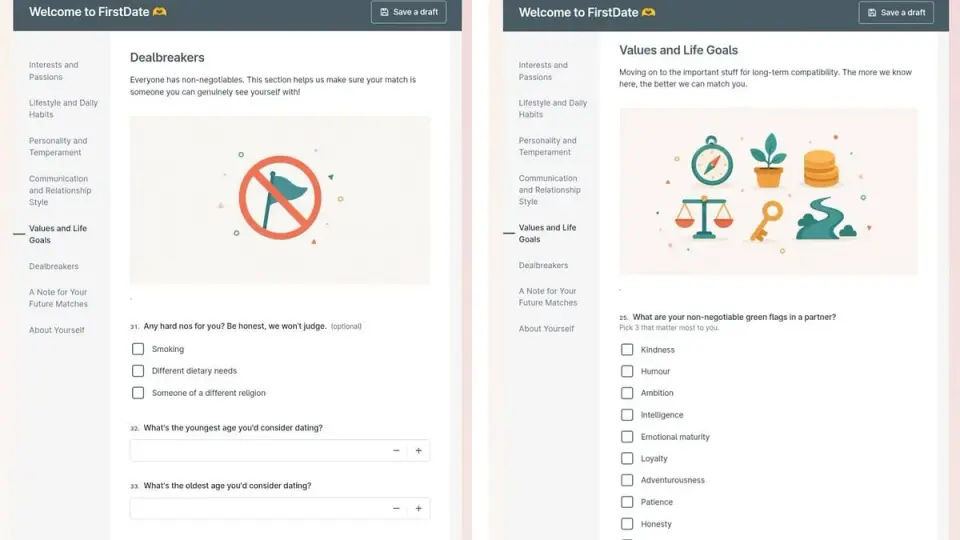
Singapore's GovTech launched FirstDate, a pilot matchmaking service for government workers aged 21-35, using the Nobel-winning Gale-Shapley algorithm to offer one stable match at a time. The initiative aims to combat 'swipe fatigue' and low fertility rates, though critics argue it reduces dating to transactional preferences and excludes older singles.
Key points
- FirstDate is a pilot program by Singapore's Government Technology Agency (GovTech) launched in late September 2026, initially restricted to government employees aged 21 to 35.
- The service uses the Gale-Shapley Stable Marriage Algorithm, which earned the 2012 Nobel Prize in Economics, to pair users in cycles where each person receives only one potential match at a time.
- Users verify identity via Singpass and complete a questionnaire of over 30 questions covering interests, lifestyle, and relationship values, with contact details shared only if both parties accept the match.
- The pilot comes amid Singapore's record-low fertility rate, which dropped to 0.87 births per woman in 2025, and fewer than 30,000 births in the year, a historic low.
- Critics describe the initiative as 'dystopian' and argue it excludes those over 35, while supporters note it reduces scam risks and offers a structured alternative to commercial dating apps.
Background
Singapore previously attempted a government-run matchmaking service in 1984 with the Social Development Unit (SDU), which was phased out after being criticized as elitist and mocked as 'Single, Desperate and Ugly.' The current FirstDate pilot follows a similar trajectory but employs modern algorithmic matching. In April 2026, GovTech first sought public feedback on the idea, and an earlier prototype proposed free first-date meals. The launch also follows Prime Minister Lawrence Wong's August 2026 announcement of new family support measures, including nearly S$70,000 in financial support per child by age 17.
How outlets are covering it
BBC and Fortune highlight the practical aspects of FirstDate, noting that identity verification via Singpass reduces the risk of scams and that limiting choices may help overcome 'swipe fatigue.' Norman Li, a psychology professor at Singapore Management University, supports the idea that fewer options can make dating more manageable. However, Singapore Samizdat argues that the algorithm fails to account for the complexity of human relationships, noting that stable matches do not guarantee satisfaction and that the questionnaire conflates personal traits with partner preferences. The Washington Post frames the move as part of Singapore's broader technocratic involvement in private life, while BBC reports that some Singaporeans view the age limit as discriminatory, suggesting the government is 'writing off' older singles to boost fertility rates. Fortune notes that while the service acknowledges compatibility on paper does not guarantee chemistry, it remains a limited pilot with applications closing on October 5, 2026.
Why it matters
FirstDate represents a significant shift in how governments approach demographic challenges, using algorithmic solutions to address declining fertility rates. It highlights the tension between technocratic efficiency and the subjective nature of human relationships, raising questions about the role of the state in personal lives. The pilot's success or failure could influence future policies in Singapore and other nations facing similar demographic pressures, such as Japan, where Tokyo's government launched a similar AI-powered dating app in 2024 that resulted in 265 marriages by mid-2026.
What to watch
GovTech has stated that FirstDate is a limited pilot and has not confirmed whether it will expand to the wider public. Applications for the current cohort close on October 5, 2026. The outcome of the pilot, including user feedback and match success rates, will likely determine whether the service is scaled or modified. Singapore's government may also continue to implement broader family support measures, as announced by Prime Minister Lawrence Wong in August 2026, to address the country's demographic challenges.
- How Singapore’s government-run dating service works, and why it won’t solve the nation’s dating woes Singapore Samizdat
- Singapore launches matchmaking service for government workers BBC
- Singapore is using a Nobel-winning matching formula to help young government workers find dates Fortune
- Singapore launches government dating app as birth rate plunges The Washington Post
- No decision made on expanding dating platform for Singapore public officers beyond pilot: GovTech CNA
Want the full story? Read the original reporting
Read on Singapore Samizdat