Tag

Fertility Rate

All articles tagged with #fertility rate

Japan's adult nappies outsell baby nappies, signaling a rapid demographic aging
world9 days ago

Japan's adult nappies outsell baby nappies, signaling a rapid demographic aging

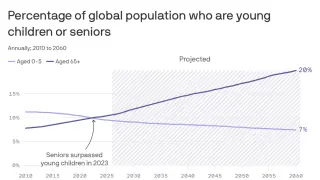
Japan’s aging crisis is starkly illustrated by supermarket shelves where adult nappies eclipsed baby nappies around 2011; in 2024 births fell to 686,061 (fertility 1.15) while deaths hit 1,605,298, yielding a natural decrease of 919,237. With about 123.4 million people and roughly 30% aged 65+, the country faces a shrinking, aging population, projected to drop to around 87 million by 2070. The decline is driven by late marriages, high housing costs, precarious work, and heavy unpaid caregiving, and is already prompting changes like a major paper maker exiting infant-nappy production while adult-nappy demand grows. The trend mirrors aging trajectories seen in other developed nations.

Smartphone Uptake Tied to U.S. Fertility Decline, Study Finds
science2 months ago

Smartphone Uptake Tied to U.S. Fertility Decline, Study Finds

A new study links the diffusion of smartphones, starting with the iPhone in 2007, to a meaningful drop in US fertility between 2007 and 2011—especially in counties with broad access and among teens and women in their 20s—though other experts caution that broader social, economic, and policy factors likely also contributed and the exact mechanism remains uncertain.

world3 months ago

Passport Power, Cannabis Maps, and Global Fertility Trends in 2026

Singapore leads the 2026 passport ranking with visa-free access to 192 destinations, followed by Japan, South Korea, and the UAE at 187; the weakest passports access fewer than 50 destinations. The U.S. remains nearly split on recreational cannabis, with 24 states and D.C. legalizing it and 26 states prohibiting it. Globally, 71% of people live in countries with fertility rates below replacement, driven by high rates in Sub-Saharan Africa and a long decline in China, signaling future population growth concentrating in a few regions.

South Korea Births Jump 6.8%, Lifting Fertility to 0.80
society5 months ago

South Korea Births Jump 6.8%, Lifting Fertility to 0.80

South Korea’s births rose 6.8% in 2025 to 254,500—the largest yearly increase in 18 years—lifting the total fertility rate to 0.80. The rebound, helped by the early- to mid-1990s cohort entering peak childbearing age (the so-called second echo-boom) and continued government incentives for marriage and childbirth, follows two years of gains and comes as firstborns rose 8.6% and the average maternal age reached 33.8. While the trend signals a demographic upswing, the fertility rate remains the OECD’s lowest.

France Faces First Postwar Demographic Shift as Deaths Edge Past Births
europe7 months ago

France Faces First Postwar Demographic Shift as Deaths Edge Past Births

France recorded more deaths (651,000) than births (645,000) in 2025—the first such postwar occurrence—while the fertility rate fell to 1.56, the lowest since WWI and a 24% drop from 2010. Despite this, the population rose to 69.1 million thanks to net migration of about 176,000, signaling an aging society and demographic pressures facing Europe.

US Fertility Rate Hits Record Low in 2024, CDC Reports
health1 year ago

US Fertility Rate Hits Record Low in 2024, CDC Reports

The US fertility rate hit a historic low in 2024 at less than 1.6 children per woman, aligning with rates in Western Europe, due to delayed childbearing and economic concerns, though overall population growth continues. Despite government efforts to boost birth rates, experts suggest these measures are symbolic and that demographic shifts are part of a longer-term trend of fertility delay.

health1 year ago

US Fertility Rate Hits Record Low in 2024, CDC Reports

The US fertility rate hit a historic low in 2024 at less than 1.6 children per woman, aligning with European levels, driven by delayed childbearing and economic concerns, though overall population growth continues due to immigration and other factors. The Trump administration has attempted measures to boost birth rates, but experts suggest broader social support is needed. Despite the decline, the total number of births increased slightly in 2024 due to population recalculations.

Tokyo Adopts 4-Day Workweek to Boost Birth Rate and Empower Women
world-news1 year ago

Tokyo Adopts 4-Day Workweek to Boost Birth Rate and Empower Women

The Tokyo government plans to introduce a four-day workweek for its employees starting in April to support young families and address Japan's low fertility rates. Governor Yuriko Koike announced the initiative, which aims to provide more flexibility for employees, particularly parents, to balance work and family life. This policy is part of broader efforts to encourage higher birth rates in Japan, where the fertility rate has fallen to 1.2 children per woman. The initiative also seeks to address the gender gap in labor force participation and improve work-life balance.

"Japan's Looming Population Crisis: A Critical State and Distant Relief"
world-news2 years ago

"Japan's Looming Population Crisis: A Critical State and Distant Relief"

Japan is facing a severe demographic crisis with a record low fertility rate and an aging population, leading to labor shortages and economic challenges. The country's fertility rate has been consistently low for decades, and even if it were to increase dramatically, the population decline is expected to continue for several more decades. Japan's reluctance to use immigration as a solution has made the situation more challenging, but experts suggest that mass immigration may be the only large-scale response to mitigate the crisis. The impact of the population decline is already evident in labor shortages and struggling rural communities, and the government is considering measures to address the issue, including potential changes to immigration policies.

South Korea's Plummeting Fertility Rate: A Growing Concern
world-news2 years ago

South Korea's Plummeting Fertility Rate: A Growing Concern

South Korea's fertility rate has hit a new record low of 0.72, well below the 2.1 threshold needed for population stability, leading to concerns of a halved population by 2100 and an aging society. Despite government incentives and proposals such as hiring nannies from South East Asia and offering military exemptions, many women feel it's unfeasible to have children and work due to gender inequality in the workplace and at home, with only 7% of new fathers taking parental leave compared to 70% of new mothers.

"South Korea's Declining Fertility Rate Sparks $75,000 Bonus Incentive for Workers"
world-news2 years ago

"South Korea's Declining Fertility Rate Sparks $75,000 Bonus Incentive for Workers"

South Korea's fertility rate, already the lowest in the world, has dropped further, sparking fears of a halving population by 2100. The government has spent billions to reverse the trend, but challenges around work culture, gender relations, and financial burdens deter couples from having children. With the average number of babies per woman falling to 0.72, well below the 2.1 needed for population maintenance, the country faces a potential "national extinction" crisis. Similar issues are also affecting neighboring countries like China and Japan.

South Korea's Fertility Rate Hits Record Low Despite Billionaire's Bonus
demographics2 years ago

South Korea's Fertility Rate Hits Record Low Despite Billionaire's Bonus

South Korea's fertility rate, already the world's lowest, dropped to a record low of 0.72 in 2023, with concerns about career advancement and the financial cost of raising children leading women to delay childbirth or opt not to have babies. The country's population decline poses a significant risk to economic growth and the social welfare system, with efforts to reverse the trend, such as increased public housing and easier loans, being a focus in upcoming elections. South Korea's demographic crisis mirrors similar challenges in neighboring Japan and China, where fertility rates have also hit record lows, prompting unprecedented steps to address the declining birthrate.