
DIA Report Reveals First Clear Image of China’s Secretive Reusable Spaceplane
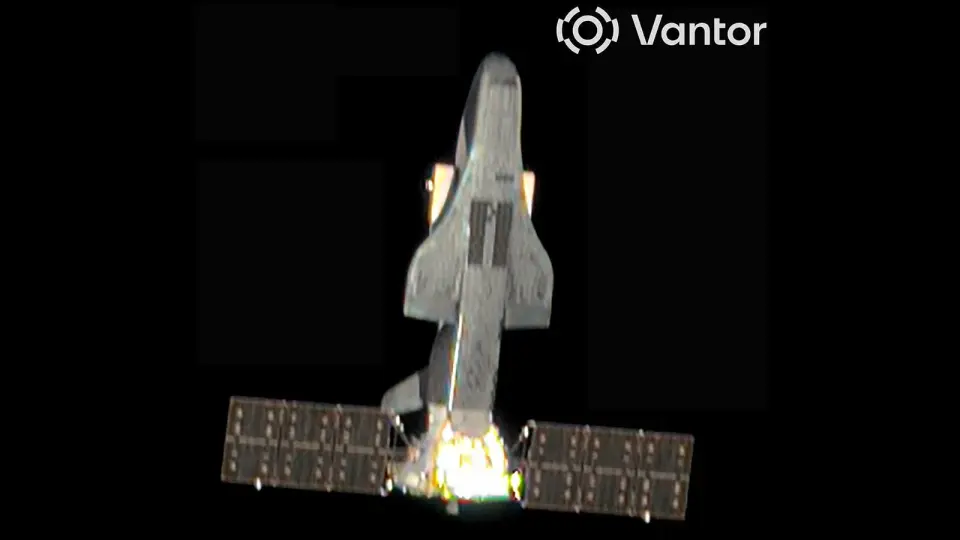
The U.S. Defense Intelligence Agency (DIA) released the first high-resolution image of China’s Shenlong spaceplane, captured in 2024 by Vantor’s WorldView 3 satellite. The photo shows the craft docked with another satellite, revealing details of its fourth mission. The release coincides with a broader assessment of Chinese space threats, including potential directed-energy weapons.
Key points
- The image, taken from 56 miles away, shows Shenlong with its payload bay doors open and docked to an unidentified satellite.
- Shenlong has completed four missions since 2020, with the current fourth mission launching in February 2026.
- The DIA report highlights China’s development of directed-energy weapons and anti-satellite capabilities as emerging threats.
- The spaceplane’s design closely mirrors the U.S. X-37B, though it operates only in low-Earth orbit so far.
- China has demonstrated the ability to release and recapture sub-satellites, raising concerns about orbital maneuverability.
Background
China’s Shenlong spaceplane has been a subject of speculation since its first orbital test in 2020. Previous missions included a 276-day flight in 2022 and a 268-day mission in 2023. The U.S. operates a similar vehicle, the X-37B, which has completed eight missions, some lasting over two years. Recent developments include China’s first land-based rocket booster recovery and concerns over satellite data sharing with adversaries, as highlighted in earlier coverage.
How outlets are covering it
Space.com emphasizes the clarity of the new image and its implications for understanding Shenlong’s capabilities. Ars Technica focuses on the strategic implications, noting the resemblance to the X-37B and the potential for directed-energy weapons. Popular Science highlights the unprecedented detail of the photo, particularly the rear-facing solar panels. SpaceNews provides a concise overview, underscoring the significance of the image in the context of U.S.-China space competition.
Why it matters
The release of this image marks a shift in transparency regarding China’s space capabilities, offering insights into its technological advancements and strategic intentions. It underscores the growing competition in space between the U.S. and China, with implications for national security and the future of orbital operations.
What to watch
Analysts expect further developments in China’s space program, including potential tests of directed-energy weapons and expanded orbital maneuvers. The U.S. may respond with increased surveillance and countermeasures, while both nations continue to refine their spaceplane technologies.
- China's secretive space plane caught on camera in incredible new photo released by US military Space
- China’s top-secret spaceplane can’t hide in low-Earth orbit Ars Technica
- US military intelligence agency publishes photo of Chinese ‘spaceplane’ in orbit FlightGlobal
- China’s super-secret space plane visible in clearest photo yet Popular Science
- U.S. intelligence report publishes clear image of China’s secretive spaceplane SpaceNews
Want the full story? Read the original reporting
Read on Space