
Former Royal Marine Completes 327-Day Solo Row Across Pacific and Indian Oceans
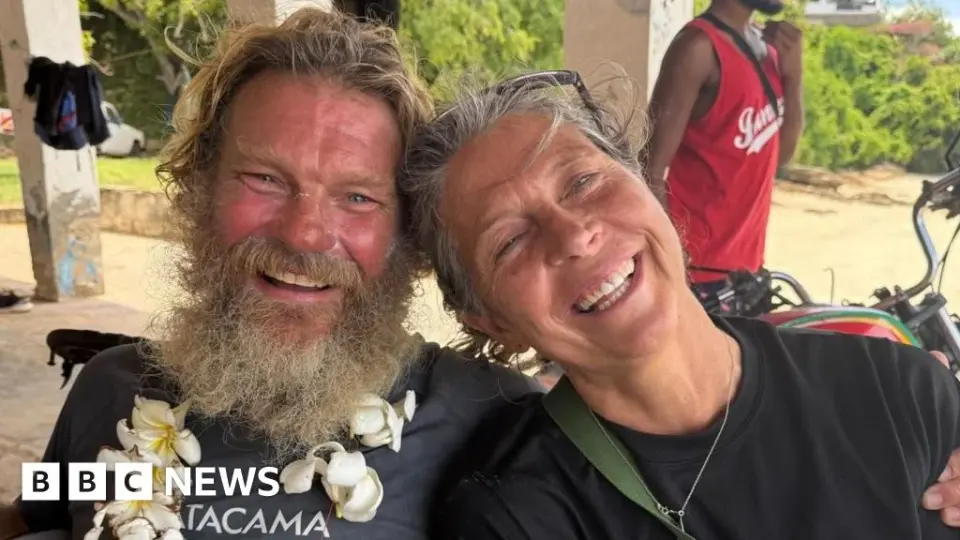
Dave 'Dinger' Bell, a former Royal Marine from Dorset, has completed a record-breaking solo and unsupported row across the Pacific and Indian Oceans. After 327 days at sea, he arrived in Kilifi, Kenya, having traveled over 15,000 nautical miles. The journey, which began in Peru in November 2025, was undertaken to raise funds for Rock2Recovery, a charity supporting veterans and emergency workers with PTSD. Bell arrived earlier than expected, still possessing 20 days' worth of food, and was greeted by his partner and supporters in Kenya. The feat has raised over £110,000 for the cause and received public recognition from Prince William and Princess Kate.
Key points
- Dave 'Dinger' Bell, a former Royal Marine from Bere Regis, Dorset, completed a solo, unsupported row across the Pacific and Indian Oceans after 327 days at sea.
- He departed from the west coast of Peru on 9 November 2025 and arrived in Kilifi, Kenya, on 2 October 2026, covering more than 15,000 nautical miles (28,000 km).
- The journey was designed to raise funds for Rock2Recovery, a charity assisting veterans and blue-light workers suffering from PTSD; the campaign has raised over £110,000.
- Bell arrived earlier than his 350-day plan, retaining enough food for another 20 days, and described the experience as the calmest of his life despite the physical and psychological challenges.
- The route took him westward across the Pacific, through the Coral Sea and Torres Strait, and across the Indian Ocean, requiring him to stop rowing for eight weeks to avoid cyclone season.
Background
Bell previously completed a solo Atlantic row from New York to Cornwall in 2021, a feat he initially vowed never to repeat. Advances in boat technology, including lighter carbon-fibre materials and improved solar panels, inspired him to attempt the larger Pacific-Indian Ocean challenge. While recent climate studies have highlighted shifting patterns in the Pacific and Indian Oceans due to global warming, Bell's route traversed these waters during a period of significant oceanic heat and acidification, as noted in recent Copernicus reports.
How outlets are covering it
The BBC reported on the logistical details of the journey, including the specific route, the eight-week pause to avoid cyclones, and Bell's comments on wildlife encounters and psychological endurance. Geo News emphasized the royal endorsement, highlighting a social media post from Prince William and Princess Kate congratulating Bell for his 'extraordinary achievement' in support of Rock2Recovery. The Telegraph source was inaccessible due to a security block, so no additional perspective could be synthesized from that outlet. All available sources agree on the core facts of the distance, duration, and charitable purpose, but differ in emphasis: BBC focused on the personal and logistical narrative, while Geo News focused on the public and royal recognition.
Why it matters
The achievement highlights the potential for extreme endurance sports to drive significant charitable fundraising for mental health causes affecting veterans and emergency services. It also demonstrates the evolving capabilities of solo ocean rowing due to technological advancements in boat design and navigation. The public and royal recognition underscores the cultural value placed on such feats of endurance and their association with charitable causes.
What to watch
Bell plans to rest and recover in Kenya before returning to his boat to continue his journey or conclude the trip. He will likely participate in public events and media appearances to further promote Rock2Recovery and share his experiences. The charity will continue to allocate the raised funds to support veterans and blue-light workers with PTSD.
- Ex-Royal Marine from Dorset completes Pacific and Indian Ocean row BBC
- Ex-Royal Marine completes world record row across two oceans The Telegraph
- William hails former Royal Marine after epic 327-day ocean ordeal AOL.com
- Ex-Marine completes stunning 10-month row across two oceans and looks like real-life Robinson Crusoe The Mirror
- Prince William celebrates extraordinary achievement: 'Well Done' Geo News
Want the full story? Read the original reporting
Read on BBC