
AI Decodes 217-Year-Old Napoleonic Cipher in Six Hours
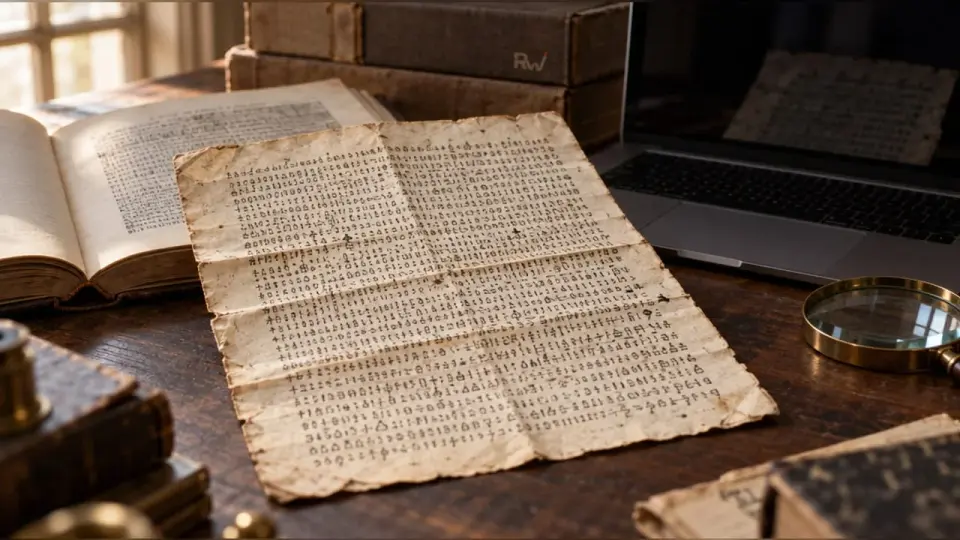
Carter Church used OpenAI's GPT-6 Astra to decode a 1809 cipher letter sent to Napoleon's marshal Auguste de Marmont. The AI transcribed 1,300 symbols from a 1969 journal scan in six hours, revealing military troop movements before the Austrian invasion. Church released the key and script for verification, though some historical details remain debated.
Key points
- Carter Church, an AI engineer at SentinelOne, utilized GPT-6 Astra to solve a cipher that had remained unsolved for 217 years.
- The letter, sent by Eugène de Beauharnais to Auguste de Marmont in March 1809, contained 1,300 cipher units and 155 distinct signs.
- GPT-6 Astra processed a scanned image from a 1969 journal, using a simulated-annealing solver to assign values to unknown symbols.
- The decoded text revealed French and Austrian troop positions shortly before Austria invaded in April 1809.
- Church released the key, transcription, and a reproduction script, allowing others to verify the results.
- Satoshi Tomokiyo, maintainer of the Cryptiana historical cipher site, marked the entry as solved after reviewing Church's work.
Background
This development follows the September 2026 launch of OpenAI's GPT-6 Astra, which was marketed for its multimodal and agentic capabilities. Earlier archive coverage noted Astra's rollout challenges and its application in legal and cybersecurity sectors. The Marmont cipher case demonstrates Astra's potential in archival research, combining image transcription, historical research, and code-based analysis.
How outlets are covering it
RuntimeWire emphasizes the reproducibility of Church's work, noting that the released key and script allow for independent verification. NDTV highlights the speed of the AI, focusing on the six-hour timeframe and the revelation of troop movements. Both sources agree on the core facts but differ in emphasis: RuntimeWire stresses the methodological rigor and open access, while NDTV frames it as a breakthrough in historical cryptography. The Telegraph source was inaccessible due to a security block, so no perspective could be extracted.
Why it matters
This case illustrates how multimodal AI can tackle neglected archival problems by combining image analysis, historical context, and algorithmic solving. It shows that AI can assist in recovering historical documents that were previously deemed unsolvable, potentially accelerating research in fields like history and cryptography. The open release of the key and script ensures transparency and allows the academic community to scrutinize the results.
What to watch
Researchers may use Church's method to decode other historical ciphers. OpenAI may further develop Astra's capabilities for archival and historical research. The academic community will likely review the released materials to verify the accuracy of the decoded text and the historical interpretations.
- GPT-6 Astra helped decode a 217-year-old cipher letter to Napoleon's marshal RuntimeWire
- Napoleon’s 217-year-old coded message ‘cracked by AI’ The Telegraph
- Napoleon’s centuries-old code cracked by AI in six hours The Times
- Napoleon's 217-Year-Old Mysterious Letter Cracked Using AI In 6 Hours ndtv.com
- SentinelOne AI researcher uses GPT-6 Astra to crack Napoleon cipher after 217 years calcalistech.com
Want the full story? Read the original reporting
Read on RuntimeWire