
French Rail Derailment Injures 44; Investigators Probe Sabotage
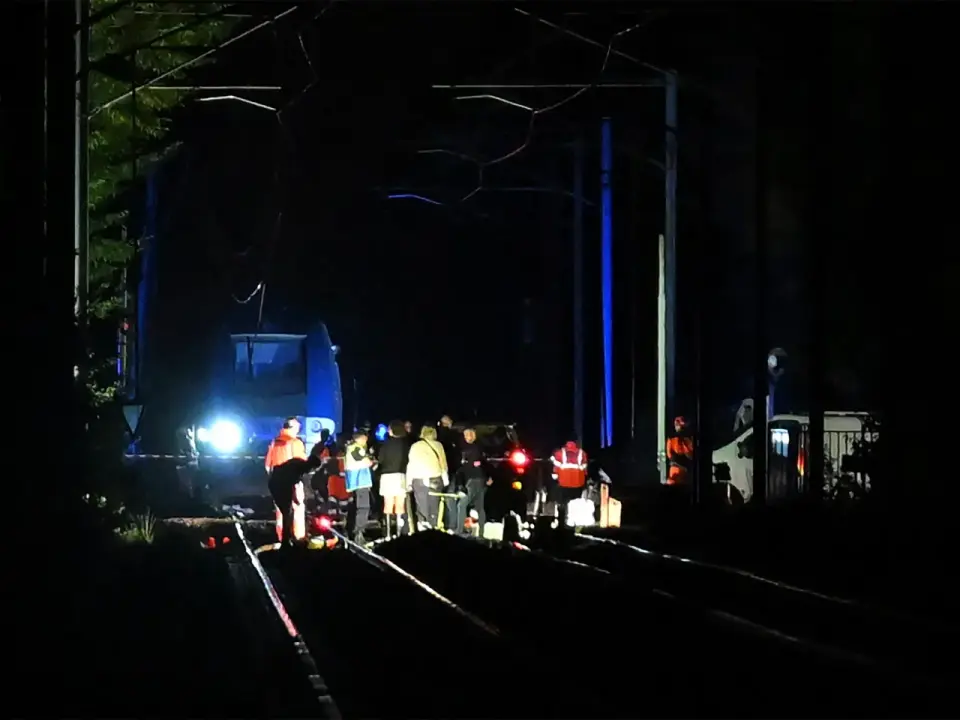
A passenger train derailed in northwestern France on September 11, 2026, injuring 44 people, including one critically. The incident occurred near Cléon, between Rouen and Caen, prompting a massive emergency response. While initial reports focused on the accident, later investigations raised suspicions of sabotage after a piece of rail was found on the track.
Key points
- A TER passenger train carrying approximately 180 to 186 passengers derailed at 7:45 PM local time on September 11, 2026, near Cléon, north of Rouen.
- Forty-four people were injured, with an 18-year-old woman airlifted to Rouen University Hospital in critical condition.
- Emergency services deployed 130 to 140 firefighters, five medical teams, and 80 vehicles to the scene under a mass-casualty protocol.
- SNCF suspended traffic on the line and cut power to the tracks to facilitate rescue operations and safety assessments.
- Investigators are examining whether the derailment was accidental or the result of sabotage, following the discovery of a rail piece on the track.
Background
This incident follows a series of transport disruptions in Europe during 2026. In August, a heatwave in England caused two separate train derailments, while a tornado in southwestern France damaged hundreds of homes. France has also experienced significant rail disasters in the past, including the 2013 Brétigny-sur-Orge derailment and the 2015 Eckwersheim crash. The current event highlights ongoing concerns regarding rail infrastructure safety and security across the continent.
How outlets are covering it
Al Jazeera and BBC reported the derailment as a sudden accident, citing passenger accounts of jolts and shattered windows, with no immediate cause identified. In contrast, CNN and CBS News emphasized a developing suspicion of sabotage. CBS noted that police found a piece of rail on the track, which a spokesperson described as 'probably' linked to the incident, though the prosecutor's office remained cautious about drawing conclusions. While Al Jazeera and BBC focused on the immediate emergency response and casualty counts, CNN and CBS highlighted the investigative angle regarding potential criminal intent. All sources agreed on the casualty count of 44 and the critical condition of one victim, but differed on the narrative of the cause, with some outlets reporting the sabotage angle as a primary focus while others treated it as an ongoing investigation.
Why it matters
The derailment underscores the vulnerability of high-speed rail networks to both mechanical failures and potential security threats. The shift from an accidental narrative to a sabotage investigation signals a heightened security concern for European transport infrastructure. The significant emergency response and disruption to services between major Normandy cities highlight the operational risks and the need for robust safety protocols in public transit systems.
What to watch
Investigators will continue to determine the cause of the derailment, focusing on whether the presence of the rail piece indicates sabotage or an accident. SNCF will work to restore safe operating conditions and resume traffic on the affected line. The prosecutor's office will likely release further findings as the investigation progresses, potentially leading to criminal charges if sabotage is confirmed.
- Passenger train derails in France, leaving 44 injured, 1 critical Al Jazeera
- Train derails in France and injures 44 as authorities investigate possible sabotage CNN
- Train derailment in France injures 44, police suspect sabotage CBS News
- France train derailment leaves at least 44 injured BBC
- France: Sabotage suspected in train derailment DW.com
Want the full story? Read the original reporting
Read on Al Jazeera