
Satellite Data Reveals Kapotnya Refinery Fully Offline After June Blast
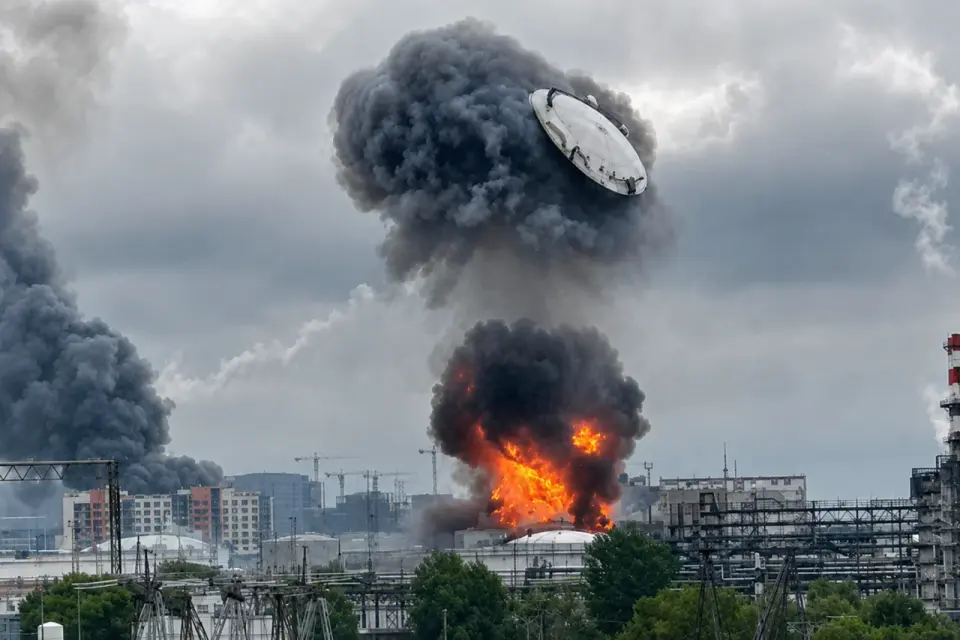
Ukrainian drone strikes on Russian oil infrastructure continue to inflict significant damage, with satellite analysis confirming that the Kapotnya refinery in Moscow has been fully offline since June. While a recent strike on the Taneko refinery in Nizhnekamsk killed at least 13 people, other facilities like Kstovo have maintained operations despite targeted hits. These deep strikes, reaching up to 1,500km from the front line, aim to disrupt fuel supplies and war financing, though their long-term economic impact remains debated.
Key points
- The Kapotnya refinery in Moscow, damaged by a Russian anti-aircraft missile in June, has been completely out of operation since at least late July, according to thermal satellite data from Meduza.
- Ukrainian forces struck the Taneko refinery in Nizhnekamsk, killing at least 13 people and wounding 39, marking one of the deadliest strikes on Russian territory since 2022.
- The Kstovo refinery in Nizhny Novgorod remains partially operational; although one of its five key processing units was destroyed in May, the other four continue to function, limiting overall production loss.
- Ukraine has conducted 'deep strikes' on refineries up to 1,500km from the frontline, including Orsk, aiming to reduce oil revenues that finance the war.
- Russian air defenses around Moscow have been exposed as weak, with incidents involving friendly fire damaging oil infrastructure during drone interceptions.
Background
Ukraine has systematically targeted Russian oil refineries since 2022, with a secret long-range drone unit (Centre No. 1) conducting covert operations. Recent strikes have extended to cities like Ufa and Penza, while Russian attacks on Ukrainian towns continue. The conflict has also seen incidents like the Moscow restaurant blast, which raised fears of targeted terrorism, though the focus remains on energy infrastructure.
How outlets are covering it
EUobserver and Meduza emphasize the use of high-resolution satellite thermal data to verify the long-term impact of strikes, noting that Kapotnya has been fully offline while Kstovo remains partially operational. The New York Times highlights the human cost of the Nizhnekamsk strike, reporting 13 deaths, while the BBC focuses on the strategic reach of Ukrainian 'deep strikes' up to 1,500km from the front line. Outlets differ in emphasis: Meduza and EUobserver focus on technical verification of damage, while the NYT and BBC highlight casualties and geopolitical implications.
Why it matters
The sustained targeting of Russian oil infrastructure threatens to disrupt fuel supplies and reduce war financing, potentially affecting both military operations and civilian life. The use of advanced satellite technology to verify damage underscores the evolving nature of the conflict, where long-range drone strikes are becoming a critical tool for Ukraine to impose economic and strategic pressure on Russia.
What to watch
Ukraine is expected to continue its campaign against Russian oil infrastructure, with potential further strikes on refineries and energy facilities. Russia may enhance air defenses around key industrial sites, while international observers will monitor the long-term economic impact of these strikes on Russian fuel production and exports.
- What is now happening at the viral Moscow refinery whose 'roof flew off' in a blast in June? (Ukraine Battlefield update, Day 1630) EUobserver
- Ukraine Drone Attack on Industrial City in Russia Kills at Least 13 The New York Times
- Ukrainian drone strikes 750 miles inside Russia kill at least 13, authorities say CBS News
- Ukrainian drone attack on the Russian city of Nizhnekamsk kills 12, authorities say NPR
- Ukraine says it hit Russian oil refinery 1,500km from frontline in overnight strike BBC
Want the full story? Read the original reporting
Read on EUobserver