
Ukraine’s StarGate Drone Rescues Soldiers Stranded in 'Kill Zone'
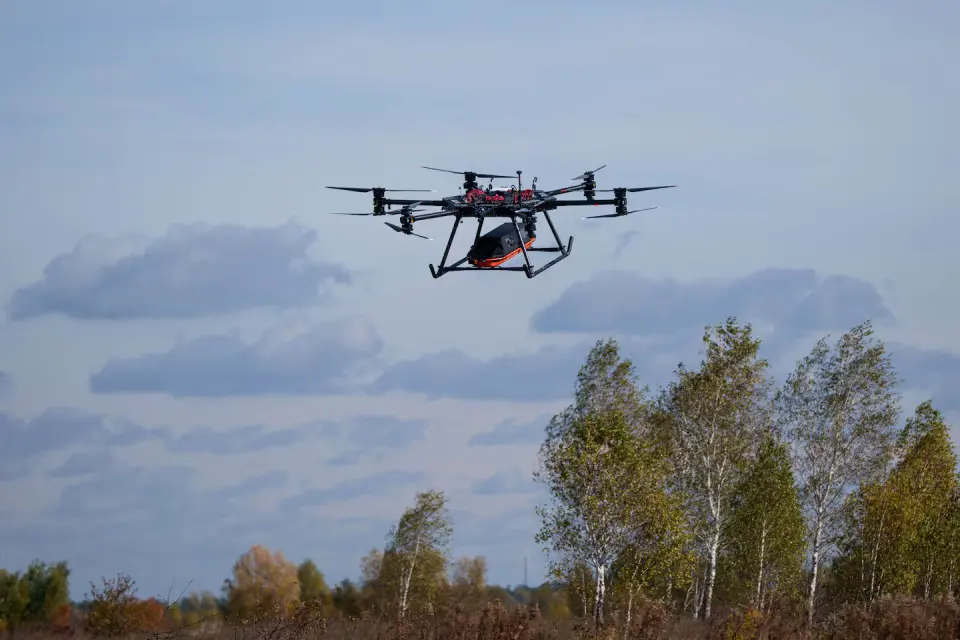
Ukrainian forces have successfully deployed purpose-built aerial drones to evacuate wounded soldiers from frontline positions where ground vehicles cannot reach. The 475th Separate Assault Regiment, known as Code 9.2, utilized a StarGate UAV manufactured by SkyFall to rescue two soldiers, including Artem Lytvyn, who had been stranded for eight days after losing his foot to a mine. The drone, capable of carrying a 150kg payload, features AI navigation to bypass electronic warfare jamming. This innovation marks a shift from traditional ground robots, which often fail in muddy or flooded terrain, to aerial logistics that can traverse the 'gray zone' near Russian borders. While the rescue of Lytvyn and another soldier was successful, the operation remains high-risk due to potential interception by Russian drones. The success has led to plans for scaling production to 1,000 units per month by year's end.
Key points
- The 475th Separate Assault Regiment (Code 9.2) used a StarGate UAV to evacuate Artem Lytvyn, a 25-year-old soldier stranded for eight days after a mine injury in Kharkiv region.
- The StarGate drone, built by SkyFall, carries a 150kg payload in a coffin-like capsule and uses AI navigation to function despite GPS jamming and electronic warfare.
- Lytvyn’s rescue was preceded by failed attempts using ground robots and a 10-person stretcher party, which covered only 11km in five days due to difficult terrain.
- Another soldier, Kostiantyn Vlasenko, was evacuated by a different drone (Ayudag-6) after 491 days on the frontline, having self-amputated his foot due to lack of medical care.
- SkyFall plans to produce 1,000 StarGate drones monthly by the end of 2026, aiming to save hundreds of lives through this new evacuation method.
- The operation involved escort drones, including Vampire UAVs, to create diversions and protect the evacuation drone from Russian Rubicon drone forces.
Background
This development follows a surge in civilian casualties in Kharkiv region, where a Russian drone strike killed six people in October 2026. It also occurs amid intensified drone exchanges between Ukraine and Russia targeting energy infrastructure in November 2026. The use of drones for logistics and evacuation represents a significant evolution in the war, which has become characterized by rapid technical innovation and the expansion of 'kill zones' where conventional vehicles are vulnerable.
How outlets are covering it
The Washington Post highlights the personal narrative of Andrii, a pilot involved in the rescue, emphasizing the emotional and technical risks of the mission. The Guardian provides a detailed account of Artem Lytvyn’s experience, focusing on the failure of ground robots and the success of the StarGate drone, while also noting the broader context of drone warfare and Russian 'meat assaults.' The Kyiv Post offers a technical overview, detailing the specifications of the StarGate and Ayudag-6 drones, the involvement of the Brave1 defense cluster, and the broader trend of using unmanned vehicles for logistics, including amphibious ground robots. All sources agree on the success of the drone evacuations but differ in emphasis: The Post and Guardian focus on the human element and risk, while the Kyiv Post focuses on the technological and logistical innovations.
Why it matters
The successful use of drones for casualty evacuation addresses a critical gap in Ukraine’s military logistics, where traditional methods are often ineffective due to terrain and enemy surveillance. This innovation could save hundreds of lives and reduce the strain on medical resources. It also signals a shift in the war’s dynamics, where technology is being adapted not just for offense but for humanitarian and logistical support. The scaling of production indicates a commitment to integrating this technology into standard military operations, potentially changing the outcome of battles by ensuring wounded soldiers can be rescued from previously inaccessible areas.
What to watch
SkyFall aims to produce 1,000 StarGate drones per month by the end of 2026. The Ukrainian Ministry of Defense is also expanding the use of amphibious ground robots to overcome water obstacles. Further testing and deployment of these drones are expected, with potential for increased use in other regions. The success of these evacuations may lead to more widespread adoption of drone-based logistics in the conflict.
- In Ukraine, drones are death. Now they are rescuers, too. The Washington Post
- A Soldier Cut Off His Own Foot to Survive. Then Came a Daring Drone Rescue. WSJ
- ‘My biggest fear was being shot down’: how an injured Ukrainian soldier was evacuated by drone The Guardian
- ‘Thinking Outside the Box’ – Ukraine’s Use of Battlefield Drones Kyiv Post
Want the full story? Read the original reporting
Read on The Washington Post